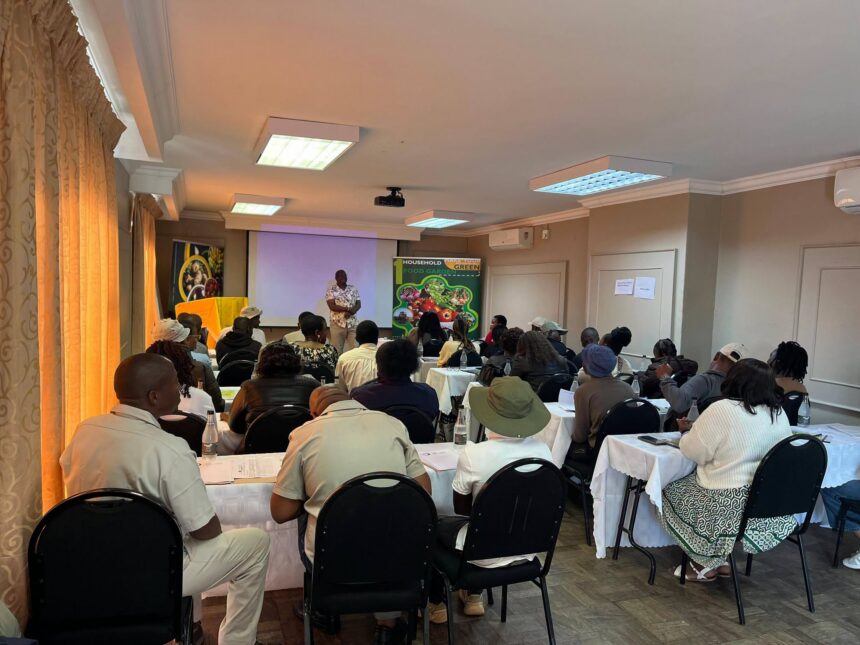
The Department of Agriculture and Rural Development continues to invest in farmers by providing practical knowledge and skills that can improve agricultural productivity, sustainability and long-term growth. As part of this ongoing support, the Department brought together state land beneficiary farmers from the Capricorn East and North Western Agro-Ecological Zones at Masana Hotel in Polokwane for a three-day NQF Level 2 credit-bearing training programme. The training focuses on irrigation and water quality, two important areas that directly influence successful crop production and responsible management of agricultural resources. The participating farmers are beneficiaries of state land and form part of the land reform programme, making skills development an important component of strengthening their farming operations. By combining access to land with technical training and ongoing agricultural support, the Department is helping farmers build the capacity needed to manage their enterprises more effectively.
Water management is a critical part of modern agriculture because the availability and quality of water can have a direct impact on crop growth and farm productivity. Farmers who understand how to manage irrigation systems can make better decisions about when and how much water their crops require. Poor irrigation practices can result in water wastage, uneven crop development and unnecessary production costs. The three-day training therefore provides farmers with practical information that they can apply directly to their farming activities. By improving their understanding of irrigation and water quality, participants can strengthen their ability to manage one of the most important resources on their farms.
The farmers attending the programme come from the Capricorn East and North Western Agro-Ecological Zones, where agricultural conditions can vary and require appropriate approaches to water management. Understanding the characteristics of an agricultural area helps farmers make informed decisions about production and resource use. Irrigation systems must be managed according to the needs of crops, the available water resources and the conditions affecting the farm. Training that takes these practical considerations into account can help farmers respond more effectively to challenges encountered during production. Bringing farmers from different areas together also creates an opportunity for participants to exchange experiences and learn from challenges encountered in different farming environments.
A major component of the training involves water sampling and water quality monitoring. These skills can help farmers identify whether the water they use is suitable for their agricultural activities and recognise potential problems that could affect production. Regular monitoring can provide useful information about changes in water quality and help farmers make more informed management decisions. Understanding how to collect water samples correctly is also important because inaccurate sampling can produce unreliable results. By learning practical water sampling techniques, farmers can become better equipped to monitor their resources and take appropriate action when problems are identified.
The training also focuses on irrigation systems and their different components. Farmers need to understand how their irrigation equipment works so that they can operate systems efficiently and identify problems before they cause significant production losses. Knowledge of components such as pipes, pumps, valves, sprinklers and other irrigation equipment can make routine farm management more effective. Participants will also learn about basic maintenance, which can help extend the useful life of irrigation infrastructure and reduce avoidable breakdowns. Regular maintenance can also improve water distribution and help farmers prevent small technical problems from becoming more costly failures.
Another important area covered during the programme is the correct use of protective clothing, tools and equipment. Agricultural work often requires farmers to operate machinery and equipment while working in environments that may present various safety risks. Understanding how to use appropriate protective clothing and tools can help farmers carry out irrigation-related activities more safely. It also promotes a stronger culture of responsible equipment handling and farm management. Providing farmers with this knowledge supports not only productivity but also the safety and wellbeing of people working on agricultural operations.
Participants will also learn how to identify common irrigation challenges, including dry spots and wet spots within fields. Uneven water distribution can affect crop development because some plants may receive insufficient water while others receive more than they require. Farmers who can identify these patterns are better positioned to investigate the cause and make necessary adjustments to their irrigation systems. The training will also address variations in water pressure, which can affect how efficiently water reaches different parts of a field. Understanding these issues can help farmers improve irrigation uniformity and use water more effectively.
Defective irrigation systems can create significant challenges for farmers, particularly when problems go unnoticed for extended periods. A damaged component, blocked line or faulty system can affect water distribution and ultimately reduce crop performance. Learning how to identify these defects allows farmers to respond more quickly and determine when basic maintenance or technical intervention is needed. Early identification can also reduce the likelihood of larger repairs and unnecessary water losses. The practical knowledge provided through the training can therefore contribute to more reliable irrigation systems and improved farm management.
Water quality is equally important because irrigation water can influence soil conditions and crop performance. Farmers need to understand the relationship between water quality, soil health and agricultural production so they can make appropriate decisions about irrigation practices. Sustainable water management also requires farmers to use available resources responsibly and avoid practices that can contribute to unnecessary wastage or environmental damage. The training provides participants with knowledge that can support more sustainable approaches to water use. This is particularly relevant as farmers seek to maintain productive agricultural operations while managing natural resources responsibly.
The NQF Level 2 credit-bearing nature of the programme adds further value for participating farmers. Formal training provides an opportunity for farmers to develop recognised knowledge and skills while gaining practical information relevant to their daily activities. Skills development can strengthen farmers’ confidence when managing agricultural systems and making decisions about production. It can also contribute to the broader professional development of beneficiaries participating in land reform programmes. Combining practical farming experience with structured training can help create stronger and more capable agricultural enterprises.
Supporting state land beneficiaries through training is also important for the broader objectives of land reform and agricultural development. Access to land can provide an important foundation for farming, but productive and sustainable land use also requires appropriate skills, infrastructure and technical support. Farmers need to understand how to manage their resources, maintain equipment and make decisions that support long-term production. Training programmes such as this one help bridge the gap between access to agricultural land and the practical knowledge required to use that land productively. Continued support can therefore help beneficiaries strengthen their businesses and contribute more effectively to local agricultural economies.
The Department’s approach demonstrates that farmer support involves more than providing access to land or agricultural inputs. Building knowledge and technical capacity can help farmers become more independent and better prepared to manage challenges within their operations. Irrigation and water quality training addresses practical issues that farmers encounter regularly, from checking water quality to maintaining equipment and identifying uneven water distribution. These skills can help reduce production risks and encourage more efficient use of water resources. They can also contribute to improved productivity by ensuring that crops receive appropriate irrigation and that problems are addressed before they become major setbacks.
The three-day training at Masana Hotel in Polokwane provides the participating farmers with an opportunity to strengthen their technical understanding while preparing them to apply new skills on their farms. The focus on water sampling, irrigation systems, maintenance, safety and problem identification ensures that the programme addresses several aspects of effective water management. Farmers who apply these lessons can improve the reliability of their irrigation systems while making more responsible use of water. This can support stronger production outcomes and contribute to more sustainable agricultural practices. Continued investment in practical farmer education will remain important as land reform beneficiaries work to build productive and resilient agricultural enterprises.
The Department of Agriculture and Rural Development’s irrigation and water quality training reflects the importance of equipping farmers with practical skills that can translate into better production and resource management. For state land beneficiaries in the Capricorn East and North Western Agro-Ecological Zones, the programme provides valuable knowledge that can help them manage irrigation systems, monitor water quality and respond to common technical challenges. The benefits of this training can extend beyond individual farms by supporting more efficient water use and strengthening agricultural activity within farming communities. When farmers have access to land, relevant training and practical support, they are better positioned to turn agricultural opportunities into sustainable production. Continued investment in skills development will therefore remain a key part of building a productive, resilient and sustainable agricultural sector.
Join 'Farmers Mag' WhatsApp Channel
Get the latest Farming news and tips delivered straight to your WhatsApp
CLICK HERE TO JOIN