Day five of the District Development Model and Service Delivery Week in Fetakgomo-Tubatse Local Municipality placed animal health and agricultural biosecurity at the centre of government efforts to support rural communities. In the early morning hours, the Morapaneng ga Kgosi Legadimane area in the Fetakgomo-Tubatse Local Municipality became an important site for a large-scale livestock vaccination campaign. The Limpopo Department of Agriculture and Rural Development, led by MEC Nakedi Grace Kekana, carried out critical vaccinations aimed at protecting local animals and supporting the livelihoods of farming communities. More than 1 500 cattle have successfully been vaccinated during the week, demonstrating the scale of the agricultural health intervention. The campaign also included rabies vaccinations for community dogs, reinforcing the importance of protecting both livestock and public health.
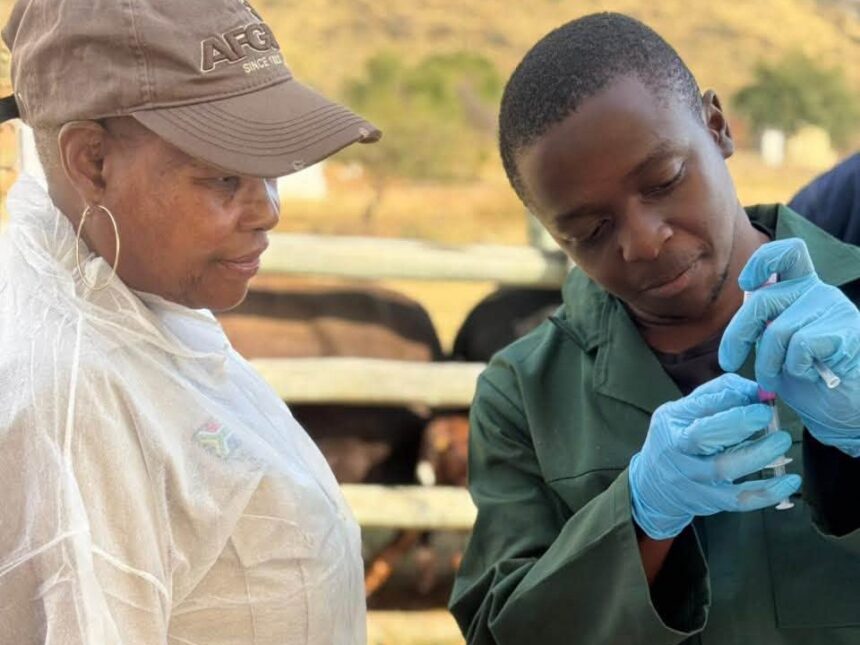
MEC Nakedi Grace Kekana played a direct role in the vaccination campaign by personally vaccinating local livestock against Foot and Mouth Disease and administering rabies vaccines to dogs in the community. Her participation placed a strong focus on the importance of animal health services reaching rural communities directly. Foot and Mouth Disease can have serious consequences for livestock owners and the broader agricultural economy because outbreaks can disrupt animal movement, trade and farming activities. Preventative vaccination and effective biosecurity measures are therefore important tools for reducing the risk of disease transmission. The presence of senior government leadership on the ground also demonstrated the importance being placed on practical service delivery in agricultural communities.
The vaccination programme forms part of broader efforts to strengthen biosecurity in the Sekhukhune District Municipality. Biosecurity involves measures designed to prevent, control and reduce the spread of diseases that can affect animals and agricultural production. For livestock farmers, maintaining animal health is essential because healthy cattle support household income, food security and local economic activity. Disease outbreaks can place significant pressure on farmers and require coordinated responses from veterinary and agricultural authorities. By taking vaccination services directly into communities, agricultural officials can support farmers while strengthening disease prevention efforts at local level.
More than 1 500 cattle had been vaccinated by the time of the fifth day of the Service Delivery Week activities. This figure highlights the reach of the campaign and the level of work being undertaken by agricultural officials in the affected communities. Each vaccination contributes to the broader objective of reducing the risk posed by serious livestock diseases and improving the resilience of rural farming operations. The campaign also provides an opportunity for officials to engage directly with livestock owners and reinforce the importance of following animal health and movement control requirements. Consistent vaccination and responsible livestock management remain important parts of maintaining a strong agricultural sector.
The rabies vaccination programme for community dogs added another important public health dimension to the day’s activities. Rabies is a serious viral disease that can affect animals and humans, making prevention through vaccination particularly important in communities where people and animals live in close proximity. Vaccinating dogs helps reduce the risk of transmission and protects households that may come into contact with infected animals. Community-based vaccination programmes can also improve access to preventative animal health services for residents in rural areas. Including rabies vaccination alongside livestock disease control therefore showed a coordinated approach to animal health and community wellbeing.
The work in Morapaneng ga Kgosi Legadimane was supported by a team of agricultural and veterinary professionals who worked together to deliver the services. MEC Kekana was joined by District Director Mr Harry Maboa and State Veterinarians Dr Makgamatha MF and Dr Matsane EM, whose veterinary expertise contributed to the implementation of the vaccination campaign. Animal Health Technicians Ms Maheya KR, Mr Mashabela SG, Mr Mathapo KG, Mr Mphahlele NC and Mr Maibelo LP also worked on the ground to ensure that the required biosecurity services were carried out. Their combined efforts allowed the vaccination operation to move efficiently through the area. The coordinated work demonstrates how successful agricultural service delivery depends on collaboration between leadership, veterinary professionals and technical teams.
The District Development Model provides an important framework for bringing different government services closer to communities and coordinating interventions around local needs. Agriculture plays a central role in many rural communities because livestock and crop production can support household income, food security and local economic development. Service Delivery Week activities such as the vaccination campaign show how government departments can translate development priorities into practical services that residents can access within their communities. Rather than focusing only on policy and planning, the initiative places emphasis on direct implementation. This approach can help address immediate challenges while supporting longer-term rural development objectives.
For livestock owners in Fetakgomo-Tubatse, effective animal health services can have a direct impact on the sustainability of their farming activities. Cattle are important assets for many rural households and can contribute to income, food security and household resilience. Protecting these animals against preventable diseases can reduce potential losses and help farmers maintain productive herds. Veterinary services also give farmers an opportunity to receive guidance on disease prevention, animal management and biosecurity practices. Continued engagement between farmers and agricultural authorities is therefore essential for maintaining healthy livestock populations.
The activities in Sekhukhune District Municipality also demonstrate the importance of taking agricultural services directly to rural areas. Farmers may face challenges accessing veterinary services due to distance, transport costs or limited resources. Mobile and community-based interventions can help overcome some of these barriers by bringing qualified personnel and essential services closer to livestock owners. This can improve participation in vaccination programmes and strengthen awareness of disease prevention. Regular engagement can also help officials identify emerging animal health concerns and respond more effectively to issues affecting local farmers.
Day five of the District Development Model and Service Delivery Week in Fetakgomo-Tubatse therefore demonstrated the practical impact that coordinated agricultural services can have in rural communities. The vaccination of more than 1 500 cattle, combined with rabies vaccinations for community dogs, represented a significant investment in animal health and biosecurity. The leadership of MEC Nakedi Grace Kekana and the contribution of veterinary and animal health teams ensured that the campaign reached the community at ground level. These interventions support livestock farmers, protect animal health and contribute to broader public health and rural development goals. As Service Delivery Week continues, the work in Morapaneng ga Kgosi Legadimane provides a clear example of how government can turn agricultural development commitments into practical services that strengthen communities.
Join 'Farmers Mag' WhatsApp Channel
Get the latest Farming news and tips delivered straight to your WhatsApp
CLICK HERE TO JOIN