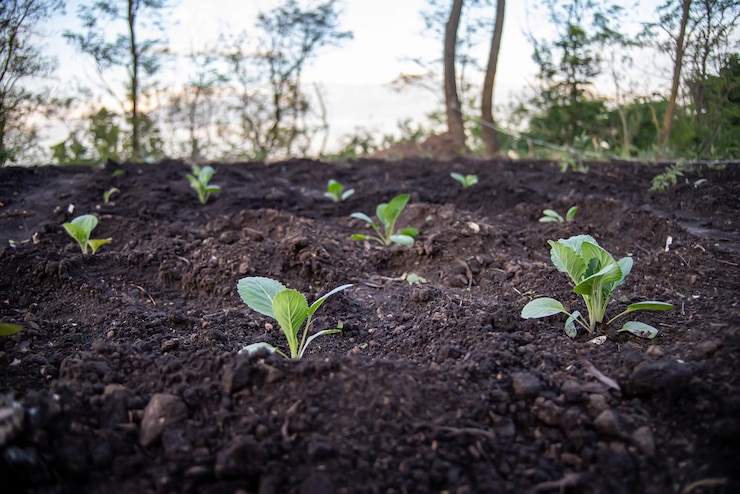
Soil health is one of the most important factors that determines farm productivity and long term agricultural success in South Africa. Many farmers face declining yields not because of seeds or weather alone, but because of soil that has lost structure, nutrients, and biological activity. Healthy soil supports strong root development, better water retention, and improved resistance to drought conditions that are common in many parts of the country. In South Africa, where rainfall is uneven and climate stress is increasing, soil quality plays a direct role in food security and farm profitability. Understanding soil health is the first step toward building a more productive and resilient farming system.
Soil health refers to the ability of soil to function as a living ecosystem that supports plants, animals, and humans. It is not only about nutrients but also about soil structure, organic matter, water balance, and microbial life. In many farming areas across South Africa, soil degradation has been caused by overgrazing, continuous monocropping, erosion, and poor land management practices. This leads to compacted soil that holds less water and produces weaker crops. Farmers who understand these issues can take practical steps to restore soil function and improve long term yields.
One of the most effective ways to improve soil health is through regular soil testing. Soil tests provide detailed information about pH levels, nutrient deficiencies, and organic matter content. In South African conditions, many soils are either too acidic or lack key nutrients such as nitrogen, phosphorus, and potassium. Without testing, farmers often apply fertilisers blindly, which increases costs without solving the real problem. By using soil test results, farmers can apply the right nutrients in the right amounts, improving efficiency and reducing waste.
Adding organic matter is another key strategy for improving soil health. Organic matter includes compost, animal manure, crop residues, and cover crops. These materials improve soil structure, increase moisture retention, and support beneficial microorganisms. In dry regions of South Africa, organic matter helps soil hold water for longer periods, reducing the impact of drought. Farmers who consistently add organic material often see improved crop growth and stronger soil resilience over time. This practice also reduces reliance on expensive chemical inputs.
Conservation agriculture is widely recognised as one of the most effective soil management systems in South Africa. It focuses on minimal soil disturbance, permanent soil cover, and crop rotation. Reduced tillage helps maintain soil structure and prevents erosion caused by wind and heavy rain. Crop rotation breaks pest cycles and improves nutrient balance in the soil. Keeping soil covered with plant residues or cover crops protects it from direct sunlight and moisture loss. Many commercial and smallholder farmers in South Africa are adopting this system to improve long term productivity.
Soil erosion remains a serious challenge in many rural parts of the country. Heavy rainfall events and poor land management can wash away the topsoil, which contains most of the nutrients needed for crop growth. Once topsoil is lost, it takes many years to recover natural fertility. To prevent erosion, farmers can use contour ploughing, windbreaks, and grass strips. Proper grazing management also helps prevent soil from becoming bare and vulnerable. Protecting soil from erosion is one of the most cost effective ways to maintain farm productivity.
Water management is closely linked to soil health in South Africa’s agricultural systems. Healthy soil improves water infiltration and reduces runoff, allowing crops to access moisture for longer periods. Poor soil, on the other hand, leads to water loss and increased drought stress. Techniques such as mulching, drip irrigation, and improved soil structure management help improve water efficiency. In areas where water is limited, improving soil’s ability to retain moisture can make a major difference in yield stability. Farmers who focus on soil and water together often achieve better long term results.
Microbial activity is another important but often overlooked part of soil health. Beneficial bacteria and fungi help break down organic matter and make nutrients available to plants. In healthy soil, these organisms work continuously to support plant growth. Excessive use of chemical fertilisers and pesticides can reduce microbial activity over time. Farmers can improve soil biology by reducing chemical dependence and increasing organic inputs. A living soil system is more productive and more resilient to environmental stress.
Improving soil health requires long term commitment rather than short term fixes. Many South African farmers are now combining traditional knowledge with modern agricultural science to restore degraded soils. Government programmes, agricultural advisors, and research institutions also provide support through training and soil management guidelines. Farmers who invest in soil health often see gradual but consistent improvements in yield, crop quality, and input efficiency. This makes soil management one of the most important investments in farming.
Strong soil health is the foundation of sustainable agriculture in South Africa. Without it, even the best seeds, irrigation systems, and farming technologies cannot deliver full results. By focusing on soil testing, organic matter, conservation practices, and water management, farmers can rebuild soil productivity over time. Healthy soil supports food security, farm profitability, and environmental stability. Improving soil health today ensures stronger and more resilient farming systems for the future.
Join 'Farmers Mag' WhatsApp Channel
Get the latest Farming news and tips delivered straight to your WhatsApp
CLICK HERE TO JOIN