Choosing the right irrigation system is one of the most important decisions for any farmer or landowner in South Africa. Water is a limited and uneven resource across the country, with some regions experiencing frequent droughts while others face unpredictable rainfall patterns. A well chosen irrigation system can improve crop yields, reduce water waste, and stabilise production throughout the year. Beginners often struggle with selecting the right system because there are multiple options, each suited for different crops, climates, and budgets. Understanding how each system works helps you make a practical decision that supports long term farm success.
The first step in choosing an irrigation system is understanding your water source and availability. In South Africa, water can come from boreholes, rivers, dams, municipal supply, or rainwater harvesting systems. Each source has different pressure levels, reliability, and cost implications. Boreholes often require pumps and filtration systems, while surface water may need permits and proper distribution infrastructure. You also need to measure how much water is available during dry seasons, since this affects the size and type of system you can install. Without a reliable water source assessment, even the best irrigation system will fail to deliver consistent results.
Drip irrigation is one of the most efficient systems for beginners, especially in water scarce regions. It delivers water directly to the plant roots through a network of pipes and emitters. This reduces evaporation and ensures that water is used only where it is needed. Drip systems are ideal for vegetables, fruit orchards, and high value crops that require precise watering. In South Africa, many small and medium scale farmers use drip irrigation because it reduces water consumption by up to 50 percent compared to traditional methods. It also allows fertiliser to be applied through the system, improving efficiency and crop growth.
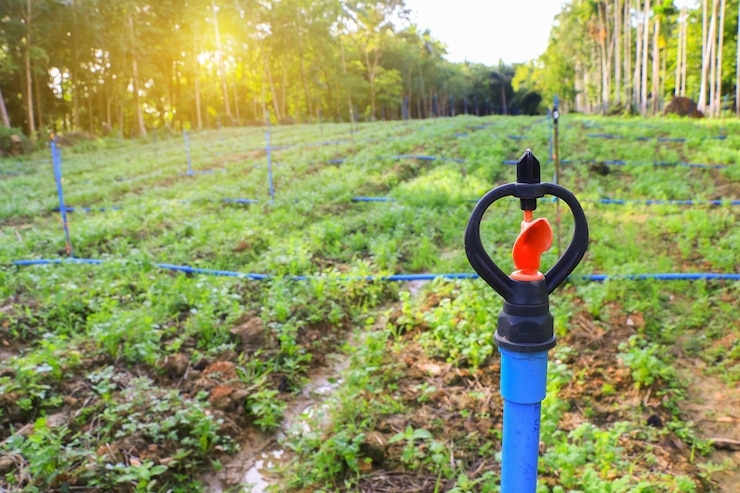
Sprinkler irrigation is another common option that works well for larger fields and a variety of crops. It simulates natural rainfall by spraying water over the crops using rotating or fixed sprinklers. This system is suitable for crops like maize, wheat, and pasture lands. Sprinkler systems require more energy and pressure compared to drip systems, which can increase operating costs. However, they provide even water distribution and are easier to install on flat or gently sloping land. In areas with moderate water availability, sprinkler irrigation offers a balance between efficiency and coverage.
Pivot irrigation systems are widely used in commercial farming operations across South Africa. These systems consist of rotating equipment that moves in a circular pattern across large fields. They are highly efficient for crops like maize, soybeans, and wheat, especially on large-scale farms. Pivot systems require a significant upfront investment but reduce labour costs and improve water management. Many commercial farmers prefer them because they can be automated and controlled remotely. However, they are not suitable for small plots or irregularly shaped fields.
Surface irrigation is one of the oldest and simplest methods still used in parts of South Africa. It involves directing water across the land through channels or furrows. This system is low cost and easy to set up but often results in water loss due to runoff and evaporation. It works best in areas with flat terrain and abundant water supply. While it may not be the most efficient method, it remains common among smallholder farmers due to its simplicity and low installation cost. Improvements such as proper levelling and scheduling can help increase its efficiency.
When choosing an irrigation system, soil type plays an important role. Sandy soils drain quickly and may require more frequent watering, making drip irrigation a better option. Clay soils retain water longer but can become waterlogged if not managed properly. Loamy soils are ideal because they balance drainage and water retention. Understanding your soil helps you match the irrigation system to the land’s natural characteristics. Ignoring soil type can lead to water wastage, poor crop growth, and reduced yields.
Climate conditions also influence irrigation decisions in South Africa. Hot and dry regions like the Northern Cape require highly efficient systems that minimise evaporation. Areas with seasonal rainfall may need systems that support supplementary irrigation during dry periods. Windy regions may not be suitable for sprinkler systems because water distribution becomes uneven. Farmers must consider temperature, rainfall patterns, and evaporation rates before making a final choice. Matching irrigation systems to climate conditions improves long term sustainability and reduces operating costs.
Cost is another major factor for beginners when selecting an irrigation system. Initial installation costs vary widely depending on the system type and scale of operation. Drip systems may require moderate investment but save money over time through reduced water use. Pivot systems require high capital investment but offer long term efficiency for large farms. It is important to consider not only installation costs but also maintenance, energy use, and repair expenses. A system that is cheap upfront may become expensive to maintain if it is not suited to your farm.
Maintenance requirements should also guide your decision. Some systems, like drip irrigation, require regular cleaning of emitters to prevent clogging. Sprinkler systems need periodic checks of nozzles, pipes, and pressure levels. Pivot systems require technical servicing and occasional mechanical repairs. Beginners should choose systems that match their ability to manage maintenance or have access to technical support. Poor maintenance can reduce efficiency and shorten the lifespan of any irrigation system.
Choosing the right irrigation system in South Africa is not just a technical decision, it is a long term investment in productivity and sustainability. Farmers who carefully evaluate water availability, soil type, climate, crop needs, and cost are more likely to succeed. Each system has strengths and limitations, and there is no one size fits all solution. The goal is to match the system to your specific farming conditions and future growth plans. With the right irrigation setup, you can improve yields, conserve water, and build a more resilient farming operation.
Join 'Farmers Mag' WhatsApp Channel
Get the latest Farming news and tips delivered straight to your WhatsApp
CLICK HERE TO JOIN