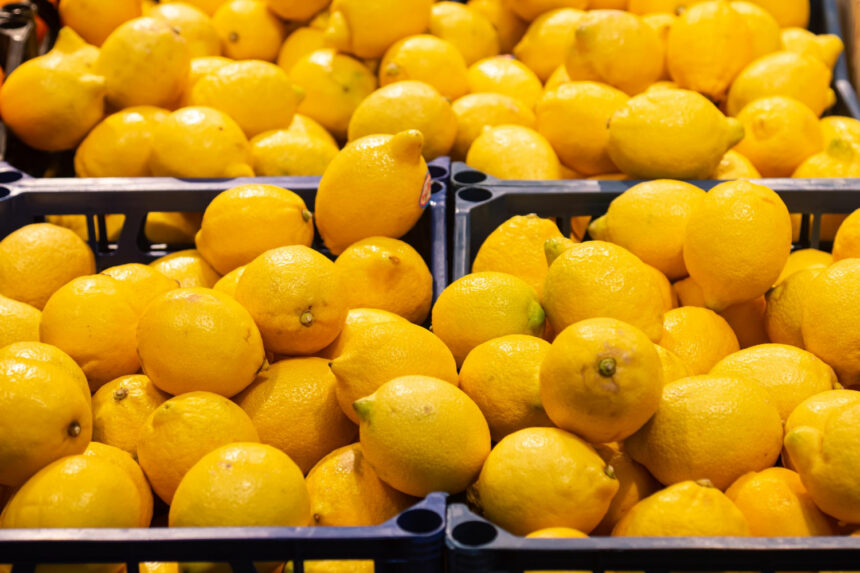
South Africa’s citrus industry is heading into a stronger-than-expected lemon export season after the Citrus Growers’ Association of Southern Africa (CGA) increased its production forecast from 45.8 million 15 kg cartons to 49.4 million cartons. The revision follows a detailed review by the CGA Lemon Variety Focus Group and reflects improved growing conditions across key production regions. The upward adjustment signals a more dynamic season than initially anticipated, driven largely by favourable weather patterns and stronger-than-expected fruit development. Industry stakeholders are now preparing for higher volumes moving through the export supply chain. The revised outlook reinforces South Africa’s position as a major global supplier of lemons.
Weather conditions played a central role in boosting the season’s performance, despite a delayed start to harvesting in several regions. Three significant cold fronts improved fruit colour development, allowing lemons to reach export readiness faster than expected. This accelerated maturation helped growers bring fruit to market in a shorter timeframe, improving overall export scheduling. At the same time, increased rainfall across many lemon-producing areas supported stronger fruit growth and improved sizing. These combined conditions resulted in higher carton yields than early-season projections had suggested.
Production increases have been recorded across several key citrus-growing regions, with packing activity currently concentrated in Senwes, Patensie and the Boland areas. These regions account for a large share of the remaining fruit still to be harvested and processed for export markets. Additional upward revisions were also reported in Letsitele in Limpopo and the Sundays River Valley in the Eastern Cape, both of which are showing stronger-than-expected output. These regional gains have contributed significantly to the overall increase in national lemon estimates. The distribution of production highlights the importance of diversified citrus-growing zones in stabilising export volumes.
With higher volumes expected to enter the supply chain, the CGA has stressed the importance of coordination across all levels of the citrus industry. Efficient communication between growers, packhouses, transport providers and exporters is seen as essential to managing the increased crop. Proper planning is needed to ensure that logistical systems can handle peak volumes without delays or bottlenecks. The association noted that maintaining steady flow to international markets is critical to preserving South Africa’s reputation as a reliable supplier. Without coordinated efforts, the risk of congestion or market imbalance could affect pricing and delivery schedules.
Industry stakeholders are particularly focused on avoiding periods of oversupply or under-supply in global markets, which can affect both pricing and buyer confidence. Effective logistics management, including transport scheduling, port handling and shipping capacity, will play a key role in maintaining market stability. Exporters are working closely with growers to align harvesting schedules with shipping availability. This approach aims to ensure that fruit reaches international buyers in optimal condition and within expected timeframes. The emphasis on coordination reflects the increasing complexity of global citrus trade.
Despite the higher-than-expected volumes, the season is now projected to end more abruptly than usual. Instead of the typical gradual decline in harvesting activity, lemon exports are expected to fall sharply around mid-July. This shortened tail end of the season is likely to require careful planning from exporters and logistics operators. A more compressed marketing window may also influence pricing strategies in international markets. Industry players are preparing for a faster transition into the end-of-season phase.
Even with the increased volumes, fruit quality remains a strong point for South African lemon producers this season. The CGA has confirmed that the overall quality profile of the crop is excellent, with strong consistency in size, colour and export readiness. This high-quality output continues to support South Africa’s position as a preferred supplier in global citrus markets. Buyers in key export destinations value the reliability and freshness of South African citrus products. Maintaining this quality standard remains a priority for growers and packers as the season progresses.
The improved performance of the 2026 lemon season reflects the resilience and adaptability of South Africa’s citrus industry. Favourable weather conditions, efficient regional production systems and strong industry coordination have all contributed to the upward revision in forecast volumes. As the season moves toward its final stages, attention will remain on logistics efficiency and market stability to ensure smooth export flows. The strong performance also reinforces long-term confidence in the sector’s ability to meet global demand. South Africa’s citrus industry continues to demonstrate its strength as a key player in international agricultural trade.
Join 'Farmers Mag' WhatsApp Channel
Get the latest Farming news and tips delivered straight to your WhatsApp
CLICK HERE TO JOIN