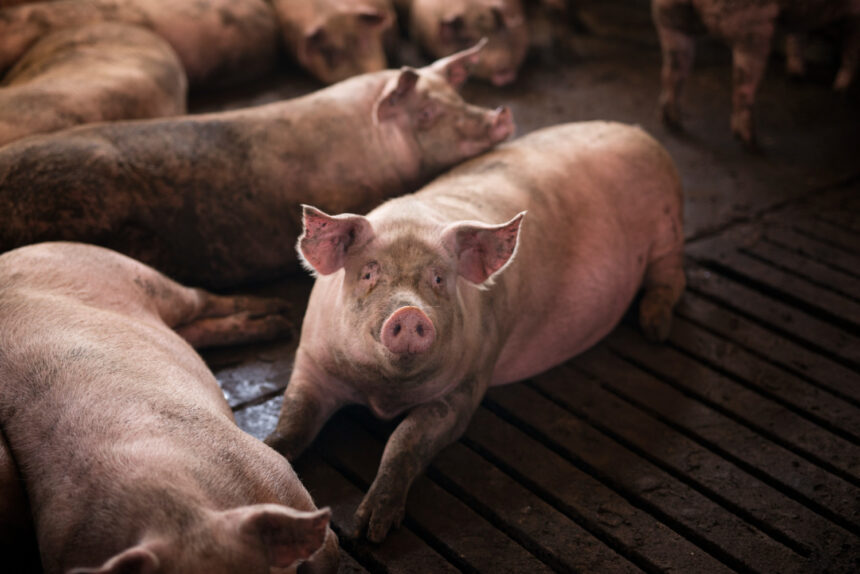
South Africa’s pig industry is navigating a complex and increasingly interconnected risk environment that demands a broader approach to disease prevention and control. African swine fever continues to pose the most significant threat to the sector, with the potential to disrupt production, trade, and food security. However, recent disease pressures across the wider livestock landscape have exposed a deeper issue that extends beyond individual farms. Biosecurity can no longer be treated as a closed system limited to on-farm practices. Instead, it must be understood as a continuous process that stretches across the entire agricultural value chain. This shift is forcing producers and stakeholders to rethink how risk is managed at every stage of production and supply.
Traditionally, biosecurity in pig farming has focused on measures implemented within farm boundaries. These include controlling access to facilities, enforcing sanitation protocols, managing animal movements, and maintaining strict staff procedures. These actions remain critical and form the foundation of disease prevention strategies. However, they represent only one layer of protection in a much larger and more complex system. As production systems evolve and become more integrated, relying solely on on-farm controls is no longer sufficient. The industry must now address risks that originate beyond the farm and move through interconnected networks.
Modern pig production is deeply linked to a wider agricultural value chain that includes feed production, transport systems, raw material sourcing, and logistics. Each of these components creates points of connection between farms, regions, and sectors, increasing both efficiency and exposure to risk. Feed plays a central role in this system, as it is the largest input cost in pig production and a key driver of performance. At the same time, it connects multiple stages of the supply chain, from grain production to processing, storage, and delivery. Any weakness within this chain can introduce disease risks that bypass traditional farm-level controls.
Every step in the feed supply chain carries responsibility for maintaining biosecurity standards. Safe sourcing of raw materials is essential to prevent contamination at the earliest stage. Feed mills must follow strict hygiene protocols to ensure that production environments remain clean and controlled. Transport systems must be properly sanitised to avoid cross-contamination between farms and regions. Traceability systems must be robust enough to track inputs and identify potential risks quickly. As the industry becomes more efficient and interconnected, the margin for error becomes smaller, and the consequences of failure become more severe.
The responsibility for maintaining biosecurity does not rest with producers alone. The feed manufacturing sector and pig producers share a common goal of protecting animal health, ensuring food safety, and maintaining consumer confidence in pork products. This shared objective requires a coordinated approach that aligns practices across the value chain. Producers must continue to enforce strict on-farm protocols while also engaging with suppliers and partners who prioritise biosecurity. Working with trusted suppliers and understanding sourcing pathways are now essential parts of farm management. This level of coordination strengthens the entire system and reduces the likelihood of disease outbreaks.
Consistency across all levels of the value chain is critical to building an effective defence against disease threats. Each disinfected vehicle, each verified supplier, and each compliant process contributes to a stronger and more resilient system. At the same time, a single lapse in biosecurity at any point in the chain can compromise even the most rigorous farm-level measures. This reality highlights the need for discipline and accountability across all stakeholders. Biosecurity must be treated as a shared responsibility that requires continuous attention and commitment.
Collaboration has become a central pillar in strengthening the pig industry’s response to disease risks. Through ongoing engagement with feed manufacturers, veterinarians, regulators, and industry stakeholders, the South African Pork Producer’s Organisation continues to promote practical and science-based biosecurity measures. These include controlled farm access, improved sanitation protocols, responsible feed sourcing, clean transport practices, and full traceability systems. These efforts are designed not only to protect herd health but also to support long-term production sustainability. By promoting alignment across the value chain, the industry is building a more unified and effective response to emerging threats.
South Africa’s pig industry is entering a phase where resilience will depend on collective effort rather than isolated action. The interconnected nature of modern agriculture means that risks travel across systems, making coordinated management essential. Biosecurity must now be viewed as a dynamic process that extends beyond the farm gate and into every link of the value chain. Protecting the national herd requires a unified commitment from all stakeholders, supported by consistent practices and shared accountability. As the industry adapts to this reality, its ability to manage risk effectively will determine its long-term stability and success.
Join 'Farmers Mag' WhatsApp Channel
Get the latest Farming news and tips delivered straight to your WhatsApp
CLICK HERE TO JOIN