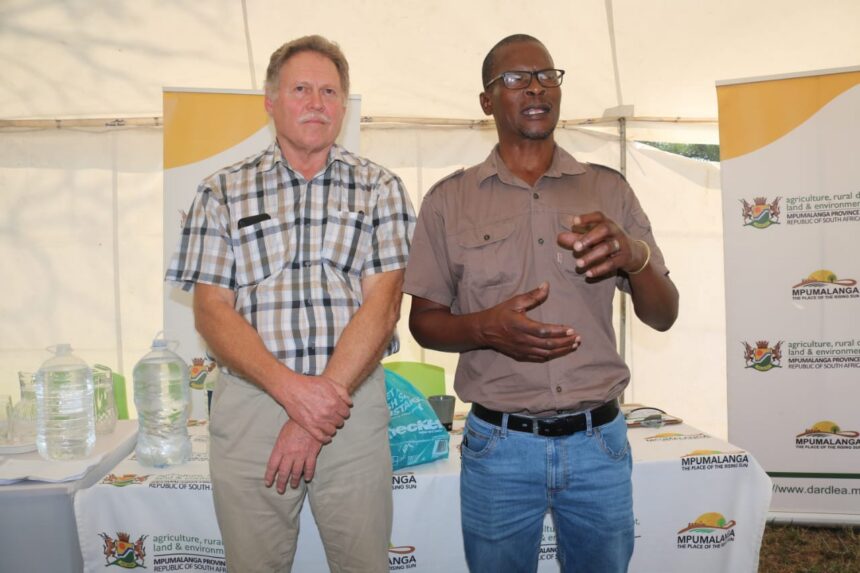
A successful Farmers Information Day was recently held in Dierefeng tsa Witlaagte near Nokaneng under the Dr J.S Moroka Local Municipality, bringing together farmers, extension officers and agricultural specialists to strengthen grain production knowledge and improve food security in the region. The event focused on the promotion of Tela Maize and other grain crops that are better suited to local environmental conditions. Farmers attended practical sessions designed to share research-based farming methods that can improve yields while reducing production risks. The initiative forms part of broader efforts to support climate-smart agriculture in areas that are increasingly affected by unpredictable rainfall and soil degradation. It also created a platform for knowledge exchange between farmers and technical experts working in the agricultural sector. The strong turnout reflected growing interest among farmers in adopting improved production practices.
The programme brought together key institutions including the Agricultural Research Council, the national Department of Land Reform and Rural Development, the Department of Agriculture, and DARDLEA, all contributing specialised knowledge to support local farmers. Each institution presented practical solutions aimed at improving grain production systems and strengthening long-term agricultural sustainability. Topics covered during the sessions included maize and cowpea cultivar trials, groundnut production techniques, soil sampling methods and nematode management strategies. Farmers were given insights into how different crop varieties perform under local conditions and how proper soil analysis can guide better input decisions. The collaborative approach ensured that farmers received both scientific knowledge and practical guidance they can apply directly on their farms. This multi-institutional support model is designed to improve productivity while reducing risks associated with crop failure.
Tela Maize was one of the key focus areas of the Farmers Information Day due to its strong performance in challenging growing conditions. The crop is known for its drought tolerance, making it suitable for regions where rainfall is inconsistent or limited. It also offers natural resistance to certain insect pests, which reduces the need for excessive pesticide use and lowers production costs for farmers. Farmers were encouraged to consider Tela Maize as part of their crop rotation systems to improve resilience and yield stability. Specialists explained that selecting the right crop varieties is one of the most important decisions in achieving successful harvests. The adaptability of Tela Maize makes it a valuable option for small-scale and emerging farmers working in variable climatic zones.
Soil health management was another critical topic addressed during the event, with strong emphasis placed on the importance of soil sampling before planting. Experts explained that soil testing helps farmers understand nutrient levels and identify deficiencies that may affect crop growth. Without proper soil analysis, farmers often apply incorrect fertiliser combinations, leading to reduced yields and increased costs. Participants were trained on how to collect soil samples correctly and interpret basic results to guide fertiliser application. This approach allows farmers to make informed decisions that improve productivity while protecting long-term soil fertility. Healthy soil was highlighted as the foundation of sustainable grain production systems.
Nematode management was also discussed as a key challenge affecting grain production in many farming areas. These microscopic pests can damage plant roots, reducing the ability of crops to absorb water and nutrients effectively. Farmers were educated on early detection methods and preventative strategies that help reduce infestation levels. Crop rotation and the use of resistant varieties were recommended as effective control measures. Specialists stressed that ignoring nematode problems can lead to significant yield losses over time. The session aimed to equip farmers with practical tools to protect their crops and maintain stable production.
Extension officers played an important role during the Farmers Information Day by linking research findings with practical farming advice. They guided farmers on how to implement new techniques in real field conditions and provided ongoing support for production planning. Farmers were encouraged to work closely with extension services to ensure continuous improvement in their farming operations. The presence of multiple experts allowed participants to receive clear, practical answers to challenges they face during the planting season. This hands-on support model helps bridge the gap between agricultural research and everyday farming practices. It also strengthens trust between farmers and support institutions.
The event highlighted the importance of using evidence-based farming practices to improve yields and reduce risks in grain production. By introducing farmers to improved maize and legume varieties, the programme supports diversification and better food security outcomes. Farmers were encouraged to adopt integrated approaches that combine soil testing, pest management and improved seed selection. These practices work together to improve productivity and reduce dependency on unpredictable weather patterns. The focus on climate-smart agriculture reflects the growing need to adapt farming systems to changing environmental conditions. It also supports long-term sustainability in rural agricultural communities.
The Farmers Information Day in Witlaagte demonstrated the value of bringing farmers and technical experts together to share knowledge and improve agricultural practices. The promotion of Tela Maize and other grain crops provided farmers with practical options for improving resilience and productivity. With support from key agricultural institutions, participants gained valuable skills in soil management, pest control and crop selection. The emphasis on research-backed methods ensures that farmers are better equipped to handle production challenges and improve yields. Continued engagement of this nature will play a vital role in strengthening food security and building more sustainable farming systems in the Dr J.S Moroka Local Municipality and surrounding areas.
Join 'Farmers Mag' WhatsApp Channel
Get the latest Farming news and tips delivered straight to your WhatsApp
CLICK HERE TO JOIN