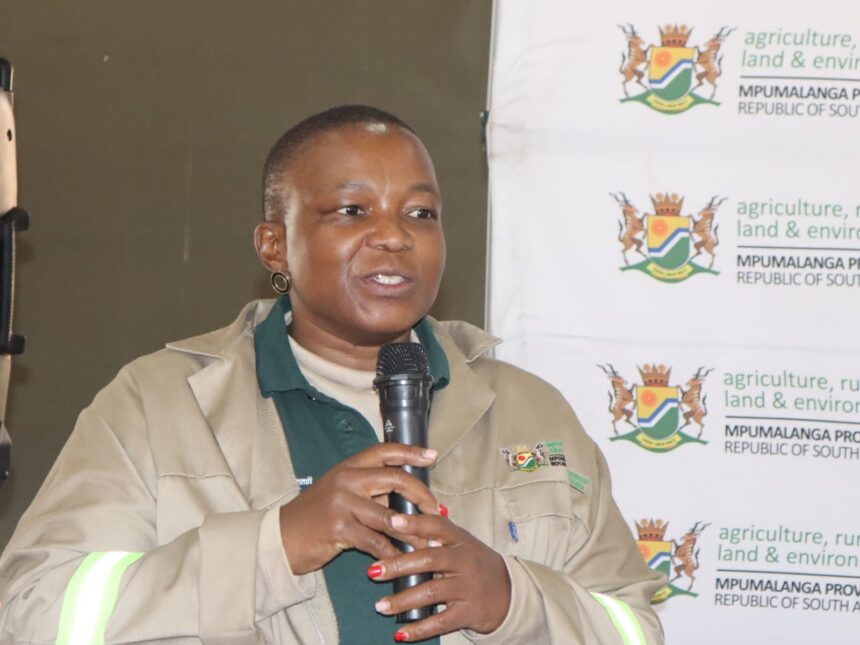
The livestock farming sector in the Chief Albert Luthuli Municipality is set for important improvements following a stakeholder engagement between farmers and MEC Khethiwe Moeketsi at the Manzana Cultural Centre. The meeting focused on practical interventions needed to strengthen cattle farming and improve rural agricultural infrastructure. A key commitment from the engagement was the construction of five additional diptanks to support livestock health and disease control in the area. Farmers from across the municipality attended the session and shared detailed challenges affecting their operations. The discussions highlighted the urgent need for better veterinary infrastructure, improved water access and stronger government support systems. The engagement created a direct platform for farmers to raise concerns and receive immediate responses from provincial leadership.
One of the central issues raised during the meeting was the lack of adequate diptank infrastructure, which continues to affect livestock health management in many rural areas. Diptanks play a critical role in controlling parasites and preventing disease outbreaks among cattle, especially in communal farming systems. The planned construction of five new diptanks within the Chief Albert Luthuli Municipality is expected to significantly improve access to livestock health services. Farmers emphasised that long distances to existing facilities often result in delays in treatment and increased livestock losses. Improved infrastructure will reduce travel time and ensure more consistent animal health monitoring. This development is seen as a key step toward strengthening the local livestock economy.
Water scarcity was another major concern raised by farmers during the engagement, particularly in areas where boreholes are either non-functional or non-existent. Engineers have been tasked with assessing affected farms to identify water challenges and determine suitable locations for borehole drilling. Reliable water access is essential for both livestock survival and the efficient operation of diptank systems. Without consistent water supply, farmers struggle to maintain herd health and productivity levels. The planned assessments aim to ensure that infrastructure investments are guided by accurate technical evaluations. This approach is intended to provide long-term solutions rather than temporary fixes.
Financial support for farmers also formed part of the key commitments discussed during the stakeholder engagement. Farmers were encouraged to submit complete documentation and viable business plans to improve their chances of accessing funding opportunities. This requirement is intended to ensure that financial assistance is directed toward sustainable and well-structured farming enterprises. Proper planning and documentation help improve accountability and increase the success rate of funded projects. MEC Moeketsi emphasised that financial support must translate into measurable improvements in production and livelihoods. The focus is on building resilient farming operations that can function independently over time.
A strong message during the engagement was the importance of farmers working toward self-sufficiency once they receive government support. The aim is to reduce long-term dependency on state assistance by building skills, capacity and sustainable production systems. Farmers were encouraged to use support programmes as a foundation for growth rather than a permanent solution. This approach is intended to strengthen local agricultural economies and empower communities to manage their own production cycles effectively. MEC Moeketsi stressed that sustainability depends on both government intervention and farmer responsibility. The success of agricultural development programmes relies heavily on shared commitment and accountability.
The atmosphere at the Manzana Cultural Centre reflected the intensity of the challenges faced by farmers in the Chief Albert Luthuli Municipality. Many farmers expressed frustration over infrastructure gaps and inconsistent service delivery, which directly affect livestock productivity. MEC Moeketsi acknowledged these concerns and committed to stronger oversight to ensure that government resources reach intended beneficiaries. She emphasised the importance of transparency and accountability in all agricultural support programmes. The engagement allowed for open dialogue between farmers and government officials, creating a clearer understanding of priorities and expectations. This direct communication is essential for improving trust and cooperation within rural development initiatives.
Collaboration between farmers and the Department was identified as a key requirement for achieving long-term agricultural sustainability. Farmers were encouraged to actively participate in planning processes and maintain regular communication with government structures. Such cooperation ensures that infrastructure projects like diptank construction and borehole drilling are aligned with real community needs. It also improves the efficiency of service delivery and reduces the risk of resource misallocation. MEC Moeketsi highlighted that successful agricultural development depends on partnership rather than top-down implementation alone. Strengthening these relationships is expected to improve overall outcomes in livestock farming.
The commitments made during the stakeholder engagement at the Manzana Cultural Centre represent a significant step forward for livestock farming in the Chief Albert Luthuli Municipality. The planned construction of five new diptanks, improved water infrastructure through borehole assessments and expanded financial support mechanisms all aim to strengthen rural agriculture. These interventions are designed to improve livestock health, increase productivity and support long-term sustainability. However, their success will depend on effective collaboration between government and farmers. With shared responsibility and continued engagement, the municipality can build a stronger and more self-sufficient livestock farming sector that supports rural development and economic growth.
Join 'Farmers Mag' WhatsApp Channel
Get the latest Farming news and tips delivered straight to your WhatsApp
CLICK HERE TO JOIN