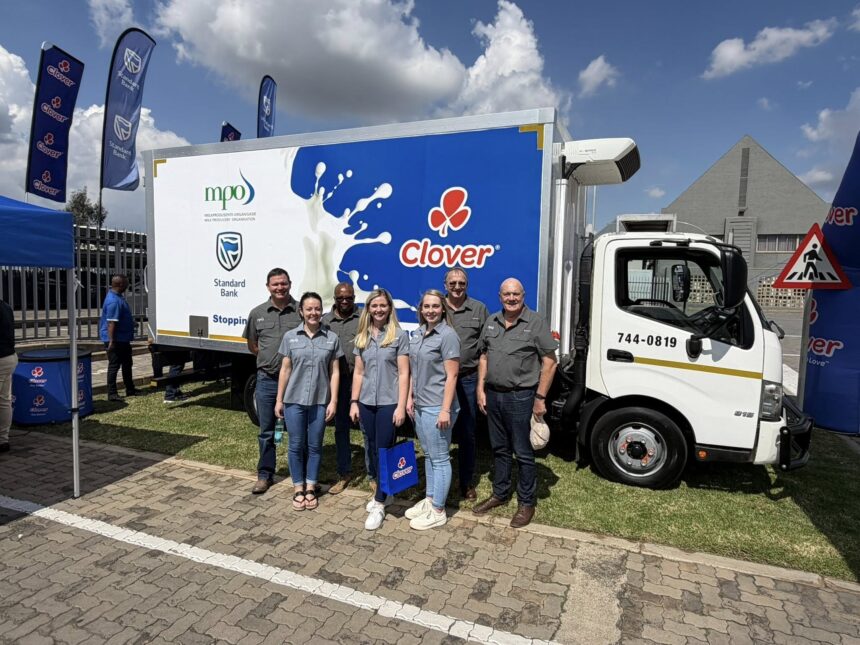
Foot-and-mouth disease continues to place severe pressure on livestock farming in South Africa, affecting cattle health, milk production, rural livelihoods, and the wider agricultural economy. A powerful new partnership between Standard Bank, Clover, and the Milk Producers’ Organisation (MPO) has introduced a practical response aimed at improving vaccine delivery and strengthening national disease control efforts. The initiative focuses on a chilled mobile vaccination vehicle designed to maintain vaccine integrity from storage to farm-level administration. This solution directly targets long standing logistical challenges that have limited effective vaccination in remote and under-resourced farming communities. It also reflects growing cooperation between financial institutions, agribusinesses, and producer organisations. The goal is to improve livestock health, protect rural economies, and secure the agricultural value chain. This collaboration marks a shift toward practical, field-based solutions that support national biosecurity.
The chilled mobile vaccination vehicle is the core innovation behind this initiative and plays a critical role in maintaining the cold chain required for foot-and-mouth disease vaccines. These vaccines must remain at strict temperatures throughout transport and administration to remain effective. In many rural areas of South Africa, long travel distances, limited infrastructure, and inconsistent refrigeration have made this difficult to achieve. The mobile unit solves this challenge by bringing refrigeration directly into farming regions, allowing veterinary teams to operate closer to livestock herds. This reduces delays, improves vaccine quality at the point of use, and increases the number of animals that can be reached in each campaign. It also reduces vaccine wastage caused by temperature breakdowns during transport. As a result, vaccination efforts become more efficient and more reliable.
The partnership between Standard Bank, Clover, and the MPO strengthens the entire livestock health system by combining financial support, technical expertise, and producer representation. Standard Bank contributes infrastructure support and coordination capacity, helping to scale the programme effectively. Clover brings cold chain logistics expertise and dairy industry experience, while the MPO represents milk producers who are directly impacted by outbreaks. This combination ensures that each part of the vaccination process is supported, from planning and storage to delivery and on-farm administration. By working together, these organisations reduce gaps in the supply chain that previously slowed vaccine rollout. The collaboration also improves communication between stakeholders, which is essential during outbreak responses. This coordinated model strengthens national capacity to respond to animal health threats.
The vaccination programme forms part of a broader national strategy led by the Department of Agriculture in South Africa to control and reduce the spread of foot-and-mouth disease. The plan targets the vaccination of more than 14 million cattle, covering over 80 percent of the national herd. High-risk regions, including KwaZulu-Natal, are prioritised due to recent outbreaks and higher transmission risk. The scale of the programme requires strong cooperation between government and private sector partners to ensure timely delivery. Without such collaboration, logistical constraints would slow down national coverage. The mobile vaccination vehicles help bridge this gap by improving access in remote farming areas. This increases the speed and reach of the national vaccination drive.
Livestock health plays a central role in rural economies across South Africa, where cattle farming supports income generation, employment, and food security. Foot-and-mouth disease disrupts this system by reducing milk yields, limiting livestock movement, and increasing production costs for farmers. It also affects related industries such as transport, meat processing, and agricultural trade. When outbreaks occur, the economic impact spreads beyond farms into entire value chains. Vaccination remains one of the most effective tools for controlling the disease and reducing these losses. The mobile vaccination initiative improves access to this protection by ensuring vaccines reach farmers in the correct condition. This helps stabilise production and reduce long term economic disruption.
The dairy sector has been particularly affected by recent outbreaks, making timely intervention critical for producers. Dairy farmers rely on consistent herd health to maintain milk supply, manage costs, and meet market demand. Foot-and-mouth disease outbreaks can lead to reduced output, increased veterinary expenses, and movement restrictions that disrupt operations. The MPO has emphasised the importance of ensuring vaccines are distributed efficiently and under proper conditions. The chilled mobile units directly address this need by maintaining the cold chain throughout transport and field use. This improves trust in vaccination programmes and encourages wider participation among farmers. It also supports stable milk supply chains for local markets.
Cold chain management is one of the most important elements of the programme and a key reason for its design. Vaccine effectiveness depends entirely on temperature stability from storage to administration. Inconsistent refrigeration has been a major barrier in rural vaccination campaigns in South Africa. The mobile units eliminate this weakness by providing continuous cooling during transport and field operations. This reduces losses, improves efficiency, and ensures better use of limited vaccine supplies. It also strengthens overall disease control outcomes by improving vaccination success rates. Strong cold chain systems are essential for protecting both animal health and agricultural productivity.
The partnership also reflects a broader shift toward collaborative agricultural resilience strategies in South Africa. Instead of relying on a single institution, the response to foot-and-mouth disease now involves shared responsibility across public and private sectors. This approach improves speed, efficiency, and coverage during outbreak responses. It also reduces pressure on government systems by expanding available resources and expertise. Financial institutions, agribusinesses, and producer organisations each play a defined role in strengthening the system. This model demonstrates how coordinated action can deliver practical solutions to complex agricultural challenges. It also supports long term improvements in animal health infrastructure.
The partnership between Standard Bank, Clover, and the Milk Producers’ Organisation represents a significant advancement in the fight against foot-and-mouth disease in South Africa. The introduction of chilled mobile vaccination vehicles improves vaccine delivery, strengthens cold chain systems, and expands access to rural farming communities. It supports livestock health, protects rural economies, and safeguards the agricultural value chain from the impact of disease outbreaks. By combining financial, technical, and producer expertise, the initiative creates a stronger and more coordinated response system. It also improves efficiency in the national vaccination programme targeting millions of cattle. This collaboration shows how practical innovation and partnership can solve real farming challenges. It sets a strong example of how agriculture, finance, and industry can work together to protect the future of livestock farming.
Join 'Farmers Mag' WhatsApp Channel
Get the latest Farming news and tips delivered straight to your WhatsApp
CLICK HERE TO JOIN