

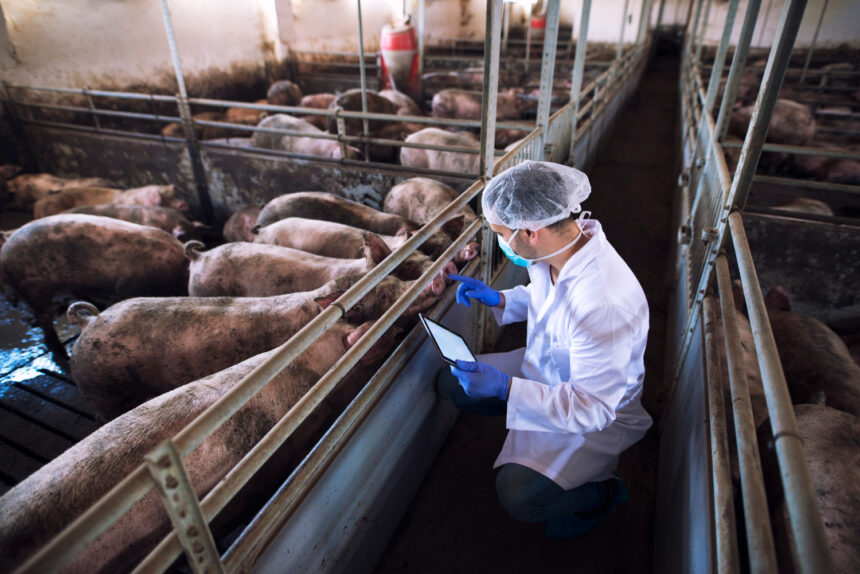
South Africa’s pork industry is navigating a complex period shaped by animal disease outbreaks, global market uncertainty, and local economic pressure. Amid widespread foot-and-mouth disease (FMD) outbreaks, the sector has felt ripple effects that are expected to become more visible over time. While the impact has not been as severe as in some other livestock industries, producers are operating in a more cautious and high risk environment. The South African Pork Producers Organisation (Sappo) has highlighted that the combination of disease threats and economic strain is influencing growth plans. Despite these challenges, the industry continues to demonstrate resilience and adaptability.
At a recent media day in Cape Town, Sappo chief executive officer Dr Marlene Louw explained that FMD remains the biggest local threat to the pork sector. She noted that the outbreak is not only affecting production systems but also limiting expansion opportunities for farmers. Beyond disease concerns, global geopolitics have added further pressure by disrupting trade flows and increasing uncertainty in export markets. At the same time, South African consumers are facing financial strain, which directly affects purchasing behaviour. Many households now prioritise affordable meat cuts, which places additional pressure on producers to balance cost and supply.
Despite these challenges, the pork industry has shown strong performance in terms of value growth. According to Dr Louw, the sector recorded a 14% increase in value, which reflects underlying strength even under difficult conditions. She emphasised that profitability in the sector remains stable and that South Africa continues to perform well compared to global peers. In fact, the country is currently ranked as the third most efficient pork producer in the world. This position highlights improvements in production systems, efficiency, and industry coordination over time.
A key concern for the industry remains biosecurity and disease response capacity. Dr Louw noted that South Africa’s responsiveness to FMD has improved significantly since late 2025. Producers and industry bodies are now better prepared to detect, manage, and respond to outbreaks. This improved coordination has helped reduce the severity of disruptions in some regions. Collaboration between farmers, organisations, and government structures has become essential in controlling disease spread and protecting production systems.
The industry has reported 16 FMD outbreaks, with cases concentrated mainly in North West and KwaZulu-Natal. These regions have been closely monitored due to their livestock density and movement patterns. At the same time, some provinces such as the Western Cape have remained free of outbreaks in pig farming, showing that containment efforts can be effective when properly implemented. The cooperation between stakeholders has been critical in limiting further spread and maintaining supply stability. This collective response continues to play a major role in safeguarding the industry.
Vaccination and disease management strategies have also been central to industry efforts. Dr Thandi Chiappero, head of consumer assurance at Sappo, explained that limited vaccine availability required careful prioritisation. Vaccination efforts were directed to high risk areas to maximise impact and control spread effectively. She noted that coordination across the sector has been strong, with producers, regulators, and industry bodies working closely together. This coordinated approach has helped ensure that responses remain targeted and efficient despite resource constraints.
In addition to disease control, Sappo has introduced digital tools to improve transparency and traceability in the pork value chain. One of the key innovations is the Pork 360 app, which allows stakeholders to track pork products from production to consumption. This system includes producers, retailers, chefs, and consumers, creating a transparent supply chain that strengthens food safety and accountability. According to Dr Chiappero, the platform has become a game changer for the industry and forms part of a broader strategic development plan. It also helps build consumer confidence by ensuring visibility across the entire production process.
Traceability systems like Pork 360 are increasingly important in modern food industries where consumers demand greater transparency. They also support export readiness by meeting international compliance standards. For South African producers, this strengthens competitiveness in global markets while improving domestic trust. The adoption of such systems reflects a shift towards technology driven agriculture and smarter supply chain management. It also demonstrates how the industry is adapting to both local and international expectations.
While concerns around imports and market pressure exist, industry leaders have urged calm among consumers and stakeholders. Dr Louw emphasised that there is currently enough pork supply in the country and no immediate risk to food security. She also noted that quality standards remain strong despite external pressures. The focus, she explained, should be on maintaining efficiency and protecting livelihoods within the sector. This approach ensures that the industry remains stable while continuing to serve both domestic and export markets.
The South African pork industry is clearly operating in a challenging environment shaped by disease, economic pressure, and global uncertainty. However, it is also demonstrating resilience through improved disease management, technological innovation, and strong collaboration. With better preparedness against FMD, growing use of traceability systems, and continued efficiency gains, the sector is positioning itself for long term stability. While risks remain, the industry continues to adapt in ways that support both producers and consumers. Its future growth will depend on sustained coordination, investment in biosecurity, and continued innovation across the value chain.
Join 'Farmers Mag' WhatsApp Channel
Get the latest Farming news and tips delivered straight to your WhatsApp
CLICK HERE TO JOIN




