
South Africa’s response to the ongoing Foot and Mouth Disease outbreak is beginning to show measurable progress, according to the Minister of Agriculture, John Steenhuisen. Early data from the national vaccination campaign indicates that the strategy is working, particularly in protecting herds that have already received vaccines. One of the most important indicators is that there have been no new infections in vaccinated herds, which points to strong vaccine effectiveness. This outcome provides reassurance to farmers and the broader agricultural sector that the current approach is delivering results. It also reflects a coordinated effort between government and industry stakeholders to contain a disease that poses serious economic risks.
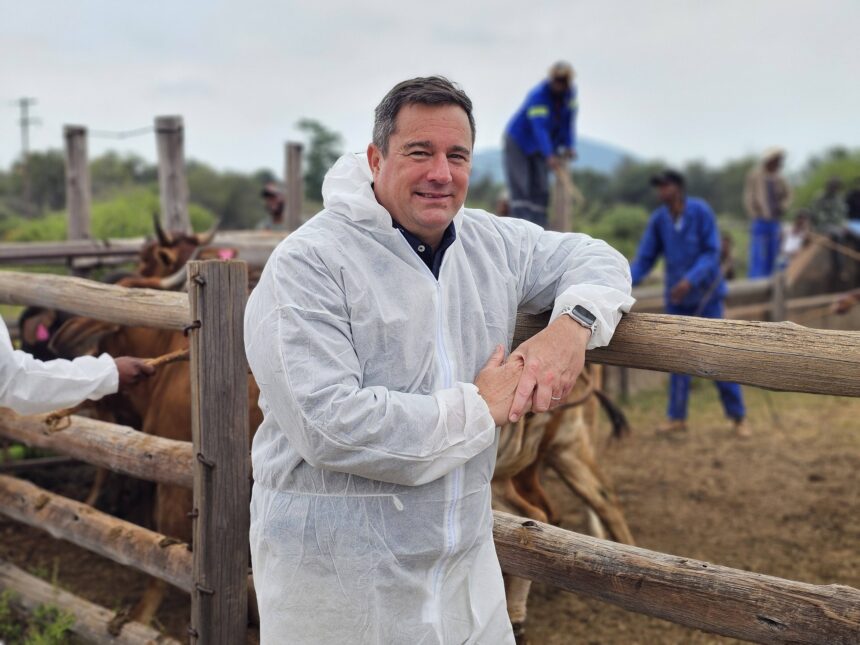
The scale of the vaccination campaign has been significant, with provinces administering over two million doses in a short period. From February 2026 to 26 March 2026, a total of 2,033,289 animals were vaccinated across the country. This rapid rollout demonstrates both logistical capacity and urgency in addressing the outbreak. The government has prioritised areas with high concentrations of susceptible livestock, ensuring that the most at risk regions receive immediate attention. This targeted approach helps maximise the impact of available vaccine supplies. It also allows authorities to manage the outbreak more effectively by focusing resources where they are needed most.
Despite these gains, Foot and Mouth Disease remains present across all nine provinces, although the severity differs by region. As of 10 April 2026, South Africa has recorded 1,317 cases nationwide. The Free State leads with 328 cases, followed by North West with 247 cases. Gauteng has reported 241 cases, while KwaZulu-Natal stands at 225 cases. Other provinces include Mpumalanga with 140 cases, Eastern Cape with 71, Limpopo with 49, Western Cape with 13 and Northern Cape with only 3 cases. These figures highlight both the widespread nature of the outbreak and the uneven distribution of infections across regions. They also underscore the need for continued vigilance and targeted interventions.
The recent increase in reported cases is not solely due to a worsening outbreak but also reflects improvements in detection and reporting systems. The government has strengthened surveillance and introduced a centralised reporting system that allows faster identification of cases. Increased awareness among farmers and veterinary teams has also played a role in identifying sub clinical infections, where animals carry the virus without visible symptoms. These cases were often missed in the past, which led to underreporting. The improved system now provides a more accurate picture of the outbreak. This data driven approach supports better decision making and resource allocation.
Securing a stable vaccine supply has been a critical part of the response strategy. The government has already obtained four million doses, including 2.5 million from Biogénesis Bagó in Argentina and 1.5 million from Dollvet in Turkey. Additional shipments are expected, with two million doses from Dollvet scheduled to arrive by the end of April. A further order of five million doses has been placed with Onderstepoort Biological Products, with 3.5 million doses expected before the end of April 2026. These supply agreements ensure that the vaccination programme can continue without disruption. They also reflect strong international cooperation in addressing the outbreak.
The vaccination campaign has been implemented using a risk based approach that focuses on high impact sectors such as dairy farming. In the Free State, all recorded dairies have already been vaccinated, which helps protect a key part of the agricultural economy. In the Western Cape, major dairy operations have also been fully covered. KwaZulu-Natal and Eastern Cape have received large allocations due to their high livestock populations, with over 78,000 doses already distributed to the Milk Producers Organisation in the Eastern Cape. KwaZulu-Natal alone has been allocated 250,000 doses, with an additional 100,000 recently added. This targeted distribution ensures that critical production areas remain protected.
Looking ahead, the government is taking steps to formalise long term disease control measures through policy. On 10 April 2026, Minister Steenhuisen announced plans to publish the Routine Vaccination Scheme for Foot and Mouth Disease under the Animal Diseases Act. This scheme aims to establish a structured and ongoing vaccination programme rather than relying only on emergency responses. Stakeholders have been invited to submit comments before the closing date of 17 April 2026. This consultative process allows industry participants to contribute to the final framework. It also ensures that the policy reflects practical realities on the ground.
South Africa’s response to Foot and Mouth Disease shows that coordinated action, strong surveillance and reliable vaccine supply can deliver results even in complex outbreaks. While challenges remain, the absence of new infections in vaccinated herds provides clear evidence that the strategy is effective. Continued investment in vaccination, monitoring and policy development will be critical in controlling the disease over the long term. The collaboration between government, farmers and industry bodies will also play a key role in sustaining progress. If current efforts are maintained, South Africa will be in a stronger position to protect its livestock sector and secure its agricultural economy.
Join 'Farmers Mag' WhatsApp Channel
Get the latest Farming news and tips delivered straight to your WhatsApp
CLICK HERE TO JOIN