

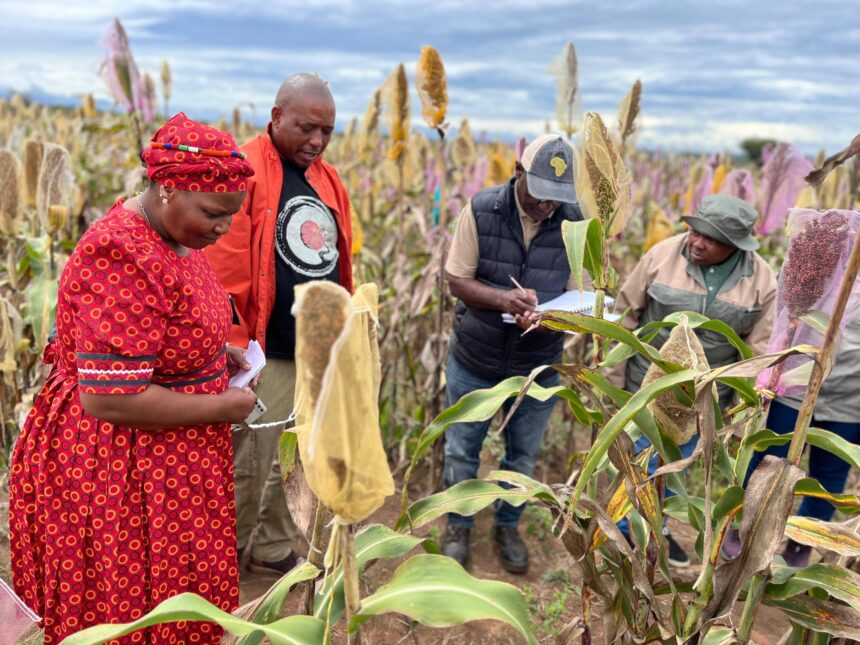
Farmers in Moletjie are taking practical steps to strengthen food security and improve resilience through focused agricultural innovation. The Limpopo Department of Agriculture and Rural Development is working closely with the Agricultural Research Council to support this progress. Their collaboration has brought together farmers, researchers and extension practitioners for the Sorghum Variety Trial Farmer’s Day in Ga-Mphela. This initiative forms part of a broader effort to align local farming practices with scientific research and climate realities. It also reflects a growing commitment to sustainable agriculture that responds directly to community needs.
The Farmer’s Day serves as a platform for knowledge exchange where indigenous farming practices meet structured scientific methods. Participants engage in discussions that focus on improving subsistence field crop productivity and strengthening household food systems. Researchers present updates on sorghum multi location trials while extension practitioners provide guidance on applying these findings at farm level. This approach ensures that research outcomes are practical and accessible to farmers. It also helps bridge the gap between traditional knowledge and modern agricultural science.
A central feature of the event is the field demonstration of sorghum trial plots, which allows farmers to observe results in real conditions. The trials include 14 different cultivars that are being tested over a three year period to determine performance under local environmental conditions. These trials focus on identifying varieties that can withstand climate stress while maintaining strong yields. Farmers are able to compare growth patterns, resistance to pests and overall productivity across the different cultivars. This direct exposure supports informed decision making when selecting crops for future planting seasons.
Training on climate smart agriculture is another key component of the programme. Farmers receive guidance on selecting cultivars that align with changing weather patterns and adapting to shifting rainfall cycles. Practical sessions cover pest and disease management as well as the benefits of crop rotation and mixed farming systems. There is also a strong emphasis on reducing reliance on synthetic inputs by encouraging the use of natural fertilisation methods. These strategies aim to improve soil health, reduce production costs and promote long term sustainability.
The event also highlights the importance of indigenous cereals such as sorghum in addressing food and nutritional security. Sorghum is well suited to dry conditions and requires less water compared to other staple crops, making it a strategic choice in areas affected by climate variability. By promoting its cultivation, the programme supports both resilience and dietary diversity within rural communities. Farmers are encouraged to view sorghum not only as a subsistence crop but also as a potential source of income. This shift in perspective can open new market opportunities and strengthen rural economies.
The host farmer, Ms Mphela Nora, shared that initiatives like these have a direct impact on local livelihoods. She noted that access to knowledge and improved farming techniques helps farmers increase yields and reduce uncertainty. This leads to better income stability and contributes to reducing poverty and unemployment in the area. She also highlighted how such programmes build confidence among farmers and encourage long term commitment to agriculture. Her experience reflects the broader benefits of combining research support with community participation.
The ongoing collaboration between the department and research institutions continues to shape a more resilient agricultural sector in Limpopo. Farmers are gaining practical tools that allow them to adapt, improve productivity and manage risks more effectively. The sorghum trials in Moletjie demonstrate how targeted interventions can deliver measurable results over time. As more farmers adopt these practices, the region stands to benefit from stronger food systems and sustainable production. Continued investment in research, training and collaboration will remain essential for maintaining this progress and ensuring lasting impact.
Join 'Farmers Mag' WhatsApp Channel
Get the latest Farming news and tips delivered straight to your WhatsApp
CLICK HERE TO JOIN




