

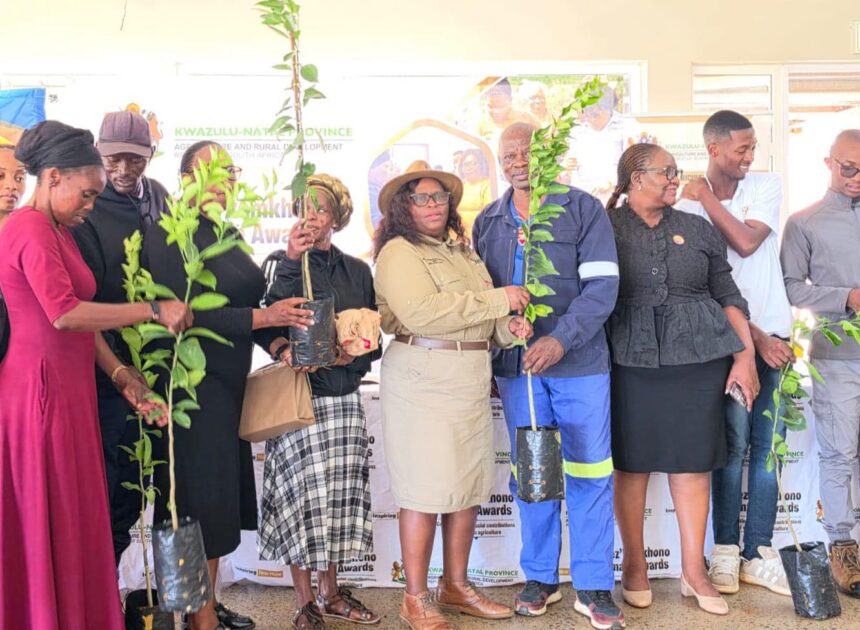
The MEC for the Department of Agriculture and Rural Development, Mrs Thembeni kaMadlopha-Mthethwa, has called on the public to actively participate in fruit tree planting as part of a wider strategy to address climate change and food insecurity. The initiative is linked to the “One Home One Garden” programme, which encourages households to grow their own food and improve access to nutritious produce. The campaign is designed to help communities become more self-reliant while also contributing to environmental sustainability. By promoting fruit trees, the department aims to combine climate action with improved household nutrition. This approach reflects a practical response to multiple social and environmental challenges facing rural communities.
As part of this initiative, MEC kaMadlopha-Mthethwa officially launched the Citrus Programme at Amajuba TVET College’s Dundee Campus by handing over 80 fruit trees. The trees included naartjies and oranges, which are well suited to local growing conditions. This distribution forms part of a larger provincial rollout involving 3000 fruit trees allocated across KwaZulu-Natal. Each district has received more than 250 citrus trees to ensure equal participation and impact. The programme is carefully structured to match tree varieties with the environmental conditions of each district, ensuring better survival rates and productivity.
During the launch, MEC kaMadlopha-Mthethwa addressed approximately 100 beneficiaries from the uMzinyathi District and emphasised the long term benefits of fruit tree planting. She explained that the programme is not limited to shade or ornamental trees but focuses on fruit trees that directly improve human health. Fruits such as lemons, oranges, and naartjies were highlighted for their nutritional value and immune boosting properties. The MEC stressed that access to such fruits can improve diets and support healthier communities. Her message reinforced the link between agriculture, health, and food security at household level.
Youth involvement was also a key focus of the initiative, with the MEC encouraging young people to take an active role in fruit tree planting projects. She noted that the department has dedicated this year to youth empowerment and sees agriculture as an important pathway for employment and entrepreneurship. By involving young people, the programme aims to build long term interest in farming and environmental stewardship. Schools, colleges, and youth groups are expected to play a growing role in expanding these efforts. This strategy ensures that knowledge and skills are transferred to the next generation of agricultural practitioners.
Beyond household food production, MEC kaMadlopha-Mthethwa also highlighted the commercial potential of the fruit industry. She encouraged communities to explore fruit farming as a business opportunity with strong income potential. South Africa already plays a significant role in global citrus production, contributing about 24 percent, just behind Spain at 25 percent. This positions the country as one of the leading exporters of citrus fruits such as oranges, lemons, grapefruits, and naartjies. The MEC explained that many of these fruits found in international markets are sourced from South Africa, creating opportunities for local farmers to participate in global trade.
She also acknowledged the broader economic challenges affecting agriculture, including global trade pressures, rising oil prices, and geopolitical tensions. Despite these challenges, she noted that there are positive developments in export markets, including the exemption of oranges from a 30 percent tariff in trade with the United States. This exemption provides relief to local exporters and supports the competitiveness of South African citrus products abroad. The MEC emphasised the importance of maintaining strong agricultural production systems to take advantage of such opportunities. These developments highlight the resilience of the agricultural sector in a changing global environment.
The fruit tree planting initiative led by MEC Thembeni kaMadlopha-Mthethwa represents a strategic effort to address climate change, food insecurity, and economic development simultaneously. Through the One Home One Garden programme and the Citrus Programme, communities are being empowered to grow nutritious food while also exploring commercial farming opportunities. The distribution of fruit trees across districts ensures inclusive participation and long term environmental benefits. The focus on youth involvement further strengthens the future sustainability of the initiative. This programme demonstrates how agriculture can be used as a powerful tool for health improvement, economic growth, and climate resilience in KwaZulu-Natal.
Join 'Farmers Mag' WhatsApp Channel
Get the latest Farming news and tips delivered straight to your WhatsApp
CLICK HERE TO JOIN




