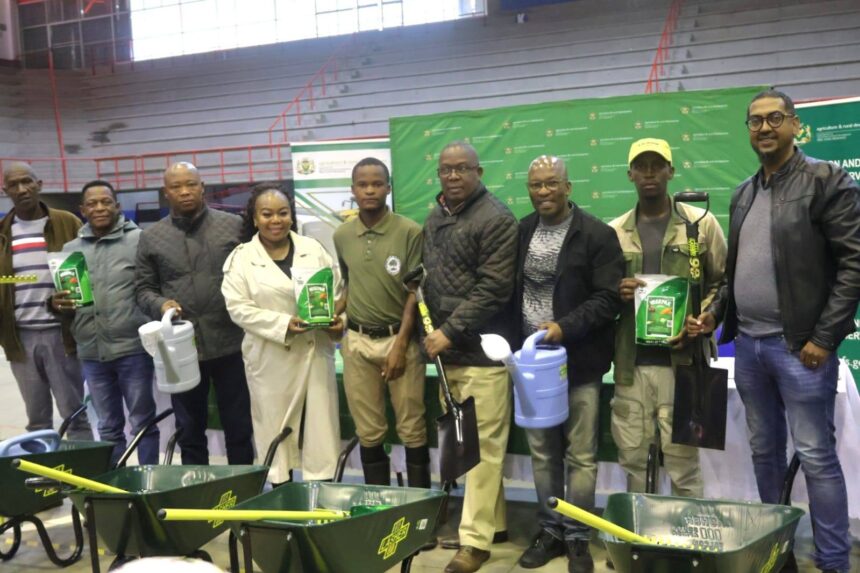
The Free State Department of Agriculture, Rural Development and Environmental Affairs continues to strengthen its commitment to food security and community development through a focused outreach programme that is already making a measurable impact. This initiative reflects a practical response to the needs of residents across the province, especially in areas where access to basic agricultural resources remains limited. By prioritising direct support, the department is helping communities take control of their own food production. The programme also aligns with broader provincial goals to reduce poverty and improve livelihoods through sustainable agriculture. Each rollout demonstrates a clear intention to move beyond policy and deliver real, usable support to people on the ground.
The latest phase of the programme took place in the Mangaung Metropolitan Municipality, with a specific focus on Thaba Nchu. Here, five public institutions and ninety two households received essential garden tools and seed packs. These resources are not symbolic, they are practical inputs that enable immediate planting and food production. Schools, community centres, and local organisations form part of the public institutions that benefit, ensuring that the impact extends beyond individual households. This structured distribution approach ensures that both community based and household level food systems receive support. It also increases the likelihood of long term sustainability by embedding agricultural practices in both public and private spaces.
The programme continued in Botshabelo, where the scale of distribution remained significant and targeted. Fifteen public institutions and sixty three households received similar support packages, reinforcing the department’s commitment to reaching as many beneficiaries as possible. The inclusion of multiple institutions in this phase highlights a deliberate strategy to build community wide resilience. When institutions such as schools and local centres participate, they create shared learning environments that encourage knowledge transfer. This approach helps communities develop practical agricultural skills while also promoting collaboration. It also ensures that the benefits of the programme extend beyond immediate consumption and contribute to long term food security.
This outreach programme directly fulfills a commitment made by Elzabe Rockman, the MEC responsible for the department. During farmer engagement sessions held in January and February, farmers clearly expressed the need for support in the form of garden tools and seed packs. These engagements provided a platform for farmers to share their challenges and outline practical solutions. The department’s response shows a clear alignment between community input and government action. By acting on these requests, the programme strengthens trust between government and local communities. It also demonstrates that engagement processes are not just formalities but lead to tangible outcomes.
The distribution of garden tools and seeds may appear simple, but it addresses several critical issues at once. It reduces the cost barrier for households that want to start or expand food gardens. It encourages self reliance by enabling families to grow their own food rather than depend entirely on external sources. It also supports nutrition by increasing access to fresh produce at household level. In public institutions, these resources can support feeding schemes and educational programmes focused on agriculture. This combination of economic, social, and health benefits makes the initiative a strategic investment rather than a once off intervention.
The continued rollout of this Community Outreach Programme positions the Free State as a province that is actively investing in grassroots development. By focusing on practical support, the department ensures that its interventions translate into visible results. The involvement of both households and institutions creates a layered impact that strengthens entire communities. As more areas receive support, the cumulative effect will likely contribute to improved food security across the province. This initiative shows that when government listens and responds with targeted action, it can create meaningful and lasting change in people’s daily lives.
Join 'Farmers Mag' WhatsApp Channel
Get the latest Farming news and tips delivered straight to your WhatsApp
CLICK HERE TO JOIN