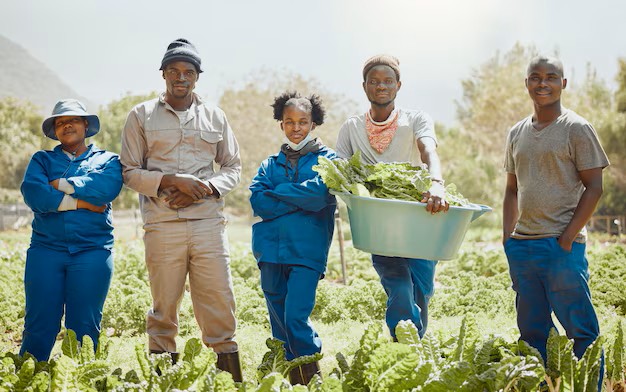
Farming in South Africa can be more than a source of food and income; it can also serve as a platform for creating meaningful employment opportunities. Farms that expand operations, diversify production, or add value to raw products can employ local workers, support rural communities, and strengthen the economy. Job creation on farms benefits both the employer and employees, providing skills development, financial stability, and long-term community growth. In regions where unemployment is high, particularly in rural areas, well-managed farms can become vital hubs for economic empowerment. By viewing the farm as a business with the potential to generate employment, farmers can contribute to social and economic development while enhancing productivity and sustainability.
Diversification is a key strategy for creating jobs on a farm. By adding value to crops, producing processed products, or branching into livestock and aquaculture, farmers can expand their workforce. For example, a vegetable farm can hire workers for planting, harvesting, processing, packaging, and marketing fresh produce. Livestock farms may employ additional staff for animal care, feed management, and meat or dairy processing. Agro-processing enterprises, such as jam, juice, cheese, or dried fruit production, require a combination of skilled and semi-skilled labor, creating opportunities beyond the farm gate. Diversification allows farmers to scale their operations while providing a variety of employment options for the local workforce.
Training and skills development are critical when creating sustainable jobs on a farm. Employees who receive proper guidance in farm management, machinery operation, animal care, and crop production are more productive and can take on greater responsibilities. Offering training programs on safety, hygiene, and quality standards also helps ensure that farm products meet market requirements. Investing in human capital benefits the farm through improved efficiency, reduced losses, and higher-quality output. It also empowers workers to gain transferable skills, which enhances their long-term employability and contributes to broader rural development.
Partnerships and community engagement can further expand employment opportunities on a farm. Collaborating with local schools, agricultural colleges, and cooperatives can provide access to interns, apprentices, and seasonal workers. Community-based programs can encourage youth participation in agriculture, exposing them to practical experience and entrepreneurial opportunities. Additionally, government grants and development programs often provide funding for labor-intensive agricultural projects, creating more openings for local employment. By integrating the farm into the wider community, farmers not only increase their workforce but also build goodwill and social support that strengthens long-term operations.
Effective planning is essential for ensuring that farm-based employment is sustainable and beneficial for both the farm and workers. Farmers should evaluate labor needs based on seasonal cycles, production goals, and expansion plans. Maintaining fair wages, safe working conditions, and clear job descriptions helps attract and retain reliable staff. Providing opportunities for advancement and recognizing performance encourages loyalty and improves farm efficiency. Creating jobs on a farm is not only a business decision but also a social responsibility that supports rural livelihoods, strengthens communities, and contributes to national economic growth. Farmers who approach employment strategically can transform their operations into engines of prosperity and resilience for both workers and the broader region.
Join 'Farmers Mag' WhatsApp Channel
Get the latest Farming news and tips delivered straight to your WhatsApp
CLICK HERE TO JOIN