

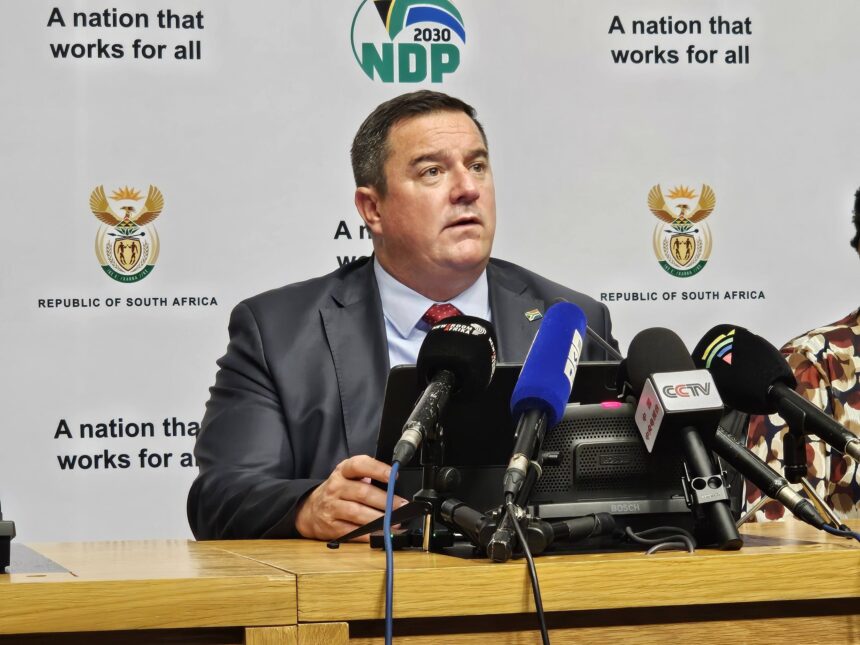
Minister John Steenhuisen recently spoke to Carte Blanche to detail South Africa’s strategy to contain the ongoing Foot and Mouth Disease (FMD) outbreak. The government is taking a multi-pronged approach, focusing on vaccine supply, logistics, and public-private collaboration to stabilise the livestock sector. The country has relied on the Botswana Vaccine Institute (BVI) for its imported vaccines, but production delays at BVI have prompted the government to diversify suppliers. Minister Steenhuisen confirmed that vaccines will now be sourced from multiple international suppliers, tested locally, and fast-tracked for emergency approval to ensure South Africa maintains a continuous stock.
Vaccinations will be administered directly at farm level to avoid concentrating animals in one location, reducing the risk of further spread. Both state and private veterinarians will handle the rollout, supported by established cold storage facilities. The government is working with the Onderstepoort Biological Products (OBP) storage facility, which has undergone audits and restructuring to ensure accountability. Minister Steenhuisen emphasised that all vaccines and permits are closely monitored, and any obstructions within the department are addressed to maintain the vaccination program’s efficiency.
South Africa is currently dealing with three FMD strains: SAT 1, SAT 2, and SAT 3, with SAT 2 being most prevalent in KwaZulu-Natal and the Free State. Field strains have been submitted to the international Pirbright Institute to match with available vaccines, marking a key step in strengthening national response capabilities. This move restores scientific procedures that were discontinued 14 years ago, ensuring the country can respond to outbreaks with accurate, strain-specific vaccines.
The minister addressed concerns about public-private partnerships, confirming that private sector involvement has been integral from the start. Industry bodies, feedlot associations, and abattoirs can purchase vaccines directly to speed up inoculation. The state covers costs for farmers who cannot afford vaccines, while commercial farmers contribute a nominal fee, which Minister Steenhuisen expects to be well below the reported R300 per dose. The goal is to balance cost recovery with the urgency of containing the outbreak.
Infrastructure development is also a priority. A mid-scale vaccine production facility is being built at the Agricultural Research Council to produce 20,000 doses per week initially, scaling to 960,000 doses by year-end. Private veterinarians will continue to support vaccinations, but distribution and administration remain strictly regulated to prevent illegal imports and maintain international FMD-free certification standards.
Minister Steenhuisen confirmed that South Africa is engaging international expertise to strengthen its response. Delegations from Germany and Ireland will assist with best practices for FMD control. He highlighted the role of local agents, such as Design Biologics for Biogenesis BGO and Junvax for Dolvet, to ensure vaccines reach farmers efficiently. Import permits are processed under strict oversight, with authorized officials empowered to sign off quickly to avoid delays.
The government’s approach combines international collaboration, private sector participation, and rigorous scientific oversight. By diversifying vaccine sources, expanding production capacity, and maintaining strict regulatory control, South Africa aims to bring the FMD outbreak under control while protecting the livestock sector and securing long-term disease management strategies.
Join 'Farmers Mag' WhatsApp Channel
Get the latest Farming news and tips delivered straight to your WhatsApp
CLICK HERE TO JOIN




