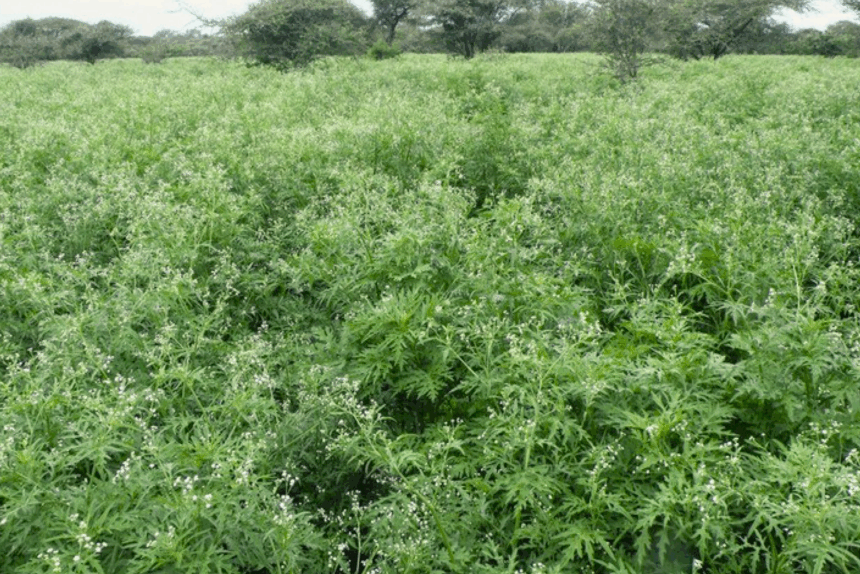
Parthenium weed is one of the most aggressive invasive plants threatening agriculture, livestock, biodiversity, and human health. Known scientifically as Parthenium hysterophorus, this fast spreading weed has become a serious concern in farming areas, grazing lands, roadsides, and disturbed soils. Parthenium weed spreads rapidly through seeds. A single plant can produce up to 25,000 seeds in one season. These seeds move easily through wind, water, animals, vehicles, contaminated crop seed, and machinery. Once established, the weed outcompetes crops and natural vegetation, reducing yields and land value.
For farmers, the impact is severe. Parthenium suppresses crop growth by releasing chemicals into the soil that inhibit other plants. This leads to poor germination, stunted crops, and lower harvests. In grazing areas, livestock avoid the weed due to its bitter taste. When consumed, it can cause mouth ulcers, digestive problems, and reduced milk production. The threat extends beyond agriculture. Parthenium weed poses serious health risks to people. Contact with the plant or its pollen can cause skin rashes, eye irritation, hay fever, asthma, and respiratory problems. Farm workers and rural communities face the highest exposure risk.
Stopping the spread of Parthenium weed requires early detection and consistent control. You must act before the plant flowers and sets seed. Manual removal works well for small infestations. Pull out the entire plant, including the roots, and dispose of it safely. Always wear gloves and protective clothing to avoid skin contact. Mechanical control such as slashing or mowing can reduce plant growth but must be repeated often. If cutting happens after flowering, it can increase seed spread. Timing is critical.
Chemical control is effective for larger infestations. Registered herbicides can suppress Parthenium when applied at the rosette or early growth stage. You must follow label instructions and local regulations to protect crops, livestock, and water sources. Biological control offers long term relief. Certain insects and pathogens feed exclusively on Parthenium weed and reduce its ability to grow and reproduce. These methods take time but provide sustainable control when combined with other strategies.
Prevention is the most effective defense. Clean farm equipment before moving between fields. Monitor roadsides, water channels, and disturbed land regularly. Use certified clean seed and avoid transporting contaminated soil or fodder. Community action is essential. Parthenium weed does not respect farm boundaries. When farmers, municipalities, and landowners work together, control efforts become more effective and lasting. Parthenium weed is a serious threat, but it is manageable. With early action, proper control methods, and shared responsibility, you can protect your land, your health, and your livelihood from this invasive plant.
Join 'Farmers Mag' WhatsApp Channel
Get the latest Farming news and tips delivered straight to your WhatsApp
CLICK HERE TO JOIN