

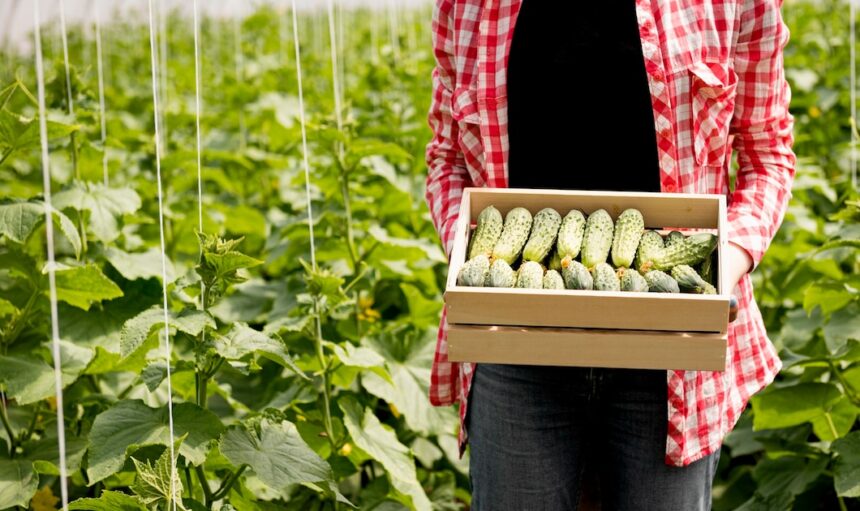
Cucumber production in South Africa has traditionally focused on fresh markets, but value addition offers farmers opportunities to increase revenue, extend shelf life, and access niche markets. By transforming cucumbers into pickles and relishes, farmers can reduce waste, stabilise income, and cater to both local and export consumers.
Choosing the Right Cucumbers for Processing
Not all cucumbers are ideal for pickling or relish production. Firm, small to medium-sized cucumbers with thin skins and minimal seeds are best for pickles. For relishes, slightly larger and more flavourful cucumbers can be used. Varieties such as National Pickling or local hybrid cucumbers perform well due to their crisp texture and consistent size. Harvesting at the correct maturity is critical; overripe cucumbers can become soft and reduce the quality of the final product.
Making Pickles
Pickling involves soaking cucumbers in a brine solution of water, vinegar, salt, and sugar, often with added spices like dill, mustard seeds, or chili. Farmers must wash and sort cucumbers, then carefully prepare jars or other containers for fermentation or vinegar-based preservation.
There are two main methods:
- Fermented pickles: Rely on natural bacteria to ferment cucumbers in a salt solution. This requires monitoring temperature and salinity levels for safe and consistent results.
- Vinegar pickles: Cucumbers are cooked briefly in a vinegar-spice solution or packed raw and topped with the mixture. This method allows longer shelf life and easier scaling for commercial production.
Proper sealing, sterilisation, and storage are essential to avoid spoilage and maintain food safety standards. Pickles can be sold fresh, in retail outlets, or through online channels, and they have strong appeal in urban and export markets.
Producing Relishes
Relishes combine cucumbers with other vegetables or fruits, sugar, vinegar, and spices. Ingredients like onions, peppers, and carrots enhance flavour and texture. The mixture is typically chopped or grated, cooked, and hot-filled into jars.
Relishes allow farmers to diversify product offerings and cater to gourmet and health-conscious consumers. Unique recipes or South African-inspired flavours can create a competitive advantage in the market.
Drying and Preservation Alternatives
While less common than pickles and relishes, dehydrated cucumber products can be incorporated into snacks, soups, or seasoning mixes. Drying cucumbers requires careful control of temperature and humidity to preserve flavour and nutrients.
Food Safety and Compliance
All processed cucumber products must comply with South African food safety standards. Farmers must ensure hygienic processing environments, sterilised containers, traceability, and proper labelling. Certifications such as HACCP may be required for formal retail or export. Accurate labels should include ingredients, batch numbers, storage instructions, and the country of origin.
Marketing and Distribution
Marketing is key to success in value-added cucumber products. Farmers can sell at farmers’ markets, specialty stores, grocery chains, and online platforms. Emphasising farm origin, natural ingredients, and artisanal production can justify premium pricing. Collaborating with co-operatives or processing hubs can help achieve economies of scale and ensure consistent quality.
Building a Sustainable Cucumber Processing Business
Sustainable production requires balancing fresh cucumber supply with processing capacity. Surplus cucumbers unsuitable for fresh sales can be redirected into pickling or relish production, reducing waste and increasing profitability. Investments in efficient processing equipment, cold storage, and proper packaging enhance product quality and shelf life.
Farmers can also implement eco-friendly practices, such as recycling brine or using solar drying methods, to reduce environmental impact and production costs.
Turning cucumbers into pickles and relishes allows South African farmers to diversify income streams, add value, and reach wider markets. With careful planning, adherence to food safety standards, and attention to quality and flavour, cucumber processing can become a profitable and sustainable agribusiness opportunity.
Join 'Farmers Mag' WhatsApp Channel
Get the latest Farming news and tips delivered straight to your WhatsApp
CLICK HERE TO JOIN




