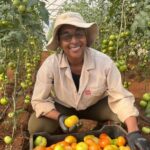
A young farmer’s curiosity and determination to break away from traditional crops has blossomed into a green revolution. Zinhle Ngidi, born in Nkandla and now based in Durban, is at the forefront of sustainable farming — cultivating seeds that produce biofuel.
Her journey began in 2017, driven by a desire to diversify agricultural practices in KwaZulu-Natal.
“I was running an agricultural business and looking for alternative energy crops that could grow in KZN, just to move away from the clichéd crops,” she recalls.
It was during this search that she came across an article about an Italian company testing the Solaris seed in the province.
“I reached out to them and asked if I could observe their trials. From there, I developed my business concept,” she explains.
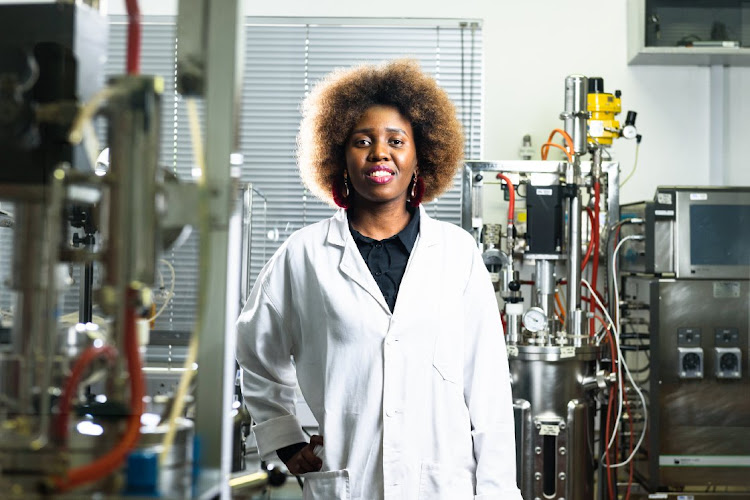
After three years of research and planning, Ngidi officially registered Igugu Clean Tech in 2020.
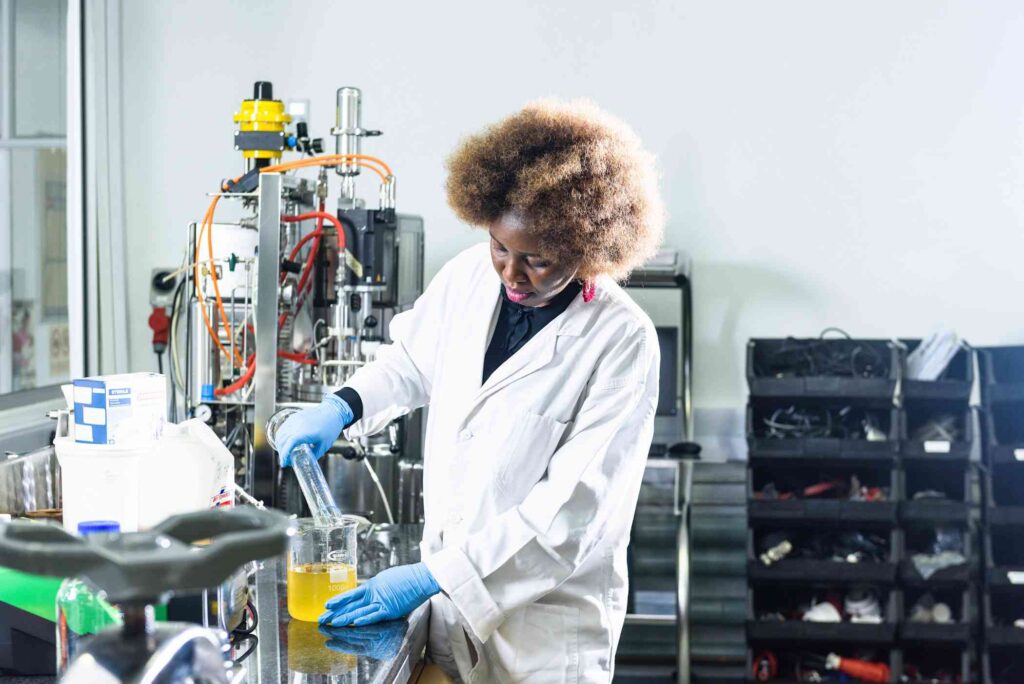
The Solaris plant — a nicotine-free tobacco variety — produces seeds rich in oil that can be refined into biodiesel and jet fuel. Igugu Clean Tech grows, harvests, and extracts oil from these seeds, before refining it into clean energy products.
Despite holding qualifications in financial planning and wealth management, Ngidi’s agricultural experience gave her the confidence to venture into biofuel production. But the road has been far from easy.
“The journey has had its challenges,” she says. “After COVID-19, we lost potential investors. Many people doubted our idea and asked, ‘Who else is doing this?’ or ‘Where did you learn it?’ But I believed in the vision.”
Igugu Clean Tech initially self-funded its research, later receiving support from the Red Bull Amaphiko Academy and the Technology Innovation Agency (TIA) under the Department of Science and Innovation.
The company has since expanded beyond South Africa, cultivating Solaris crops in Kenya, Malawi, and Zimbabwe.
“We started on a 10-hectare farm in Tongaat, north of Durban. Now, we have about 10 000 hectares in KZN, 20 000 in Malawi, 20 000 in Kenya, and around 50 hectares in Zimbabwe,” says Ngidi.
Currently, Igugu employs four permanent staff and over 50 contract workers, including agronomists, chemical engineers, and farmers. With expansion plans underway, Ngidi projects that the company could employ over 2 000 people within the next three years.
To boost production, Igugu is also setting up a 20 000-litre capacity commercial plant in Cato Ridge, Durban — an upgrade from its current 5 000-litre-a-day operation.
Zinhle Ngidi’s story is one of vision, perseverance, and innovation — proof that the future of farming can be both sustainable and profitable.
For more information, visit www.igugucleantech.co.za or email info@igugucleantech.co.za.
Images © Mpumelelo Macu
Join 'Farmers Mag' WhatsApp Channel
Get the latest Farming news and tips delivered straight to your WhatsApp
CLICK HERE TO JOIN