

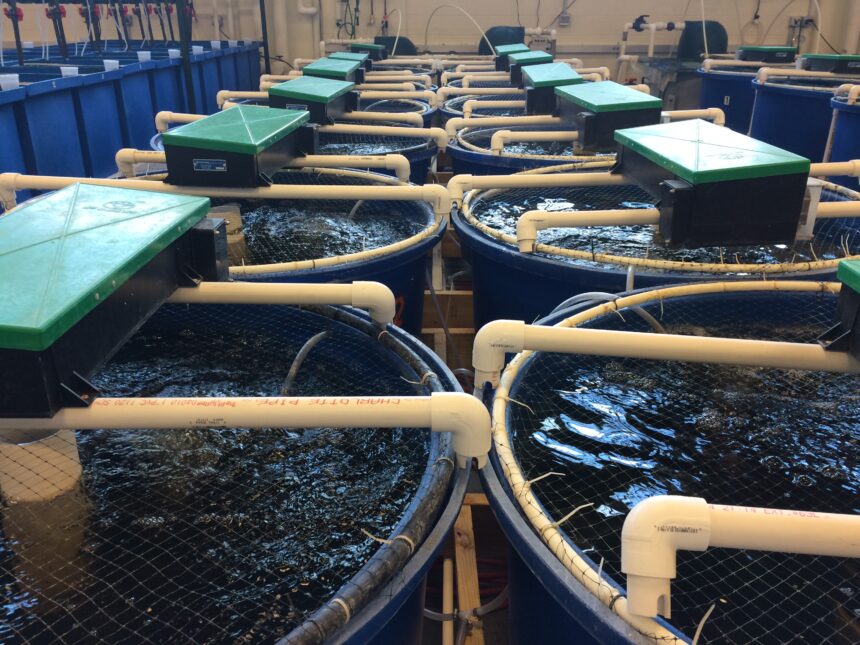
Recirculating aquaculture systems (RAS) are transforming modern fish farming. By recycling water and controlling the environment, RAS offers multiple advantages over traditional methods.
1. Water Efficiency
RAS uses up to 90% less water than conventional aquaculture. Water is filtered, treated, and reused continuously. This reduces dependence on rivers, ponds, or large water bodies, making fish farming viable in areas with limited water resources.
2. Environmental Control
Farmers can maintain optimal water temperature, oxygen levels, and pH. Controlled conditions reduce stress on fish, lower disease risk, and increase growth rates. Farmers can also produce species year-round regardless of external climate.
3. Reduced Disease Risk
Closed systems limit exposure to pathogens from external water sources. Filtration, UV treatment, and biosecurity measures in RAS reduce the need for antibiotics and chemicals, promoting healthier fish and safer products.
4. Space Efficiency
RAS allows high-density fish farming in smaller areas. Vertical or stacked tanks maximize production per square meter. This is particularly useful in urban or land-limited regions.
5. Waste Management
Solid waste and dissolved nutrients are captured and treated, preventing pollution of natural water bodies. Nutrient-rich by-products can be used as fertilizer, creating additional revenue streams.
6. Improved Growth Rates
Consistent environmental conditions and high-quality feed improve feed conversion ratios. Fish grow faster and reach market size sooner, increasing farm profitability.
7. Market Flexibility
RAS farms can operate close to urban centers, reducing transport costs and ensuring fresher fish for consumers. Farmers can target niche markets with specialty species not feasible in open systems.
8. Sustainability
Reduced water use, lower disease incidence, and efficient feed utilization make RAS a sustainable option. The system supports long-term production without overexploiting natural resources.
Recirculating aquaculture systems offer economic, environmental, and operational benefits. By optimizing water use, controlling the farming environment, and reducing disease, RAS increases profitability and supports sustainable fish farming. Farmers adopting RAS can improve production efficiency while minimizing environmental impact.
Join 'Farmers Mag' WhatsApp Channel
Get the latest Farming news and tips delivered straight to your WhatsApp
CLICK HERE TO JOIN




