

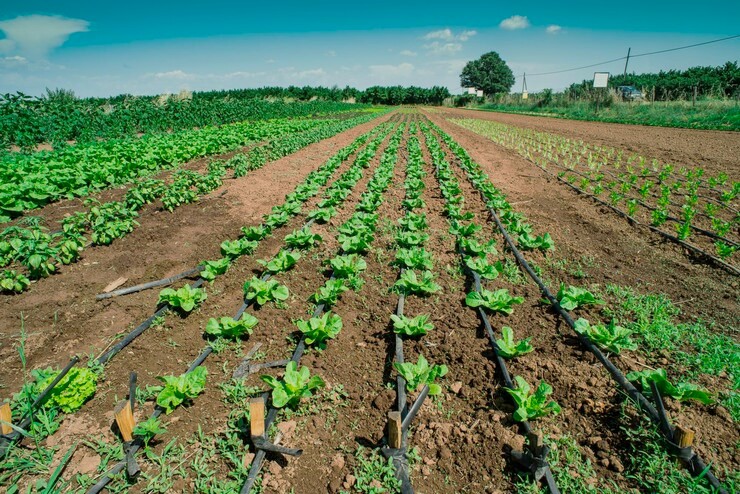
Multicropping and polyculture systems involve growing multiple crops or raising different species together in the same area. These practices can improve farm productivity, reduce risks, and enhance sustainability compared to monoculture farming.
Improved Resource Use
Multicropping and polyculture optimize the use of land, water, and nutrients. Different crops or species often have complementary growth habits. For example, deep-rooted crops access nutrients from lower soil layers while shallow-rooted crops use surface nutrients. This reduces competition and increases overall yield per unit area.
Enhanced Soil Fertility
Intercropping legumes with cereals enriches the soil through nitrogen fixation. Crop rotation within multicropping systems reduces nutrient depletion and supports long-term soil health. Diverse root structures and organic matter from multiple species improve soil structure and moisture retention.
Pest and Disease Management
Growing a variety of crops or species reduces the spread of pests and diseases. Polyculture systems disrupt the life cycles of harmful organisms, lowering the need for chemical pesticides. Natural predators often thrive in diverse ecosystems, further controlling pest populations.
Risk Reduction
Relying on a single crop increases vulnerability to market fluctuations, weather, or disease. Multicropping spreads this risk. If one crop fails due to drought, pests, or disease, other crops may still produce yields, ensuring farm resilience and income stability.
Increased Biodiversity
Polyculture supports higher biodiversity on farms. Multiple plant species and habitats encourage beneficial insects, birds, and soil organisms. This enhances ecosystem services such as pollination, pest control, and nutrient cycling.
Economic Benefits
Diverse production can increase overall farm income. Farmers can harvest multiple crops at different times, ensuring continuous market supply. Polyculture systems can also reduce input costs by lowering the need for synthetic fertilizers and pesticides.
Climate Resilience
Multicropping improves farm resilience to extreme weather. Diverse root systems and canopy structures protect soil from erosion and buffer crops against heat, wind, or heavy rainfall. Systems with multiple species are better able to adapt to changing climate conditions.
Multicropping and polyculture systems offer significant advantages over monoculture farming. They improve resource use, enhance soil fertility, reduce pests and diseases, spread economic risk, increase biodiversity, and strengthen climate resilience. Farmers who adopt these practices can achieve higher productivity, sustainable land use, and stable income while promoting environmental sustainability.
Join 'Farmers Mag' WhatsApp Channel
Get the latest Farming news and tips delivered straight to your WhatsApp
CLICK HERE TO JOIN




