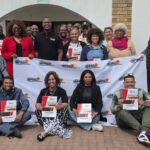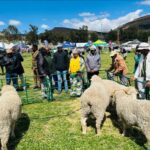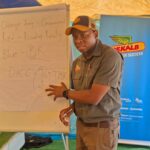
The Limpopo Department of Agriculture and Rural Development is continuing to strengthen the skills and knowledge of farmers through capacity-building programmes designed to support sustainable agricultural production. The department is currently supporting livestock farmers from the Capricorn South Agro-Ecological Zone through a three-day training programme focused on sustainable livestock production. The training is being held at Patong Lodge in Lebowakgomo and brings together 25 livestock farmers for NQF Level 1 credit-bearing training. The programme focuses on practical knowledge that farmers can apply to improve animal health, productivity and the management of their farming operations. By investing in farmer development, the department is helping strengthen the skills needed to support productive and sustainable livestock farming in Limpopo.
The training focuses on assessing how environmental conditions influence sustainable livestock production. Understanding the relationship between livestock and their environment is important, particularly for farmers operating on open and communal grazing land. The availability and quality of grazing, water resources, weather conditions and other environmental factors can affect animal health and productivity. Farmers therefore need practical knowledge that helps them manage their livestock while using available natural resources responsibly. The three-day programme provides an opportunity for participants to build this knowledge and understand how environmental factors can influence their farming outcomes.
Sustainable livestock production on open and communal grazing land is one of the key areas covered during the training. Communal farming systems require careful management because grazing resources are shared among farmers and can come under pressure when livestock numbers and available land are not properly balanced. Farmers need to understand how to use grazing areas effectively while maintaining the condition of the land for future production. Good grazing management can help protect available forage and support livestock nutrition over time. The training therefore provides farmers with information that can assist them in managing livestock within the realities of communal farming systems.
Supplementary feeding is another important component of the programme. Livestock may require additional feed when grazing does not provide enough nutrients to meet their nutritional needs, particularly during periods when natural forage is limited. Farmers are being introduced to different types of animal feed and their nutritional value as part of the training. Understanding the nutritional properties of different feeds can help farmers make more informed decisions when supplementing grazing. Appropriate feeding practices can support animal growth, body condition and overall productivity while helping farmers manage available resources more effectively.
The programme also addresses noxious plants that can hinder livestock production. Some plants can reduce the quality of grazing resources or create risks for livestock, making it important for farmers to recognise and manage them appropriately. Understanding which plants may negatively affect livestock can help farmers identify potential risks within grazing areas. Farmers can then take suitable management measures to protect grazing resources and animal health. Including this topic in the training gives participants practical information that can support better management of their grazing environments.
Animal health is another central focus of the capacity-building initiative. Healthy animals are essential for productive livestock enterprises, whether farmers are raising cattle, goats, sheep or other livestock species. Farmers need to understand factors that can affect animal health and recognise the importance of effective management practices. Good animal health management can help reduce production losses and support stronger livestock performance. The training gives participants an opportunity to strengthen their understanding of animal health as part of a broader approach to sustainable livestock production.
The programme also examines factors that influence livestock production. Livestock productivity can be affected by nutrition, animal health, environmental conditions, management practices and the availability of suitable grazing and water. Farmers who understand these factors are better positioned to identify challenges affecting their animals and make informed management decisions. The training connects these different aspects of livestock production rather than treating them as separate issues. This approach can help farmers develop a more complete understanding of what is required to maintain productive and sustainable livestock enterprises.
Effective livestock management in communal farming systems forms another important part of the training. Communal farmers often operate under conditions that differ from those experienced by commercial farmers with individually managed land. Shared grazing areas require cooperation, responsible resource use and practical management strategies that consider the wider farming community. Strengthening farmers’ knowledge in this area can help them make better decisions about livestock management while contributing to the sustainable use of communal agricultural resources. The training therefore addresses both individual farm management and the broader environment in which communal livestock production takes place.
The NQF Level 1 credit-bearing nature of the programme also gives the training a formal skills-development component. Participants are not only receiving practical information but are taking part in structured training linked to a recognised qualification framework. This can contribute to the development of a stronger skills base among livestock farmers in the Capricorn South Agro-Ecological Zone. Formal training can also help farmers build confidence in applying agricultural practices based on established knowledge. Continued investment in accredited and practical farmer training can support the long-term development of agricultural skills in rural communities.
Capacity-building programmes such as this one can contribute to the wider development of Limpopo’s agricultural sector. Livestock farming plays an important role in rural livelihoods and can provide households with food, income and productive assets. Improving farmers’ knowledge can help them manage their livestock more effectively and respond to challenges that affect production. Better management can also support the responsible use of grazing resources and improve the sustainability of farming activities. By providing farmers with practical skills, LDARD is supporting the development of agricultural enterprises that can contribute to rural economic activity and food security.
The three-day programme at Patong Lodge Lebowakgomo demonstrates the importance of continued skills development for communal livestock farmers. The participation of 25 farmers from the Capricorn South Agro-Ecological Zone creates an opportunity for knowledge to be shared and applied within farming communities. Training that covers environmental influences, grazing management, supplementary feeding, animal health, noxious plants and livestock management can provide farmers with a broad foundation for improving their operations. The initiative reflects LDARD’s continued focus on equipping farmers with practical knowledge that supports sustainable agricultural production. Strengthening these skills can help communal livestock farmers improve animal health and productivity while managing their farming resources more responsibly over the long term.
Join 'Farmers Mag' WhatsApp Channel
Get the latest Farming news and tips delivered straight to your WhatsApp
CLICK HERE TO JOIN