KwaZulu-Natal MEC for Agriculture and Rural Development Mrs Thembeni kaMadlopha-Mthethwa visited Impendle outside Pietermaritzburg to assess agricultural projects supported through funding from her department. The visit focused on projects involving a young farmer and a community farming cooperative that have received assistance to strengthen their agricultural operations. The MEC’s programme provided an opportunity to see how departmental funding and agricultural support are being used on the ground. It also highlighted the role of government assistance in helping farmers establish productive enterprises and improve their access to agricultural infrastructure. The projects in Impendle demonstrate how targeted support can contribute to vegetable production, crop farming and rural economic activity.
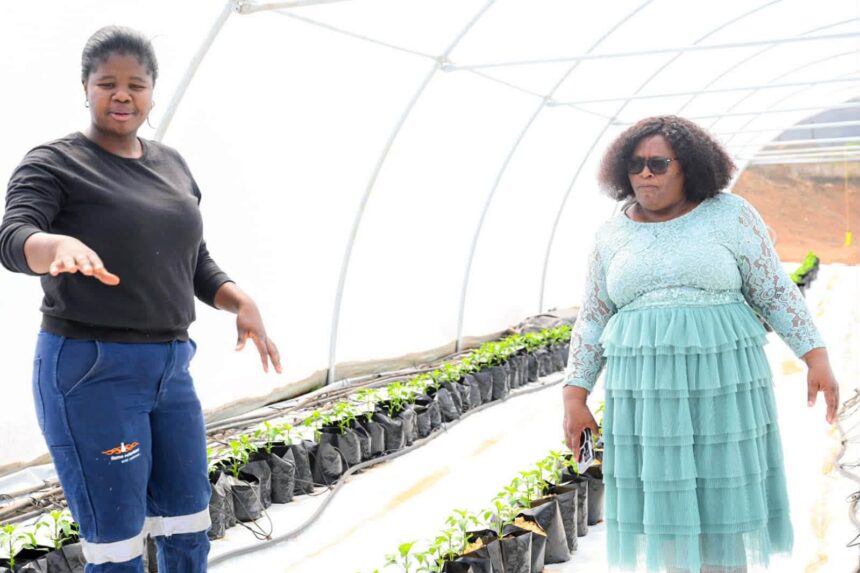
The MEC first visited NDO Agriculture, a farming enterprise owned by young farmer Thando Khumalo. The KwaZulu-Natal Department of Agriculture and Rural Development provided funding to support the installation of irrigation infrastructure and two tunnels for the vegetable farming project. These investments have helped Khumalo expand her production activities and establish a more structured farming operation. She currently grows potatoes, chillies and spinach in Impendle and Pietermaritzburg, supplying produce to the market. The project demonstrates how access to agricultural infrastructure can help young farmers develop production capacity and create opportunities to generate income from farming.
Irrigation is particularly important for vegetable production because reliable access to water can support crop growth and help farmers manage production more effectively. The installation of irrigation infrastructure at NDO Agriculture provides Khumalo with an important resource for maintaining her vegetable crops. The two tunnels also provide additional production infrastructure that can support the cultivation of vegetables under controlled conditions. Together, these investments can help the farmer manage production more efficiently and build a stronger foundation for the expansion of her enterprise. The project also shows how financial support can be directed towards practical infrastructure that directly contributes to agricultural production.
Khumalo’s focus on potatoes, chillies and spinach also demonstrates the potential for diversified vegetable production. Producing different crops can give farmers access to multiple products and markets while allowing them to make use of available agricultural resources. Her sales in Impendle and Pietermaritzburg connect the farming enterprise to consumers and markets beyond the immediate production area. Developing these market connections is an important part of building a sustainable agricultural business. Continued production and effective market management can help the enterprise strengthen its position as it grows.
The MEC then visited a farming cooperative at Upper eMakhuzeni, where members are working together to develop their agricultural activities. The department has supported the cooperative with fencing poles and has committed further assistance in the form of seeds for yellow maize and dry beans. Fencing is an important part of agricultural infrastructure because it can help farmers define and protect productive land. Access to quality seed is equally important because it provides the foundation for establishing crops during the planting season. The combination of infrastructure and production inputs can help the cooperative strengthen its farming activities and increase its productive capacity.
The support provided to the cooperative also reflects the importance of community participation in agricultural development. Members are working voluntarily on the project, contributing their time and effort towards maintaining and developing the farming operation. Community involvement can help create a sense of shared responsibility while strengthening the cooperative’s ability to manage its agricultural activities. A farming cooperative can also allow members to combine resources and knowledge while working towards common production goals. The commitment shown by the members was recognised during the MEC’s engagement with the cooperative.
Speaking to cooperative members, MEC kaMadlopha-Mthethwa said she was pleased to see that departmental funding was being used properly and was making a difference. She said the department considers the viability of community projects when providing financial assistance. The first project she referred to received R500,000 in assistance, while the second project received fencing material valued at R780,000. The MEC also highlighted the commitment of community members who are working voluntarily on the cooperative. Her comments placed emphasis on both responsible use of public resources and the active participation of beneficiaries.
The support for the Upper eMakhuzeni cooperative is expected to extend beyond fencing infrastructure through the provision of yellow maize and dry bean seeds. These crops can form an important part of the cooperative’s production activities and provide opportunities for members to participate in crop farming. Access to appropriate seed can help farmers establish their crops while reducing some of the initial input requirements associated with production. The success of the planting season will also depend on factors such as soil conditions, rainfall, crop management and access to markets. Continued technical support and effective farm management will therefore remain important as the cooperative develops its production activities.
Imbumba YamaKhuze Cooperative leader Thulasizwe Mthembu thanked the MEC and departmental officials for the support provided to the farm. He said the assistance had helped the cooperative’s agricultural activities to thrive. His acknowledgement reflects the importance of partnerships between government departments and community-based agricultural organisations. Government assistance can provide infrastructure and inputs, while farmers and cooperative members remain responsible for putting those resources into productive use. The relationship between public support and farmer participation is therefore an important part of ensuring that agricultural projects can develop over time.
The visit to Impendle also highlighted the role of young farmers in KwaZulu-Natal’s agricultural sector. Thando Khumalo’s NDO Agriculture provides an example of a young farmer using departmental support to establish irrigation and tunnel infrastructure and produce vegetables for the market. Supporting young farmers can help create opportunities for agricultural entrepreneurship and strengthen participation in the farming sector. Community cooperatives such as Imbumba YamaKhuze also provide a model for collective agricultural activity in rural areas. Together, these projects show different ways in which agricultural support can contribute to production, livelihoods and rural economic development.
The MEC’s visit to the agricultural projects in Impendle provided an opportunity to assess how departmental assistance is translating into practical farming activity. NDO Agriculture is producing potatoes, chillies and spinach with the support of irrigation and tunnel infrastructure, while the Upper eMakhuzeni cooperative is receiving fencing support and further assistance with maize and dry bean seed. The projects also demonstrate the importance of farmer commitment, community participation and responsible use of agricultural resources. Continued monitoring and support can help these enterprises address production challenges and build stronger farming operations. The developments in Impendle show how targeted agricultural assistance can support young farmers and cooperatives while contributing to broader rural agricultural development in KwaZulu-Natal.
Join 'Farmers Mag' WhatsApp Channel
Get the latest Farming news and tips delivered straight to your WhatsApp
CLICK HERE TO JOIN