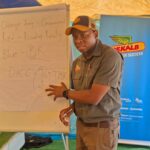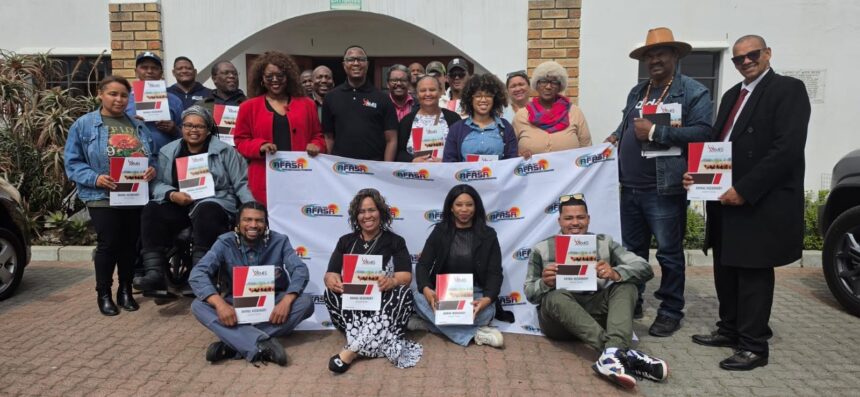
Red Meat Industry Services and the African Farmers’ Association of South Africa have joined forces to strengthen the skills of emerging livestock farmers in the Western Cape through specialised animal husbandry training. The recent programme brought together a group of AFASA farmers for practical training focused on livestock management, animal husbandry and improved production practices. The training was facilitated by RMIS Technical Advisor Ernest Makua, who shared technical knowledge aimed at helping farmers improve how they manage their livestock enterprises. The initiative forms part of broader efforts to equip emerging farmers with the knowledge and practical skills required to build productive agricultural businesses. By focusing on practical livestock management, the programme also supports the development of stronger and more sustainable participation in the red meat value chain.
Animal husbandry plays an important role in livestock farming because the way animals are managed can directly affect their health, growth, reproduction and productivity. Farmers need a strong understanding of animal care, nutrition, breeding, housing, disease prevention and general herd management to operate productive livestock enterprises. Practical training can help farmers identify areas where their current practices can be improved and apply more informed approaches to livestock production. The AFASA training provided an opportunity for participating farmers to engage with technical information that can be applied within their own farming operations. Strengthening these skills can help producers make better decisions throughout the livestock production cycle.
Livestock management was another key focus of the training. Effective livestock management requires farmers to monitor the condition of their animals and respond to their nutritional, health and production needs. Farmers also need to keep appropriate records and understand how different management practices affect the performance of their herds. Good management can help producers identify problems early and take appropriate action before those problems have a greater impact on production. By strengthening farmers’ understanding of livestock management, the programme provided practical tools that can support more consistent production.
Improved production practices are particularly important for emerging farmers who are working to build sustainable livestock businesses. Producing livestock for commercial markets requires more than simply keeping animals, as farmers need to manage production costs, animal health, quality and market requirements. Technical knowledge can help producers understand how their day-to-day decisions influence the performance and profitability of their enterprises. Training also gives farmers an opportunity to learn from experienced agricultural professionals and consider how established practices can be adapted to their own circumstances. This can support the gradual development of farming operations that are better prepared to participate in formal markets.
The involvement of RMIS and AFASA also highlights the value of collaboration within the agricultural sector. Farmer organisations can provide a platform for producers to identify common needs while technical organisations can contribute specialised knowledge and support. Working together allows training programmes to be shaped around practical challenges faced by farmers. This can make skills development more relevant to producers and increase the opportunity for farmers to apply what they learn after the training. Collaboration also creates opportunities to strengthen relationships between farmers and organisations involved in the broader red meat value chain.
The training was facilitated by RMIS Technical Advisor Ernest Makua, whose role involved guiding farmers through important aspects of animal husbandry and livestock production. Technical advisers can provide farmers with practical information that helps connect agricultural theory with day-to-day farming activities. Farmers can use these engagements to ask questions about production challenges and gain a better understanding of practices that may improve their operations. Direct interaction with technical experts is particularly useful when farmers face challenges that require practical solutions. The participation of an experienced technical adviser therefore added an important skills-development component to the programme.
The focus on emerging farmers is also significant for the continued development of South Africa’s livestock sector. Emerging producers require access to knowledge, infrastructure, finance, markets and technical support if they are to develop sustainable agricultural enterprises. Training addresses one of these important requirements by helping farmers strengthen the skills needed to manage their businesses and livestock effectively. When combined with access to other forms of agricultural support, improved technical knowledge can contribute to stronger production systems. Developing a broader base of capable livestock producers can also contribute to greater participation across the red meat value chain.
Market readiness was another important aspect of the initiative. Farmers who want to participate in commercial livestock markets need to understand the standards and production practices expected by buyers. Animal health, livestock condition, traceability, record keeping and consistent production can all influence a farmer’s ability to supply formal markets. Training can help farmers understand the importance of these requirements and identify areas where their enterprises may need further development. Building market-ready livestock businesses can create opportunities for farmers to participate more effectively in the wider red meat industry.
Sustainability also remains an important consideration for livestock farmers. Sustainable livestock production requires farmers to manage animals, grazing resources and other inputs in ways that support continued production over time. Farmers need to balance production objectives with responsible management of land, water and animal health resources. Practical training can help producers understand how management decisions influence the long-term performance of their enterprises. Strengthening these skills can support farmers as they work to develop livestock businesses that remain productive while responding to changing agricultural conditions.
The Animal Husbandry Training in the Western Cape demonstrates how targeted skills development can contribute to the growth of emerging livestock enterprises. Through its collaboration with AFASA, RMIS is providing farmers with access to technical knowledge focused on animal husbandry, livestock management and improved production practices. The training gives participants practical information that can support better animal care, stronger production systems and greater preparedness for commercial markets. Continued investment in farmer education and technical support can help strengthen individual enterprises while supporting the wider red meat value chain. By empowering farmers with knowledge and practical skills, initiatives of this nature contribute to the development of more productive, sustainable and market-ready livestock businesses in South Africa.
Join 'Farmers Mag' WhatsApp Channel
Get the latest Farming news and tips delivered straight to your WhatsApp
CLICK HERE TO JOIN