MEC Rodgers Basikopo Makamu has continued his engagement with agricultural stakeholders in Limpopo by meeting employees from the Sekhukhune and Capricorn districts in Lebowakgomo before visiting the award-winning Zwoda Farming Project in Zebediela. The engagements formed part of efforts to take the department’s strategic vision directly to employees and communities involved in supporting farmers. The meet-and-greet session provided an opportunity for the MEC to communicate his priorities while ensuring that district operations remain focused on delivering effective farmer support. The visit to Zwoda Farming Project then provided a practical example of how innovation, diversification and government support can contribute to agricultural growth. The activities highlighted the importance of connecting government strategy with the realities faced by farmers on the ground.
The engagement with staff from Sekhukhune and Capricorn districts focused on cascading the MEC’s strategic vision to the ground level. Ensuring that employees understand departmental priorities is important for creating consistent and responsive services across different agricultural communities. District officials play a direct role in supporting farmers and helping agricultural projects access the assistance they need to improve production. Strong coordination between leadership and employees can also help government respond more effectively to challenges affecting farmers. By taking the engagement to district level, Makamu emphasised the need for operations to remain closely connected to the needs of agricultural communities.
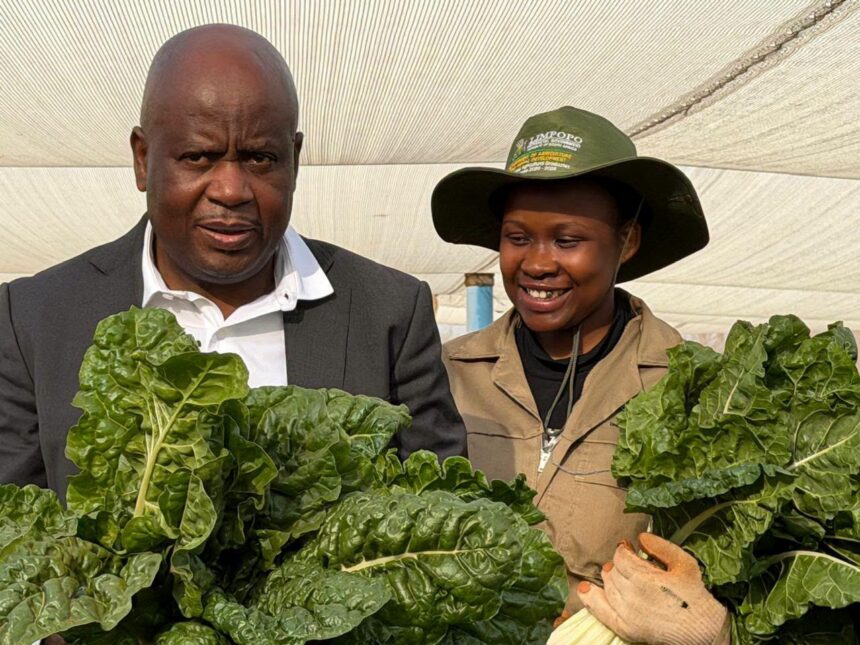
The visit to Zwoda Farming Project in Zebediela demonstrated how a young farmer can develop a diverse agricultural enterprise despite challenges such as severe weather conditions. The project is owned by Tumisho Mphahlele, who has transformed her four-hectare farm into a resilient agricultural operation. Instead of relying on a single crop, Mphahlele has diversified production across several agricultural activities. The farm produces green peppers, chilli, cabbage, spinach, watermelon, macadamia and strawberries, creating multiple sources of production and potential income. This diversified approach provides the enterprise with greater flexibility while reducing its dependence on one agricultural product.
Weather conditions can present significant risks for farmers, particularly when crops are exposed to extreme temperatures and other environmental pressures. Mphahlele has responded to these challenges by introducing shade nets to provide additional protection for her crops. The decision forms part of a broader approach to building resilience within the farming operation. Zwoda Farming Project has also expanded beyond crop production into aquaculture, with tilapia fish forming part of the enterprise. The farm further participates in goat farming, including Boer and Kalahari Red goats, demonstrating how different agricultural activities can operate within one diversified business.
Zwoda Farming Project has also moved beyond primary agricultural production by exploring value addition opportunities. One example is the processing of strawberries into jam, which allows the farm to create a finished product rather than relying only on the sale of fresh produce. Value addition can create additional revenue opportunities while helping farmers make better use of their harvests. It can also support the development of small agricultural enterprises into more commercially focused businesses. For a young farmer operating on four hectares, combining production with processing provides an opportunity to build a broader agricultural value chain around the enterprise.
Mphahlele told MEC Makamu that the next stage of development for Zwoda Farming Project includes plans to build a packhouse, water-storage dam and secure storage facilities. These infrastructure investments could help the farm improve its ability to handle, store and prepare agricultural products for different markets. A packhouse can support better handling and preparation of produce, while additional water storage can help improve resilience during periods when water availability becomes a challenge. Secure storage can also protect equipment and agricultural products while improving the overall organisation of the farming operation. These priorities reflect the need for infrastructure that can support the transition from a small agricultural enterprise to a larger and more commercially sustainable operation.
Government support has already contributed to the productivity of Zwoda Farming Project through the handover of a tractor. Agricultural machinery can reduce the amount of manual work required on a farm while improving the efficiency of land preparation and other farming activities. For a diversified enterprise, access to appropriate equipment can also help the farmer manage different production activities more effectively. The support provided by the Department of Agriculture and Rural Development forms part of broader efforts to assist farmers with equipment and supplies. Such interventions can help agricultural projects strengthen their productive capacity and work towards longer-term commercial goals.
Zwoda Farming Project has also demonstrated the potential of agricultural development to create employment opportunities in rural communities. With support from the Department of Agriculture and Rural Development, the project has created 30 jobs, consisting of 10 permanent positions and 20 opportunities through the Expanded Public Works Programme. These opportunities show how agricultural enterprises can contribute to local employment while supporting food production and economic activity. Expanding agricultural businesses can create further opportunities across farming, processing, transportation, marketing and other parts of the agricultural value chain. The employment created through Zwoda therefore extends the project’s impact beyond its four-hectare farming operation.
The long-term vision for Zwoda Farming Project is to develop the enterprise into a thriving agri-tourism hub. Its combination of crop production, livestock, aquaculture and value-added processing provides a foundation for a broader agricultural experience. Agri-tourism can create opportunities for visitors to learn about farming while generating additional income streams for agricultural enterprises. The project’s diverse activities could support this vision as infrastructure and market opportunities continue to improve. Continued investment in water storage, a packhouse, secure facilities and other infrastructure will be important as Mphahlele works to expand the business.
The visit by MEC Rodgers Basikopo Makamu to Zwoda Farming Project highlighted the value of supporting young farmers who are using innovation and diversification to build sustainable agricultural enterprises. From protecting crops with shade nets to producing vegetables, fruit, fish and goats, Mphahlele has developed a farming model that makes use of multiple agricultural opportunities. The addition of strawberry processing into jam also demonstrates how value addition can strengthen the commercial potential of a farming business. With government support, job creation and plans for additional infrastructure, Zwoda Farming Project is positioned to pursue its ambition of becoming an agri-tourism hub. The engagement also reinforced the importance of responsive district-level governance and practical farmer support in building a stronger and more inclusive agricultural sector in Limpopo.
Join 'Farmers Mag' WhatsApp Channel
Get the latest Farming news and tips delivered straight to your WhatsApp
CLICK HERE TO JOIN