Protecting livestock from disease requires accurate information, early detection and coordinated action across the agricultural sector. Reliable livestock disease surveillance helps authorities understand where diseases occur, how they spread and which conditions may increase the risk of infection. This information is especially important for communal and smallholder farmers, who often operate in environments where research and disease monitoring data remain limited. Without reliable information, it can be difficult to identify emerging disease patterns or determine where disease-control measures should be strengthened. National surveillance programmes therefore play an important role in protecting livestock, supporting farmers and safeguarding the wider food supply.
The ARC-OVR Bacteriology section is conducting national surveillance for mycobacteriosis, a group of bacterial diseases that includes tuberculosis in animals. Animal tuberculosis can have serious consequences for livestock health and can create challenges for farmers when infections spread within herds or between animals. The surveillance programme also focuses on brucellosis, another bacterial disease that can affect livestock and people. Monitoring these diseases provides important information that can help veterinary authorities understand their prevalence and distribution. Identifying where these diseases occur is an important step towards developing effective control measures and reducing their potential impact on livestock production and public health.
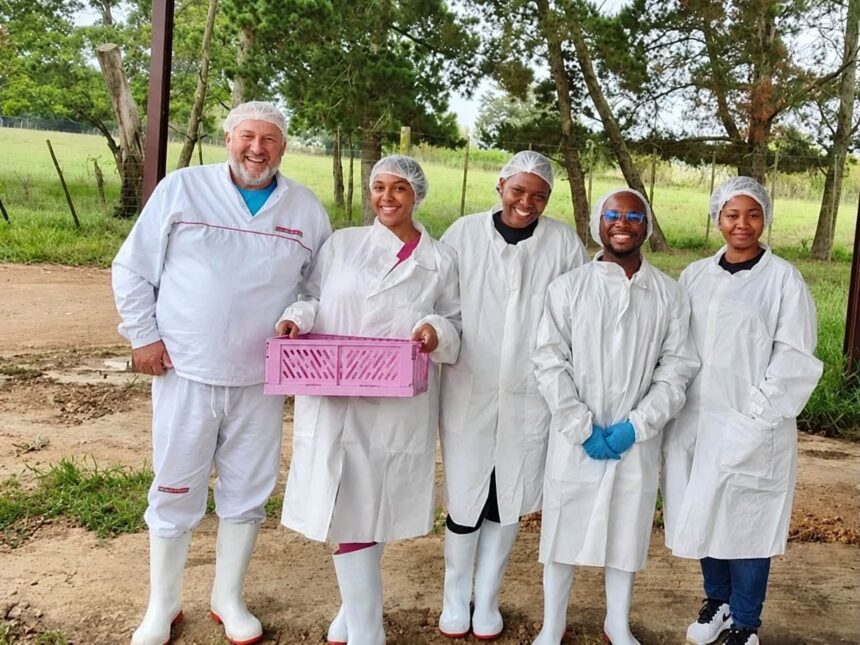
The surveillance work is being conducted at selected abattoirs across all nine provinces, creating a broad national approach to gathering disease information. Abattoirs can provide useful opportunities for surveillance because animals from different farming areas pass through these facilities, allowing samples to be collected and assessed as part of disease monitoring activities. Working across all provinces can also help researchers build a more comprehensive picture of livestock disease patterns across the country. The programme is being carried out in collaboration with national and provincial veterinary services, strengthening coordination between research institutions and government veterinary structures. This cooperation can help ensure that information collected through surveillance contributes directly to disease-control planning and veterinary responses.
The projects are coordinated by ARC-OVR, with Dr Nomakorinte Gcebe and Dr Tiny Hlokwe leading the coordination of the surveillance work. Their involvement reflects the importance of specialist veterinary research in identifying and monitoring bacterial diseases affecting livestock. Effective surveillance requires systematic sample collection, laboratory investigation and careful analysis of the information generated. Researchers can use these findings to identify disease trends and provide evidence that supports veterinary decision-making. Continued coordination between researchers and veterinary services is also essential for ensuring that surveillance results reach the institutions responsible for implementing disease-control measures.
Reliable disease information is particularly valuable for communal and smallholder farmers because these producers may have fewer resources available for disease prevention and management. Livestock often provide households with income, food, savings and other forms of economic security, making disease outbreaks potentially damaging to both farming operations and household livelihoods. Limited research data can make it harder to understand the specific disease risks faced by animals in different production environments. National surveillance can help address this information gap by generating evidence from multiple regions and livestock populations. Better information can then support more targeted veterinary advice and disease-control strategies that reflect actual conditions on the ground.
Mycobacteriosis surveillance can also contribute to a better understanding of animal tuberculosis and related bacterial diseases within livestock populations. Monitoring helps researchers determine whether infections are present and identify patterns that may require further investigation. Disease information can support authorities when they assess the need for additional testing, movement controls or other interventions. Early recognition of disease patterns can also reduce the risk of infections spreading unnoticed for extended periods. Maintaining regular surveillance is therefore an important part of a long-term strategy to protect animal health and strengthen national disease management.
Brucellosis requires particular attention because it can affect both livestock and people. The disease can create losses for farmers through its effects on animal health and reproduction, while its potential impact on human health makes effective control even more important. Surveillance can help authorities identify areas where the disease may be circulating and determine where additional control measures could be necessary. Farmers also benefit from greater awareness of the disease and the importance of following veterinary guidance when managing suspected infections. Combining disease monitoring with education and appropriate veterinary support can strengthen efforts to reduce the risks associated with brucellosis.
Biosecurity will also benefit from stronger surveillance information. Biosecurity refers to the measures used to prevent and control the introduction and spread of disease among animals. Farmers can use good biosecurity practices to reduce opportunities for infectious diseases to enter their herds or spread between animals and farming operations. However, effective biosecurity depends on understanding the diseases present in a particular area and the pathways through which they can spread. National surveillance findings can provide valuable evidence for improving disease-prevention recommendations and helping farmers understand which risks require greater attention.
Early detection is another major benefit of national disease surveillance. When authorities receive reliable information about disease occurrence, they can investigate potential risks and respond more quickly when outbreaks are suspected. Faster responses can help limit disease transmission and reduce the potential impact on livestock populations and farming communities. Early action also gives veterinary services an opportunity to work with farmers on appropriate control measures before a problem becomes more widespread. Strengthening surveillance systems can therefore improve the country’s ability to move from reacting to serious outbreaks towards preventing and managing disease risks more effectively.
The programme also has implications for food security because healthy livestock support the production of safe and reliable food. Disease outbreaks can affect livestock numbers, productivity and the movement of animals and animal products, creating consequences throughout the agricultural supply chain. Protecting livestock health helps farmers maintain productive herds while supporting the stability of food production systems. Surveillance information can help authorities identify threats that could affect livestock production and take appropriate action when risks emerge. A strong disease-monitoring system therefore supports not only farmers and animals but also consumers and the broader agricultural economy.
National livestock disease surveillance represents an important investment in agricultural resilience and animal health. The work being conducted by the ARC-OVR Bacteriology section on mycobacteriosis and brucellosis is generating information that can improve understanding of disease occurrence and distribution across the country. By collecting surveillance data at selected abattoirs in all nine provinces and working with national and provincial veterinary services, the programme creates a stronger evidence base for disease-control decisions. The findings can support improved biosecurity, earlier outbreak responses and more targeted protection for livestock and farming communities. Continued investment in surveillance, research, veterinary services and farmer awareness will be essential to protecting livestock, strengthening farmer livelihoods and safeguarding the wider food supply.
Join 'Farmers Mag' WhatsApp Channel
Get the latest Farming news and tips delivered straight to your WhatsApp
CLICK HERE TO JOIN