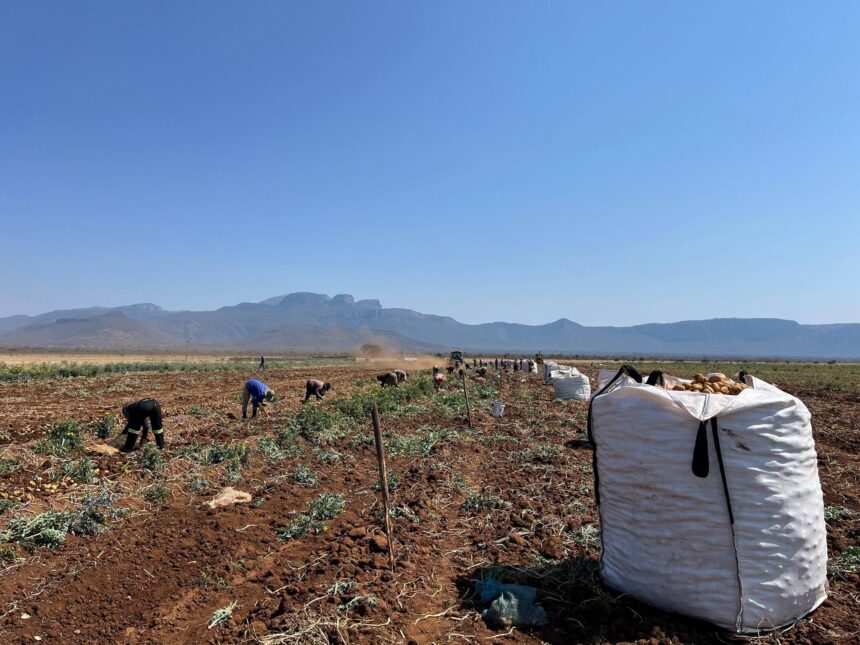
The Provincial Legislature continues to strengthen community participation through the Taking Legislature to the People (TLTTP) programme, bringing government and key stakeholders closer to communities affected by decisions on development and service delivery. The programme creates an important platform for residents, farmers, community organisations and government departments to raise concerns and discuss practical solutions to challenges affecting their livelihoods. Agricultural development remains a critical part of this engagement, particularly in rural communities where farming supports employment, food production and local economic activity. The latest engagement placed the agricultural sector in focus during a visit to Mazeli Farming and Projects, an award-winning, black-owned commercial farming enterprise in the Blouberg Municipality. The visit provided an opportunity to assess the farm’s progress while giving stakeholders a clearer understanding of the challenges that continue to limit its growth.
Mazeli Farming and Projects was established in 2016 and has developed into a diversified agricultural enterprise producing a range of products for local and regional markets. The farming operation produces potatoes, butternuts and peppadews while also keeping goats and sheep as part of its agricultural activities. Its commercial reach includes major markets such as PepsiCo Simba as well as customers in Mozambique, demonstrating the potential of rural enterprises to participate in larger agricultural supply chains. The farm’s development also reflects the importance of supporting black-owned commercial farmers who are building sustainable businesses within the agricultural sector. Its achievements show how access to productive infrastructure, market opportunities and appropriate government support can help agricultural enterprises expand their operations and contribute to local economic development.
The engagement was attended by a team from the Limpopo Department of Agriculture and Rural Development, led by Acting District Director Madigoe Tumisho. The discussions focused on the progress made by Mazeli Farming and Projects, its achievements since establishment and the obstacles that continue to affect its operations. Government and agricultural stakeholders were able to engage directly with the farming enterprise, allowing concerns to be considered within the broader objectives of rural and agricultural development. These engagements are important because farmers often face challenges that require coordination between several institutions rather than assistance from a single department. By bringing stakeholders together at the farm, the TLTTP programme helps create a more direct channel through which agricultural concerns can be documented, discussed and considered for further action.
Government support has played a role in the expansion of Mazeli Farming and Projects, particularly through assistance provided by LDARD. The support has included mechanisation and irrigation infrastructure, both of which are important for improving productivity and strengthening the reliability of commercial farming operations. Mechanisation can help farmers manage larger areas more efficiently while reducing some of the physical and operational pressures associated with agricultural production. Irrigation infrastructure is equally important because reliable water access can support production and reduce dependence on unpredictable rainfall patterns. The assistance provided to the farm illustrates how targeted agricultural support can contribute to increased production capacity, stronger market participation and employment creation.
The farm’s expansion has also created valuable employment opportunities in the Blouberg Municipality. Mazeli Farming and Projects currently provides work for 10 permanent employees and approximately 150 to 200 seasonal workers, highlighting the wider economic contribution of commercial agriculture. Seasonal employment is particularly important in farming because labour requirements can increase significantly during planting, harvesting and other intensive production periods. These jobs provide income to households while also supporting economic activity in surrounding communities. The farm’s ability to create employment demonstrates why the growth of agricultural enterprises matters beyond food production alone. Supporting productive farms can help strengthen rural economies by creating opportunities for workers and generating demand for services and inputs connected to agricultural activity.
Despite the progress achieved by Mazeli Farming and Projects, the visit also brought attention to several challenges that continue to affect the enterprise’s ability to grow. Insecure land tenure remains a significant concern because farmers need certainty over land to make long-term investments in infrastructure, equipment and production systems. Limited access to affordable finance can also restrict the ability of agricultural businesses to purchase machinery, expand production, manage cash flow and respond to changing market conditions. Rising input costs add further pressure, particularly when farmers face higher expenses for seed, fertiliser, fuel, animal feed, labour and other essential production requirements. Infrastructure constraints can compound these difficulties by affecting the efficiency and reliability of farming operations. Addressing these challenges will require sustained engagement between farmers, government departments, financial institutions and other agricultural stakeholders.
The TLTTP programme provides an important mechanism for ensuring that challenges affecting communities and businesses do not remain isolated from provincial decision-making processes. Taking the Legislature to communities allows public representatives and government stakeholders to hear directly from people who experience development challenges in their daily lives. In the case of Mazeli Farming and Projects, the engagement placed specific agricultural concerns on the agenda while also recognising the progress already made by the farming enterprise. This approach allows discussions to move beyond identifying problems by creating opportunities to consider possible interventions and responsibilities. Continued follow-up will be important to ensure that concerns raised through these engagements are properly considered and that progress can be monitored over time.
The focus on Mazeli Farming and Projects also highlights the broader importance of inclusive agricultural development in rural Limpopo. Black-owned commercial farms can contribute to food production, job creation, market development and the expansion of rural businesses when they receive the support needed to operate sustainably. However, long-term success requires more than initial assistance, as farmers also need secure access to land, finance, infrastructure, technology, markets and affordable production inputs. Partnerships between government and farming enterprises can therefore play an important role in identifying barriers and developing practical responses that support continued growth. The experience of Mazeli Farming and Projects shows both the opportunities available within the agricultural sector and the structural challenges that farmers must overcome. Strengthening these enterprises can contribute to a more productive and inclusive rural economy.
The latest TLTTP engagement demonstrates the value of taking legislative and government discussions directly into communities and productive economic spaces. The visit to Mazeli Farming and Projects allowed stakeholders to recognise the farm’s achievements while gaining a better understanding of the challenges affecting its future expansion. Its record of production, market participation and employment creation provides a strong example of the contribution that commercial agriculture can make to rural development. At the same time, concerns around land tenure, affordable finance, input costs and infrastructure show that sustained intervention remains necessary to unlock the full potential of agricultural enterprises. As the Provincial Legislature continues with the Taking Legislature to the People programme, engagements such as this can help ensure that the experiences and priorities of farmers and rural communities remain part of efforts to advance inclusive agricultural and rural development.
Join 'Farmers Mag' WhatsApp Channel
Get the latest Farming news and tips delivered straight to your WhatsApp
CLICK HERE TO JOIN