Day 2 of the 56th SASAS Congress highlighted the important role that scientific research continues to play in advancing South Africa’s livestock industry. The Agricultural Research Council (ARC) maintained a strong presence throughout the day’s programme, with its researchers presenting studies that addressed some of the sector’s most significant challenges and opportunities. Their work covered a broad range of disciplines, including animal breeding, genetics, nutrition and reproductive technologies, demonstrating the organization’s commitment to evidence-based agricultural innovation. Each presentation reflected years of dedicated research aimed at improving livestock productivity while supporting sustainability and long-term resilience. The collective contributions reinforced the value of collaboration between researchers, producers and industry stakeholders in building a stronger agricultural future for South Africa.
One of the key themes emerging from the ARC presentations was the growing importance of genetics in livestock improvement. Researchers shared findings that focused on improving the detection of valuable genetic traits in sheep, an area that has significant implications for breeding programmes across the country. Early and accurate identification of desirable traits allows breeders to make informed decisions that enhance flock performance, productivity and overall profitability. By applying modern genetic tools, producers can select animals with superior characteristics while reducing the time required to achieve breeding objectives. This approach not only strengthens commercial production but also supports the development of healthier and more adaptable livestock populations.
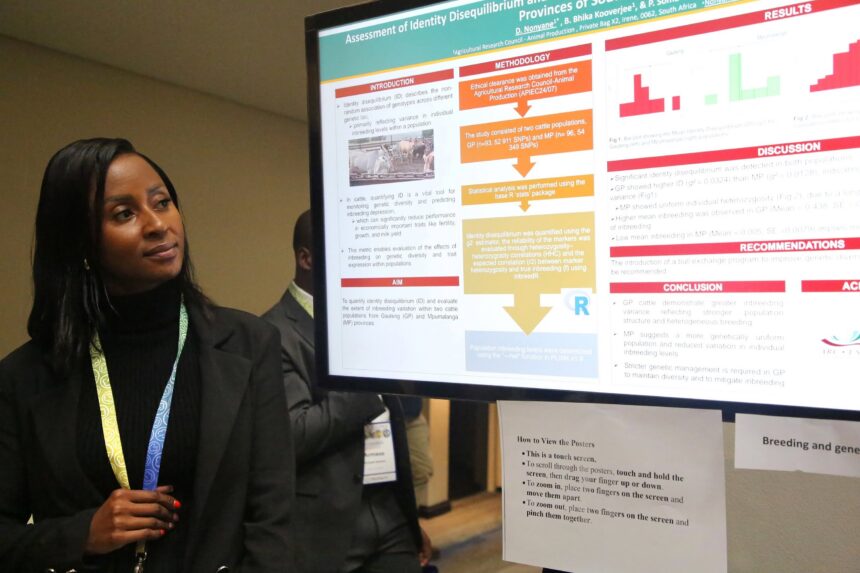
Another important area of discussion centered on protecting South Africa’s valuable livestock genetic resources. ARC researchers presented work aimed at safeguarding the genetic diversity of the country’s Shorthorn cattle population, highlighting the importance of preserving unique bloodlines for future generations. Maintaining genetic diversity is essential because it improves resilience against disease, environmental changes and other production challenges that may arise over time. Diverse genetic resources also provide breeders with greater flexibility when developing animals suited to different production systems and climatic conditions. The research demonstrated that conservation efforts are not only about protecting heritage breeds but also about ensuring the long-term sustainability and competitiveness of South Africa’s livestock industry.
Nutrition also featured prominently during the day’s scientific programme, with researchers presenting new findings on maize silage fermentation. High-quality silage remains one of the most important feed sources for many livestock producers, particularly during periods when natural grazing becomes limited. Improving the fermentation process enhances feed quality, preserves nutritional value and reduces spoilage, ultimately contributing to better animal performance. The ARC’s research explored ways to optimize silage production through improved fermentation practices that can benefit both dairy and beef producers. Better feed efficiency not only lowers production costs but also supports more sustainable farming systems by reducing waste and maximizing available resources.
Reproductive technologies formed another significant component of the ARC’s presentations during the congress. Researchers examined sperm handling media and their potential to improve breeding outcomes across various livestock species. Effective reproductive management is essential for increasing conception rates, maintaining genetic progress and improving overall herd productivity. Advances in sperm preservation and handling techniques can increase the success of artificial insemination programmes while supporting more efficient breeding strategies. These developments provide producers with practical tools that can strengthen herd performance and contribute to more consistent reproductive success.
The diversity of research presented by the ARC demonstrated how modern livestock science relies on multiple disciplines working together to solve complex agricultural challenges. Genetics, nutrition, reproduction and animal management are closely connected, and improvements in one area often lead to positive outcomes across the entire production system. By integrating scientific knowledge from different fields, researchers are helping producers improve efficiency while maintaining high standards of animal health and welfare. This multidisciplinary approach is increasingly important as the agricultural sector responds to changing environmental conditions, evolving consumer expectations and the need for greater sustainability. The congress provided an ideal platform for sharing these integrated research efforts with fellow scientists, industry professionals and producers.
Knowledge sharing remains one of the greatest strengths of scientific gatherings such as the SASAS Congress. Events like these encourage collaboration between researchers from different institutions while creating opportunities to exchange ideas, discuss new technologies and identify future research priorities. The participation of the Agricultural Research Council reflects its ongoing commitment to supporting innovation through rigorous scientific investigation and practical solutions. By presenting research findings to peers and industry stakeholders, ARC scientists help ensure that valuable discoveries move beyond laboratories and into real-world agricultural applications. This process ultimately benefits livestock producers by providing access to the latest evidence-based practices.
The studies presented during Day 2 also highlighted the importance of investing in agricultural research as a foundation for food security and economic growth. Strong livestock systems depend on continuous scientific advancement that improves productivity without compromising environmental sustainability or genetic resources. The ARC’s research contributes directly to these goals by developing solutions that help farmers adapt to changing production conditions while remaining competitive. Whether through improved breeding technologies, enhanced feed quality or better conservation of valuable genetics, each project adds to the growing body of knowledge that supports the future of South African agriculture. Continued research investment will remain essential as producers face increasing pressures from climate variability, production costs and growing food demand.
Day 2 of the 56th SASAS Congress clearly demonstrated the Agricultural Research Council’s leadership in advancing livestock science through innovative and practical research. From improving the detection of genetic traits in sheep and protecting the genetic diversity of South Africa’s Shorthorn population to advancing maize silage fermentation and investigating sperm handling media, the ARC’s researchers showcased work that addresses both current and future industry needs. Together, these studies contribute to more productive, resilient and sustainable livestock systems that benefit farmers, consumers and the wider agricultural economy. The breadth of expertise presented throughout the day reflects the ARC’s ongoing dedication to scientific excellence and meaningful industry impact. As research continues to evolve, the knowledge shared at the congress will help shape stronger livestock production systems capable of meeting the demands of South Africa’s agricultural future.
Join 'Farmers Mag' WhatsApp Channel
Get the latest Farming news and tips delivered straight to your WhatsApp
CLICK HERE TO JOIN