Food security remains one of the most urgent development priorities in South Africa, particularly in rural communities where many households rely on small scale farming to supplement their daily food needs. In the Eastern Cape, government efforts to strengthen local food production have taken a practical step forward through direct support to subsistence farmers. Nokuzola Capa recently visited a storage site in Kirkwood where gardening implements are being prepared for distribution to surrounding communities. The initiative is part of a broader strategy to improve household level food production and reduce dependence on external food supply chains. It focuses on empowering vulnerable households with the tools needed to grow their own food consistently and sustainably.
The programme forms part of the Food Security at Household Level Programme implemented by the department, which targets rural families who face ongoing challenges in accessing nutritious and affordable food. The aim is to support households not only with immediate relief but also with long term capacity to produce their own vegetables and basic crops. By providing gardening tools, seeds and related inputs, the programme encourages communities to establish and maintain productive home gardens. This approach helps reduce food insecurity while also improving dietary diversity in rural households. It also strengthens local resilience by ensuring that families are less affected by fluctuations in food prices and supply disruptions.
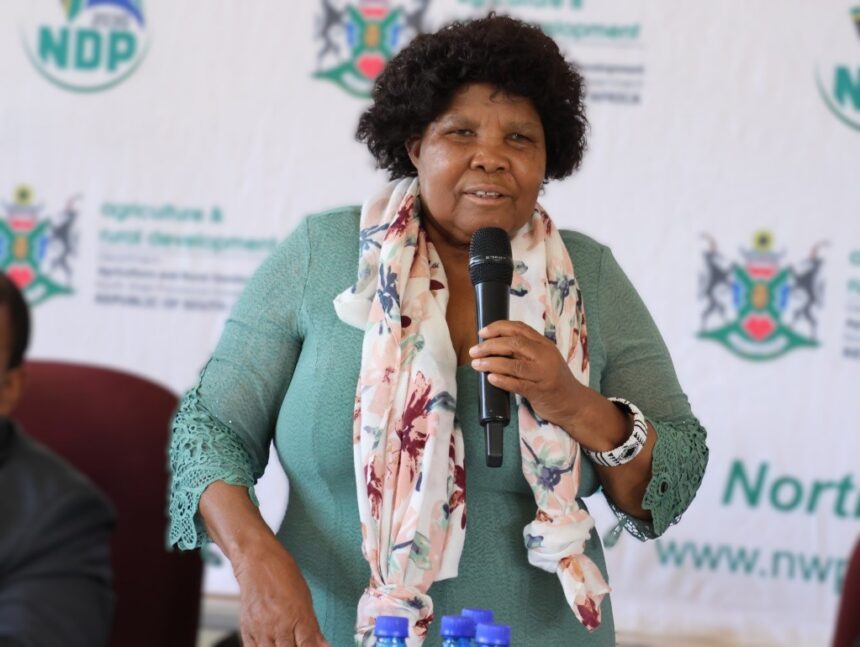
During her visit to Kirkwood, Deputy Minister Capa assessed the readiness of gardening implements that will be distributed to subsistence farmers in the area and nearby communities. The supplies are intended to support households in establishing or expanding backyard gardens that can provide a steady source of vegetables throughout the year. Items prepared for distribution typically include basic tools that make cultivation easier for households with limited farming experience or resources. The visit also highlighted the importance of efficient planning and logistics in ensuring that support reaches intended beneficiaries without delays. Government officials emphasised that the success of the programme depends on proper coordination at local and district level.
Subsistence farmers remain central to the government’s food security strategy because they play a direct role in producing food at household level. Many families in rural areas already practice small scale farming, but often lack adequate tools, inputs and technical guidance to maximise productivity. By addressing these gaps, the programme aims to transform subsistence gardening into a more reliable and structured form of food production. This support is especially important in areas where unemployment is high and households rely heavily on self produced food to meet daily needs. Strengthening this sector helps reduce pressure on social support systems while improving community wellbeing.
The Food Security at Household Level Programme is designed to create long term impact by building self reliance within communities rather than promoting short term dependency. Households that receive gardening implements are encouraged to actively maintain their gardens and use them as a continuous source of food. Over time, these gardens can improve nutrition, reduce household expenditure on groceries and even create opportunities for small scale local trade. The programme also promotes skills development as beneficiaries learn basic agricultural practices such as soil preparation, planting cycles and water management. These skills can be passed on within communities, strengthening local knowledge systems.
The visit to Kirkwood reflects government’s continued commitment to supporting rural development through practical and accessible interventions. By focusing on household level production, the initiative addresses food insecurity at its root rather than only responding to its effects. The distribution of gardening implements is expected to benefit vulnerable communities by improving access to tools that make food production more achievable. As implementation continues, the programme is expected to expand its reach and deepen its impact across more communities in the Eastern Cape. Ultimately, initiatives like this contribute to building stronger, more resilient food systems where households are empowered to feed themselves with dignity and consistency.
Join 'Farmers Mag' WhatsApp Channel
Get the latest Farming news and tips delivered straight to your WhatsApp
CLICK HERE TO JOIN