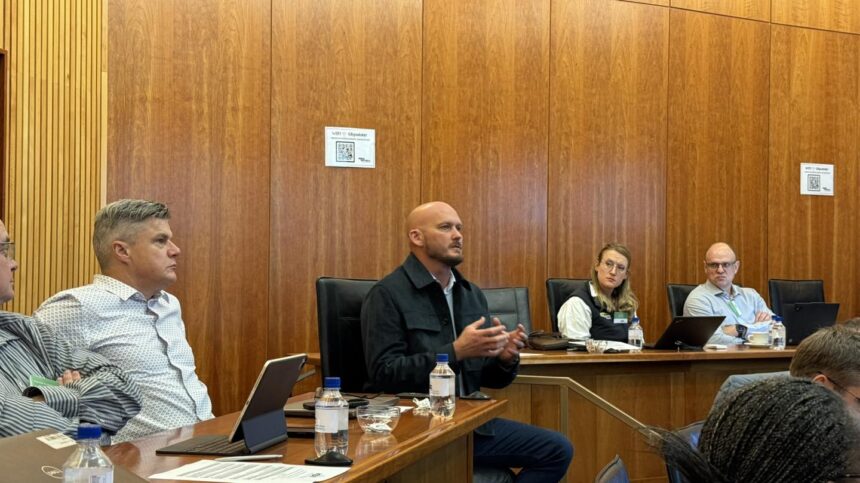
Agbiz hosted its Council Meeting on 23 April 2026 at the Grain Building Auditorium in Pretoria, with additional participation through MS Teams to ensure wider member engagement. The meeting brought together leadership and stakeholders from across the agricultural value chain to reflect on progress and align on key organisational priorities. It served as an important platform for reviewing developments that affect the competitiveness and sustainability of South Africa’s agricultural sector. The hybrid format allowed for inclusive participation, ensuring that both in person and virtual attendees could contribute meaningfully. This gathering reinforced Agbiz’s role as a central voice in shaping agricultural policy and economic direction.
A major focus of the session was trade engagements and economic diplomacy, which remain critical for expanding market access for South African agricultural products. Discussions highlighted the importance of strengthening relationships with international trading partners and navigating global market conditions. Participants examined how trade agreements and diplomatic efforts can open new export opportunities for farmers and agribusinesses. The council emphasised the need for coordinated efforts between government and industry to reduce barriers to trade. These engagements are essential for positioning South African agriculture as a competitive player in global markets.
Land reform was another key topic addressed during the meeting, reflecting its continued importance in shaping the structure of the agricultural sector. Members reviewed progress and challenges related to land reform initiatives and their impact on agricultural productivity. The discussion focused on ensuring that land reform supports both transformation and economic sustainability. There was recognition that successful land reform must be accompanied by access to finance, skills development and infrastructure support. These factors are necessary to ensure that emerging farmers can participate meaningfully in the agricultural economy.
Strategic projects within the organisation were also reviewed, with attention given to their role in driving long term sector development. These projects aim to support innovation, improve efficiency and strengthen value chains across agriculture. Council members assessed progress and identified areas where additional focus is required to achieve set objectives. The importance of collaboration between industry stakeholders was highlighted as a key factor in successful implementation. Strategic planning remains central to ensuring that the sector adapts to changing economic and environmental conditions.
Policy and legislative developments formed a significant part of the discussions, particularly in relation to their impact on agricultural operations and investment. Members analysed recent and upcoming policy changes that influence land use, trade, labour and environmental compliance. The council emphasised the need for proactive engagement with policymakers to ensure that regulations support sector growth. Clear and consistent policy frameworks were identified as essential for building investor confidence. This engagement helps ensure that the agricultural sector remains stable and competitive.
Updates on communications and marketing were also presented during the meeting, focusing on how the organisation communicates its work and strengthens its public presence. Effective communication strategies were discussed as a way to improve stakeholder engagement and industry visibility. Marketing efforts were highlighted as important tools for promoting South African agricultural products both locally and internationally. The council noted that strong communication supports trust and transparency within the sector. These efforts also help position agriculture as a key driver of economic development.
Financial matters were reviewed to ensure that the organisation remains well managed and aligned with its strategic objectives. Members examined financial performance, resource allocation and budgeting priorities. The discussion reinforced the importance of financial discipline in maintaining organisational effectiveness. Transparent financial management was highlighted as a key factor in sustaining member confidence. This oversight ensures that resources are directed towards initiatives that deliver measurable impact.
The Agbiz Council Meeting reaffirmed the organisation’s commitment to building a resilient and competitive agricultural sector. Through focused discussions on trade, land reform, policy, strategy and communication, the meeting provided a comprehensive overview of current priorities and future direction. The engagement of leadership and members ensured that diverse perspectives were considered in shaping outcomes. Continued collaboration remains essential for addressing sector challenges and unlocking growth opportunities. Agbiz’s ongoing work plays a significant role in supporting a dynamic and sustainable agricultural economy in South Africa.
Join 'Farmers Mag' WhatsApp Channel
Get the latest Farming news and tips delivered straight to your WhatsApp
CLICK HERE TO JOIN