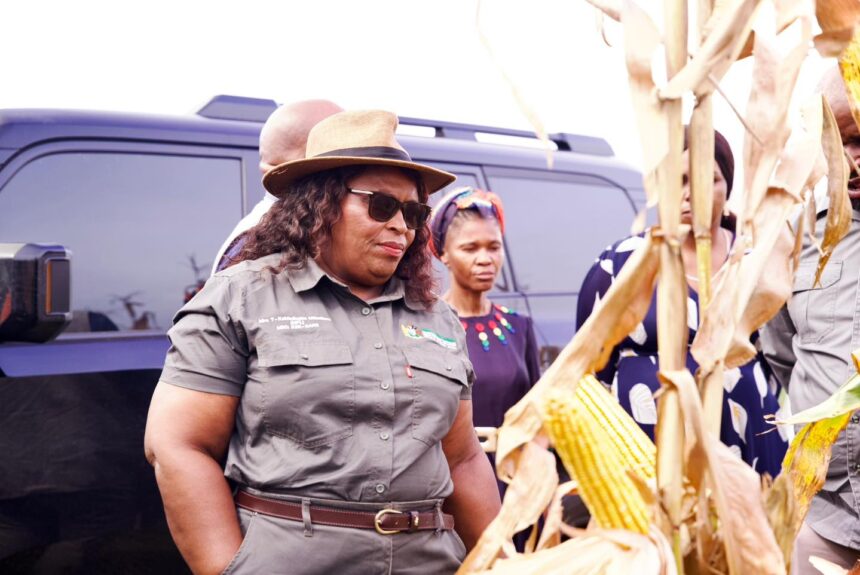
Agricultural development in KwaZulu-Natal continues to gain momentum as government programmes focus on strengthening food security and supporting rural economies. As part of the Operation Sukuma Sakhe programme, the KwaZulu-Natal MEC for Agriculture and Rural Development, Hon. Thembeni KaMadlopha-Mthethwa, conducted an oversight visit to Makhulela Holdings Grain Production. The visit formed part of ongoing efforts to assess the impact of departmental support on emerging and established farming enterprises. It also aimed to ensure that agricultural investments translate into measurable production outcomes. The engagement reflected a broader commitment to building a resilient and inclusive agricultural sector in the province.
Makhulela Holdings Grain Production is a thriving farming enterprise supported by the Department and has become an example of structured agricultural development in rural KwaZulu-Natal. The project spans numerous hectares of maize production, making it a significant contributor to local grain output. During the visit, MEC KaMadlopha-Mthethwa observed active farming operations and engaged with management on production methods and challenges. The scale of the maize fields demonstrated how targeted government support can expand agricultural capacity. It also showed how land utilisation can be improved through structured farming systems and technical assistance.
The oversight visit highlighted the Department’s ongoing commitment to strengthening food security across the province. Maize production remains a key component of South Africa’s staple food supply, and projects like Makhulela Holdings play an important role in stabilising availability and pricing. By supporting large scale grain production, the Department aims to reduce dependency on external supply chains and improve local self sufficiency. The MEC emphasised the importance of consistent productivity and efficient farm management practices. These elements are essential for ensuring long term food security in both rural and urban markets.
Empowering local farmers remains a central pillar of the Department’s agricultural development strategy. Through initiatives linked to Operation Sukuma Sakhe, farmers receive support in the form of infrastructure, training, and access to agricultural resources. The visit to Makhulela Holdings demonstrated how such support can translate into visible economic activity and job creation within rural communities. The enterprise also provides opportunities for skills development among local workers involved in planting, maintenance, and harvesting. This contributes to broader rural development objectives by creating sustainable livelihoods.
Sustainable agricultural development was another key focus during the oversight engagement. The Department continues to promote farming practices that protect soil quality, improve yield efficiency, and reduce environmental impact. At Makhulela Holdings, attention was given to production methods that align with long term sustainability goals. These include crop rotation planning, efficient water use, and responsible land management. Such practices ensure that agricultural productivity can be maintained over time without degrading natural resources.
The visit also reinforced the importance of partnerships between government and private agricultural enterprises. Collaboration between the Department and Makhulela Holdings demonstrates how shared responsibility can drive sector growth. Government support provides the foundation, while private operators contribute operational expertise and management capacity. This combination strengthens the overall agricultural value chain and enhances competitiveness. It also ensures that development initiatives are grounded in practical, real world farming conditions.
The oversight visit by MEC Thembeni KaMadlopha-Mthethwa to Makhulela Holdings Grain Production under the Operation Sukuma Sakhe programme highlighted the progress being made in KwaZulu-Natal’s agricultural sector. The extensive maize production project stands as a clear example of how targeted support can improve food security, empower farmers, and promote sustainable development. The Department’s continued involvement in such initiatives reflects a long term commitment to rural transformation and economic growth. As agricultural programmes expand, the focus remains on building strong, productive, and sustainable farming communities.
Join 'Farmers Mag' WhatsApp Channel
Get the latest Farming news and tips delivered straight to your WhatsApp
CLICK HERE TO JOIN