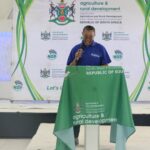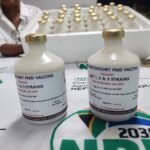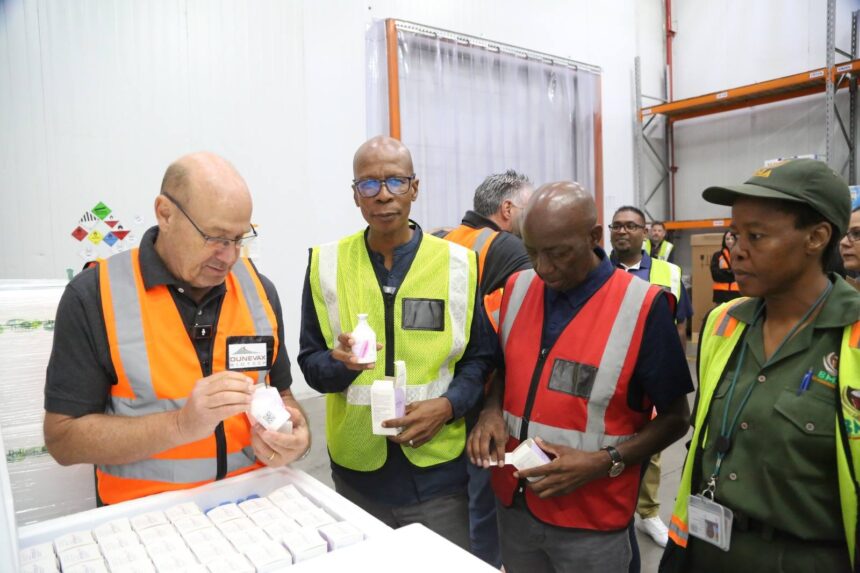
South Africa has taken a major step in strengthening its fight against Foot and Mouth Disease as the Minister of Agriculture, John Steenhuisen, confirmed the arrival of two million vaccine doses from Dollvet in Turkey. This shipment marks the first portion of a larger order of six million doses secured through local agents Dunevax. Distribution to provinces is expected to begin within days, signalling urgency in controlling the spread of the disease. The arrival of these vaccines comes at a critical time as the country continues to manage outbreaks that threaten livestock production and food security. This development reflects a coordinated national effort to stabilise the agricultural sector and protect farmers.
Building on this progress, the government has placed an additional order for five million vaccine doses from Biogénesis Bagó, which will be managed locally by Onderstepoort Biological Products. These vaccines will arrive in two batches, consisting of 3.5 million and 1.5 million doses. However, their importation is subject to approval by the South African Health Products Regulatory Authority under a Section 21 application process. This regulatory step ensures that all imported vaccines meet safety and quality standards before being distributed. Once approved, these additional doses will significantly boost the country’s vaccination capacity and strengthen ongoing disease control measures.
The Department of Agriculture has confirmed that it has secured all available matched vaccines currently on the international market. This ensures a steady and reliable supply as the country works toward vaccinating the national herd. The ultimate goal is to achieve recognition from the World Organisation for Animal Health as an FMD-free country with vaccination. Achieving this status is critical for reopening international markets that have been closed to South African red meat exports for decades. This effort is not only about disease control but also about restoring economic opportunities for farmers and the broader agricultural sector.
To manage the rollout effectively, the department has implemented a targeted vaccine allocation strategy based on scientific risk assessments and livestock population data. Provinces have been allocated doses according to their level of risk and need, ensuring that high priority areas receive adequate coverage. The Eastern Cape will receive 135400 doses, Free State 182400, Gauteng 124800, KwaZulu-Natal 192000, Mpumalanga 144000, North West 182400, Western Cape 150000, Northern Cape 100000, and Limpopo 150000. In addition to these allocations, specific sectors have been prioritised with 100000 doses for the dairy industry, 150000 for feedlots, and 150000 for the pig industry. A reserve of 239000 doses has been set aside for emergency use to respond quickly to new outbreaks.
The government has also strengthened surveillance and reporting systems to support the vaccination campaign. Faster data collection from provinces allows authorities to track disease spread and respond more efficiently. Collaboration with private sector partners and industry bodies has been key in ensuring that vaccination efforts reach farms across the country. These partnerships improve coordination and help maintain consistency in vaccine delivery and monitoring. The focus on data driven decision making ensures that resources are used effectively and that no high risk areas are overlooked.
Since February 2026, South Africa has already received four million vaccine doses, including 2.5 million from Biogénesis Bagó and 1.5 million from Dollvet. This follows an earlier import of two million doses in the last quarter of 2025. These combined efforts have enabled the vaccination of over 2.1 million animals nationwide. The scale of this campaign highlights the seriousness of the outbreak and the commitment to controlling it. Continuous vaccine supply remains essential to maintaining momentum and preventing further spread of the disease.
In parallel with vaccine procurement, the government is advancing regulatory measures to support long term disease control. On 10 April 2026, Minister Steenhuisen announced plans to introduce a Routine Vaccination Scheme for Foot and Mouth Disease under the Animal Diseases Act, 1984. Public comments on the proposed scheme closed on 17 April 2026, and submissions are currently being reviewed. Once finalised, the scheme will provide a structured framework for ongoing vaccination efforts. This will ensure consistency and sustainability in disease prevention across the country.
The global context also highlights the urgency of South Africa’s response. Foot and Mouth Disease outbreaks are currently affecting multiple regions, including Europe, the Middle East, and the Asia Pacific. Countries such as Greece, China, Cyprus, Israel, and Germany have reported recent cases. The specific SAT1 topotype 3 strain affecting South Africa has also been detected in Turkey, Azerbaijan, Lebanon, Israel, Cyprus, and Syria between late 2025 and early 2026. This widespread presence shows that FMD remains a global threat that requires coordinated international responses. South Africa’s actions are therefore aligned with broader global efforts to contain the disease.
The arrival of new vaccine shipments and the expansion of procurement efforts mark a critical phase in South Africa’s fight against Foot and Mouth Disease. Through strategic planning, targeted allocation, and strong partnerships, the country is building a comprehensive response to protect its livestock sector. The goal of achieving FMD-free status with vaccination reflects both a public health priority and an economic strategy to reopen global markets. Continued investment in vaccines, surveillance, and regulation will be essential to sustaining progress. These efforts position South Africa to not only control the current outbreak but also strengthen its long term agricultural resilience.
Join 'Farmers Mag' WhatsApp Channel
Get the latest Farming news and tips delivered straight to your WhatsApp
CLICK HERE TO JOIN