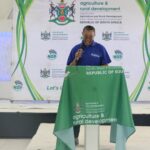
The visit by the Premier of Phophi Ramathuba to the Tafelkop Farmers Association marked a clear shift from routine oversight to hands on agricultural development planning. She was joined by the MEC for Agriculture and Rural Development, Nakedi Grace Kekana, during an engagement at the Tafelkop Irrigation Scheme. The leadership team did not arrive for observation alone, they arrived with a structured plan focused on agricultural expansion and job creation. Their visit signals a growing emphasis on turning irrigation schemes into high output economic zones. It also reflects a stronger push for coordinated development between government and farming communities.
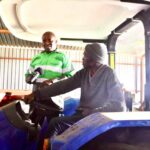
During the engagement, the provincial leadership committed to practical interventions designed to improve productivity at the irrigation scheme. Key pledges included the introduction of mechanisation support to reduce manual labour constraints and increase efficiency on farms. They also committed to upgrading irrigation infrastructure to improve water distribution and reliability for crop production. In addition, the revamping of local pack houses was highlighted as a priority to strengthen post harvest handling and market readiness. These improvements are expected to directly support farmers in scaling operations and improving product quality. The focus is on building a system that supports both production and value addition within the same local economy.
A major outcome of the visit was the emphasis on job creation linked to increased agricultural output. Farmers at the Tafelkop Irrigation Scheme were challenged to scale production levels to help achieve a target of more than 600 jobs for the surrounding community. This target places agriculture at the centre of local economic development and household income generation. The approach ties farming success directly to employment opportunities for residents in the area. It also encourages farmers to think beyond subsistence farming and move toward commercial production models. The expectation is that increased output will trigger a ripple effect across transport, packaging and distribution sectors.
The initiative also demonstrates the practical application of the District Development Model in action within Limpopo Province. The model is designed to improve coordination between different spheres of government and ensure that development projects deliver real outcomes at community level. The Tafelkop engagement showed this coordination clearly, with traditional leadership and government working side by side. The presence of the Executive Mayor of Minah Bahula, the Mayor of David Tladi, and the Deputy Chairperson of the Limpopo House of Traditional Leaders reinforced this collaborative approach. This multi level participation strengthens accountability and ensures that decisions reflect both community needs and policy direction. It also improves implementation speed by reducing administrative delays.
The Tafelkop Irrigation Scheme is now positioned as a key agricultural hub within the province, with strong potential for expansion and commercialisation. The focus on mechanisation will help farmers reduce production costs while increasing output consistency across seasons. Upgrading irrigation systems will improve water efficiency, which is critical in sustaining crop yields in changing climate conditions. The planned refurbishment of pack houses will also support farmers in meeting market standards and reducing post harvest losses. These combined interventions are expected to transform the area into a more competitive agricultural zone. The long term goal is to build resilience and ensure that farming remains a viable livelihood for future generations.
The engagement reflects a broader vision to strengthen agriculture as a driver of economic growth in Limpopo. By aligning infrastructure investment with job creation targets, the provincial government is building a structured development pathway for rural communities. The involvement of multiple stakeholders ensures that implementation remains inclusive and community focused. As these commitments move into execution, the impact is expected to be visible in increased production levels, improved infrastructure and expanded employment opportunities. This visit reinforces the position of Limpopo as a province determined to grow its agricultural sector and support communities through sustainable development initiatives.
Join 'Farmers Mag' WhatsApp Channel
Get the latest Farming news and tips delivered straight to your WhatsApp
CLICK HERE TO JOIN