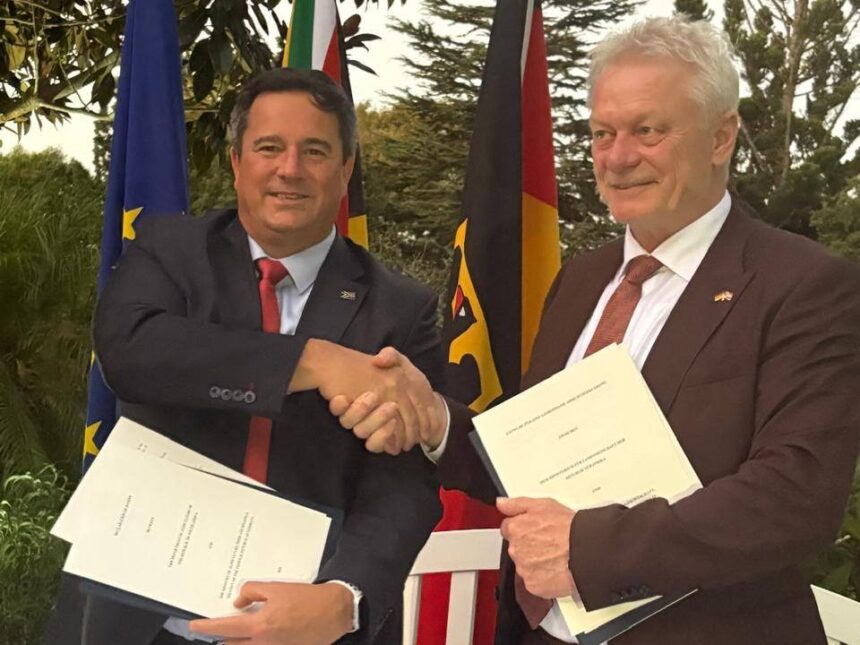
South Africa has taken an important step toward strengthening its agricultural sector through a new international partnership focused on disease control, trade and sustainable development. Minister of Agriculture John Steenhuisen recently joined the German Federal Minister of Agriculture, Food and Regional Identity to sign a Joint Declaration of Intent on Agricultural Development. The agreement signals a deeper level of cooperation between South Africa and Germany as both nations work to address challenges facing modern agriculture. It also reflects the growing importance of global partnerships in securing food systems and improving agricultural resilience. Through this declaration, the two countries aim to combine knowledge, technical expertise and policy coordination to support farmers and strengthen agricultural trade.
A central focus of the partnership is the control and management of Foot and Mouth Disease, commonly known as FMD. This highly contagious viral disease affects cloven hoofed animals such as cattle, pigs, sheep and goats. Outbreaks of FMD can severely disrupt livestock production and international trade in animal products. For countries with large livestock industries, strong disease control systems are critical for maintaining market access and protecting rural livelihoods. The cooperation between South Africa and Germany will focus on strengthening disease monitoring, improving veterinary systems and sharing scientific research to limit the spread of the disease.
Effective management of livestock diseases is essential for protecting farmers and ensuring stable food supply chains. In recent years, outbreaks of Foot and Mouth Disease have had a major impact on the livestock industry in South Africa. Movement restrictions, export limitations and economic losses have affected farmers, meat processors and rural communities. By partnering with Germany, South Africa gains access to advanced technical knowledge and international best practices in disease prevention and response. This collaboration can improve early detection systems, strengthen biosecurity measures and enhance veterinary capacity across the country.
Another important aspect of the agreement is support for the safe trade in animal products between countries. Global markets demand strict health and safety standards before meat and livestock products can be exported. Cooperation between South Africa and Germany will help strengthen regulatory frameworks and ensure that animal products meet international requirements. This includes improving inspection systems, disease certification processes and traceability measures. By strengthening these systems, South African producers can increase confidence among international buyers and expand export opportunities in global markets.
Sustainable agricultural development also forms a key pillar of the partnership. Agriculture worldwide faces growing pressure from climate change, water scarcity and rising production costs. Through this joint initiative, the two countries will exchange expertise on environmentally responsible farming practices and innovative agricultural technologies. Knowledge sharing can help farmers improve productivity while protecting natural resources such as soil and water. Sustainable approaches also support long term food security and help rural communities adapt to changing environmental conditions.
Germany has extensive experience in agricultural innovation, research and sustainable farming systems. Through cooperation with South Africa, German institutions can share technical expertise and research findings that support modern agricultural practices. This may include advancements in livestock health management, precision agriculture and climate resilient farming methods. For South Africa, access to this knowledge can strengthen agricultural productivity and improve the competitiveness of local producers. Such partnerships also encourage collaboration between research institutions, agricultural organizations and government departments.
The agreement also reflects a broader strategic relationship between South Africa and Germany in economic development and trade. Agriculture plays a major role in rural employment, food production and export earnings within South Africa. Strengthening the sector helps create jobs and supports economic stability in farming communities. By working together, both countries aim to build agricultural systems that are resilient, efficient and capable of meeting global market demands. International cooperation can also support innovation and investment in key agricultural industries.
This Joint Declaration of Intent marks an important milestone in the growing partnership between South Africa and Germany. By focusing on disease control, safe trade and sustainable development, the agreement addresses some of the most critical challenges facing the agricultural sector today. Cooperation between governments, researchers and farmers will help strengthen livestock health systems and improve agricultural productivity. It also creates opportunities for knowledge exchange and long term collaboration that benefits both nations. As South Africa continues to modernize its agricultural sector, partnerships like this one play a key role in building a resilient and competitive industry for the future.
Join 'Farmers Mag' WhatsApp Channel
Get the latest Farming news and tips delivered straight to your WhatsApp
CLICK HERE TO JOIN