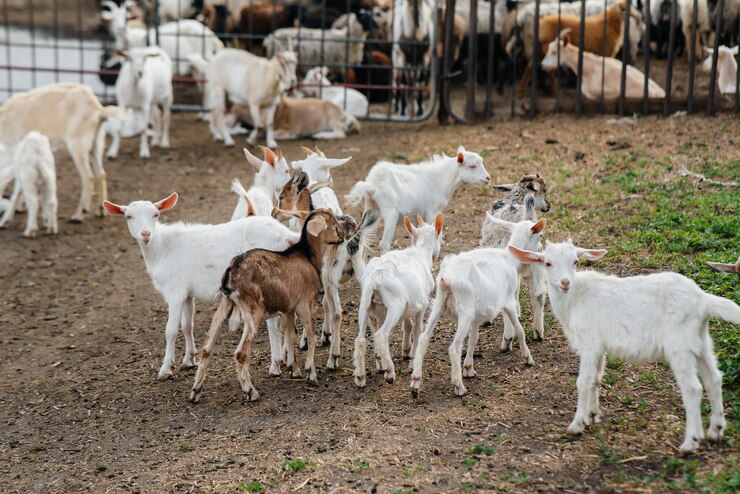
Raising small livestock such as goats, sheep, and poultry is an effective way to generate income and provide food even on limited land. Urban, peri-urban, and small-scale farmers can use compact spaces efficiently by combining proper housing, feeding, and management practices. These animals are hardy, require less space than cattle, and can adapt to various environments, making them ideal for small-scale commercial or household farming.
Goats are one of the most versatile small livestock options. They thrive on shrubs, weeds, and crop residues, making them easy to feed in limited areas. Breeds like Boer and Kalahari Red are popular for meat, while dairy goats such as Saanen or Toggenburg provide milk. Goats also produce manure that can fertilize crops, contributing to a sustainable farming system. Housing should be secure to protect against predators, and routine health checks and deworming are essential for maintaining herd productivity.
Sheep are suitable for small pastures and provide multiple revenue streams through meat, wool, and breeding stock. Dorper and Merino breeds are commonly raised for meat and wool quality. Sheep require controlled grazing and access to clean water. Managing parasites through rotational grazing and regular vaccinations is crucial, especially in compact farming setups. With proper care, sheep can provide consistent income and complement other livestock on limited land.
Poultry farming is highly productive on small plots. Chickens for meat (broilers) or eggs (layers) can be raised in coops, pens, or free-range systems depending on space and resources. Poultry feed is relatively inexpensive, and birds mature quickly, allowing for rapid returns. Integrating poultry with goats or sheep maximizes land use, as chickens can scavenge under trees or pens, reducing waste and controlling pests.
Successful small livestock farming on limited space requires careful planning. Adequate shelter, fencing, and clean water are critical for animal health. Rotational grazing, supplementary feeding, and biosecurity measures help prevent disease outbreaks. Farmers can also integrate small livestock with vegetable gardens or crop residues to create a circular system that reduces waste and enhances productivity.
Goats, sheep, and poultry are ideal livestock for small-scale farming. They provide multiple income streams, require limited space, and are compatible with sustainable farming practices. With proper management, even a small plot of land can become a productive and profitable livestock operation, contributing to food security and economic growth for smallholder farmers.
Join 'Farmers Mag' WhatsApp Channel
Get the latest Farming news and tips delivered straight to your WhatsApp
CLICK HERE TO JOIN