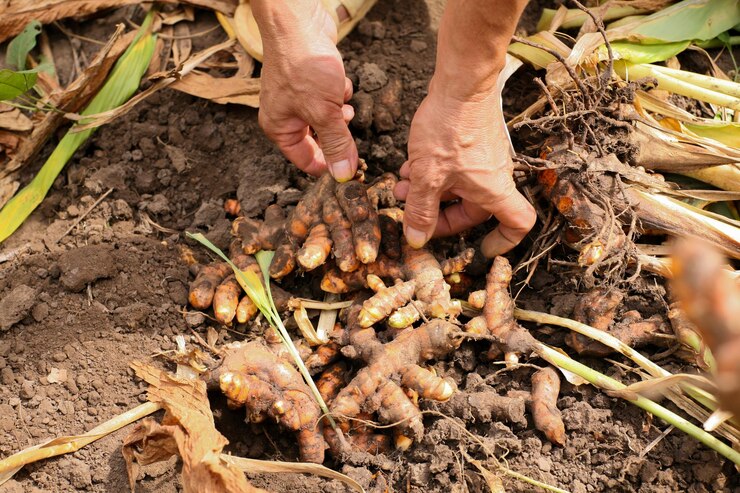
KwaZulu-Natal (KZN) offers ideal conditions for growing ginger and turmeric, thanks to its warm temperatures, high rainfall, and fertile soils. Both crops are in high demand locally and internationally, making them lucrative options for farmers. With proper planning, management, and marketing, a ginger and turmeric farm can become a profitable venture.
Site Selection and Soil Requirements
Choose well-drained, fertile soils rich in organic matter. Sandy loam or loamy soils with a slightly acidic to neutral pH (5.5–6.5) work best. Avoid low-lying areas prone to water logging, as excess moisture can lead to root rot. Good soil preparation, including ploughing and incorporation of compost or well-rotted manure, improves soil structure and nutrient availability.
Climate and Planting
Ginger and turmeric require warm, humid conditions with temperatures between 20°C and 30°C. Both crops thrive under partial shade, particularly during the early growth stage. Planting typically occurs at the start of the rainy season. Rhizomes should be healthy, disease-free, and cut into sections with at least one viable bud. Space plants 20–30 cm apart in rows 30–40 cm apart to allow proper growth and airflow.
Watering and Irrigation
Consistent moisture is critical, especially during the first three months of growth. Drip irrigation is recommended to conserve water and ensure even distribution. Avoid overwatering, as standing water can cause rhizome rot. Mulching with straw or dry leaves helps retain soil moisture, suppress weeds, and regulate soil temperature.
Fertilisation and Soil Nutrition
Apply balanced fertilisers with nitrogen, phosphorus, and potassium according to soil test results. Organic inputs, such as compost, poultry manure, and vermicompost, improve soil fertility and boost rhizome quality. Split applications of fertiliser during the growth period encourage healthy vegetative growth and enhance yield.
Pest and Disease Management
Common pests include aphids and shoot borers, while diseases like rhizome rot and leaf spot can affect yields. Regular field monitoring, proper spacing, crop rotation, and removal of infected plant material reduce pest and disease pressure. Using certified disease-free rhizomes and applying biocontrol agents or approved agrochemicals can further protect crops.
Harvesting and Post-Harvest Handling
Ginger and turmeric are typically ready for harvest 8–10 months after planting, when leaves begin to yellow and dry. Carefully dig out the rhizomes to avoid damage. Wash, sort, and sun-dry them for storage or processing. Proper post-harvest handling preserves quality, extending shelf life and market value.
Marketing and Profitability
Both crops have strong local demand from retailers, processors, and herbal markets. Export opportunities exist for dried, powdered, or fresh rhizomes. Value addition through processing into powders, oils, or teas can significantly increase profits. Establishing relationships with local cooperatives or processors can ensure consistent sales and better prices.
Starting a ginger and turmeric farm in KZN requires careful planning, attention to soil and climate conditions, and effective crop management. By investing in quality inputs, maintaining good agricultural practices, and exploring value-added markets, farmers can build a profitable and sustainable ginger and turmeric enterprise.
Join 'Farmers Mag' WhatsApp Channel
Get the latest Farming news and tips delivered straight to your WhatsApp
CLICK HERE TO JOIN