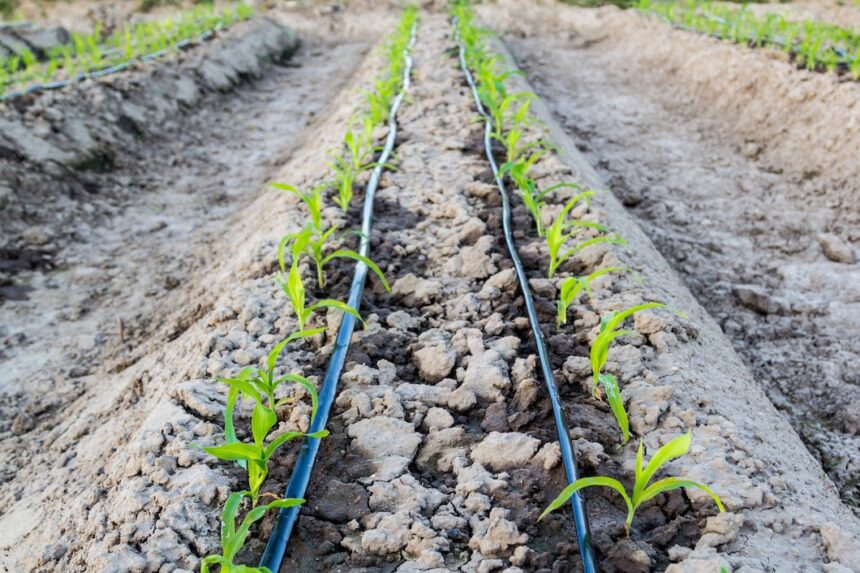
Southern Africa’s farmers are facing a growing threat from prolonged droughts, unpredictable rainfall, and rising temperatures. These conditions are reshaping how food is produced, especially in semi-arid regions where water is increasingly scarce. Adopting climate-resilient farming practices is no longer optional. It is essential for long-term food security and profitability.
Here are five practical, proven methods to help farmers stay productive during drought.
1. Conservation Agriculture
Conservation agriculture focuses on minimum soil disturbance, permanent soil cover, and crop rotation. By avoiding deep ploughing and leaving crop residues on the surface, moisture loss is reduced, and soil structure improves. Mulching helps maintain cooler soil temperatures and reduces evaporation. Crop rotations break pest cycles and enhance soil fertility.
Farmers in the Free State and Limpopo using no-till systems have reported up to 30% higher soil moisture retention compared to conventional ploughing. This method also cuts fuel costs and preserves valuable topsoil.
2. Drip Irrigation and Smart Water Management
Water efficiency is critical in drought-prone areas. Drip irrigation delivers water directly to plant roots, reducing evaporation losses. It allows for precise control of water use and nutrient delivery.
Installing soil moisture sensors helps determine the right irrigation timing, avoiding both water stress and over-irrigation. Farmers in the Northern Cape using moisture probes have improved water use efficiency by more than 40%. Rainwater harvesting systems and on-farm dams can also supplement irrigation during dry spells.
3. Drought-Tolerant Crop Varieties
Plant breeding has advanced to produce crops that perform better under limited water conditions. Drought-tolerant maize, sorghum, and cowpea varieties can maintain yields even with lower rainfall.
These crops have deeper root systems and shorter growing cycles, allowing them to mature before peak heat periods. For example, some drought-tolerant maize hybrids can yield 25% more than traditional varieties in dry years. Choosing the right seed based on regional trials is key to success.
4. Agroforestry and Windbreaks
Integrating trees and shrubs into cropping systems provides multiple benefits. Trees reduce wind erosion, improve water infiltration, and help moderate field temperatures. Deep-rooted species like acacia or moringa can access groundwater reserves and recycle nutrients to the surface.
In KwaZulu-Natal, farmers who planted windbreaks around maize fields saw a 15% yield increase due to reduced wind stress and soil moisture loss. Agroforestry also diversifies income through timber, fruit, or fodder production.
5. Soil Health Restoration
Healthy soils act as natural water reservoirs. Increasing organic matter through compost, manure, or cover crops enhances the soil’s ability to retain moisture. Leguminous cover crops, such as cowpeas or lucerne, fix nitrogen and build structure for better root penetration.
Soil testing should guide nutrient management. Balanced fertilisation prevents degradation and helps plants cope with stress. Farmers who improved soil organic carbon levels by even 1% reported stronger crop resilience during the 2023 drought season.
Drought conditions will continue to test African agriculture, but with smart planning and innovation, farmers can adapt. Practices like conservation tillage, precision irrigation, improved genetics, and soil management are proven solutions. They reduce risk, cut costs, and sustain yields even under extreme weather. By investing in climate-resilient systems today, farmers can secure their livelihoods and contribute to a more sustainable food future.
Join 'Farmers Mag' WhatsApp Channel
Get the latest Farming news and tips delivered straight to your WhatsApp
CLICK HERE TO JOIN