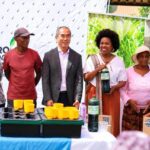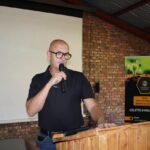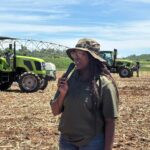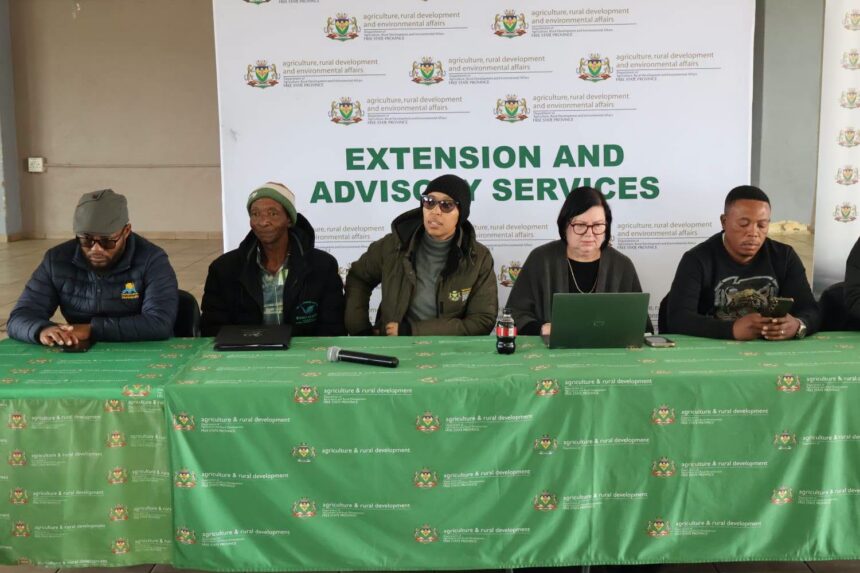
MEC Rockman held a farmers engagement at Refeng Kgotso Community Hall, bringing farmers together to discuss the practical challenges affecting agricultural production in their communities. The engagement created an opportunity for farmers to speak directly about the obstacles they face in livestock farming, crop production and access to agricultural support. The meeting also focused on identifying areas where the department can provide assistance and where stronger cooperation between farmers, government and municipalities is needed. Issues raised included access to water, fencing, livestock medication, lease agreements, poor roads, stock theft and market access. The engagement highlighted the need for practical solutions that can help farmers protect their livestock, improve production and build more sustainable agricultural businesses.
In his welcoming remarks, Mr Roberts explained that the purpose of the engagement was to give MEC Rockman an opportunity to interact directly with farmers and understand the challenges they experience on a daily basis. He said the meeting would allow farmers to raise their needs so that the department could consider where it can provide assistance. Direct engagement with farmers can help government understand how policies and agricultural programmes affect producers at community level. It can also help identify challenges that may not be fully visible through administrative processes. The discussions at Refeng Kgotso Community Hall therefore placed farmers at the centre of the conversation about agricultural development.
The first presentation came from Mr Tele of Rosendal Commonage, who outlined several challenges affecting farmers in the area. He identified access to water as one of the major concerns because reliable water is important for both livestock and agricultural activities. He also raised the need for proper fencing to help manage animals and protect farming operations. Access to medication for cattle was another concern discussed during the engagement. These challenges can affect animal health, production costs and the ability of farmers to maintain productive livestock operations.
Mr Molapo from Mabele Commonage thanked the department for its work relating to Foot and Mouth Disease vaccination. His acknowledgement showed the importance of animal health services for farmers who depend on livestock for their livelihoods. He also raised concerns about obtaining lease agreements, explaining that the lack of suitable documentation can create difficulties when farmers apply for funding. Access to secure land arrangements can be important when farmers need to demonstrate their ability to use land for agricultural purposes. He further identified poor roads and stock theft as challenges that continue to affect farming activities in the area.
The concerns about lease agreements also demonstrate how administrative challenges can have practical consequences for farmers. Funding applications often require supporting information that establishes a farmer’s circumstances and the basis for the proposed agricultural activity. When farmers struggle to obtain the required agreements or documentation, they may face additional barriers during funding processes. Addressing these issues requires coordination between farmers, municipalities and relevant government departments. Clear communication about land arrangements and application requirements can help farmers better understand what documentation they need and where to obtain it.
Stock theft emerged as another important concern during the engagement. Livestock represents a significant investment for farmers, and the loss of animals can directly affect household income and agricultural production. Farmers who experience stock theft may also face additional costs when replacing animals and rebuilding their herds. Addressing the problem requires cooperation between farming communities and the relevant authorities. Better communication, responsible livestock management and community-level accountability can form part of broader efforts to protect agricultural assets.
Animal health received detailed attention during the engagement through a presentation by Ms Mampe, an Animal Health Technician. She explained how Foot and Mouth Disease affects animals and discussed symptoms that farmers should watch for. The presentation also covered ways to manage the disease and reinforced the importance of farmers understanding livestock health risks. Foot and Mouth Disease can affect susceptible cloven-hoofed animals and requires appropriate disease control measures when suspected. Farmers play an important role in observing their animals and reporting concerning signs to the relevant animal health authorities.
The discussion around Foot and Mouth Disease was particularly relevant for commonage farmers because animals from different owners may share the same grazing or other communal resources. Shared farming environments can create additional biosecurity considerations because livestock may have more opportunities for contact with animals from different herds. MEC Rockman said she had observed that many of the challenges raised during the engagement were associated with commonage farming and a lack of biosecurity. Strengthening biosecurity requires farmers to understand how diseases can enter and spread within livestock operations. It also requires practical measures that are suitable for the conditions under which commonage farmers operate.
MEC Rockman said the department has a partnership with the municipality to develop a proper audit of people using commonages. A clear understanding of who uses commonage areas can support better management and accountability. It can also help authorities and farmers understand the scale of agricultural activity taking place on shared land. Accurate records may assist with planning services such as animal health interventions, infrastructure support and agricultural programmes. The proposed audit therefore forms part of a wider need for organised and accountable commonage management.
MEC Rockman also encouraged farmers to appoint proper committees to strengthen accountability for resources. Effective committees can provide farmers with structures through which they can communicate their needs, manage shared resources and engage with government institutions. Clear responsibilities can also make it easier to identify who is responsible for decisions and follow-up actions. For commonage farmers, organised structures may be especially important because several producers can depend on the same land, infrastructure and services. Strong governance at community level can support more transparent management of agricultural resources.
Market access and overproduction were another major issue raised by MEC Rockman. She pointed out that certain commodities, including spinach, can experience periods of overproduction. When supply exceeds demand, farmers may find themselves selling their produce at lower prices. This can reduce the income farmers receive despite the costs they have already incurred for seed, water, labour, transport and other inputs. The challenge is not simply producing more food, but also ensuring that farmers have opportunities to reach viable markets.
MEC Rockman said economics must form part of the response to agricultural challenges and that solutions should allow farmers to explore markets. Market planning can help farmers understand what buyers need, when demand is strongest and what quantities can realistically be sold. Farmers can also benefit from considering production planning before planting large quantities of the same commodity. Better coordination between producers can help reduce situations where many farmers bring similar products to the market at the same time. Strengthening market access therefore requires attention to production decisions, pricing, transportation, storage and relationships with buyers.
The discussion about spinach and other commodities also highlights the difference between food production and profitable farming. A farmer may successfully produce a crop but still struggle financially if there is insufficient demand or if market prices fall below production costs. Agricultural development therefore needs to consider the full value chain rather than focusing only on production. Farmers need information that can help them make informed decisions about what to plant and where to sell it. This approach can support more sustainable agricultural enterprises and reduce the risk of producing crops without a clear market.
Weather conditions were another important part of MEC Rockman’s keynote address. She encouraged farmers to prepare for an extreme wave projected by the South African Weather Service. Farmers need to pay attention to official weather information because extreme temperatures can affect livestock, crops, water availability and working conditions. Livestock can experience heat stress when temperatures rise significantly, particularly when animals lack adequate shade, water and ventilation. Preparing ahead of extreme weather can help farmers reduce avoidable risks to their animals and agricultural activities.
MEC Rockman also encouraged commonage farmers to plant trees as one way of helping reduce heat stress. Trees can provide shade for livestock and contribute to more suitable conditions around farming areas when they are properly selected and maintained. Tree planting should be matched with appropriate species, adequate water and responsible land management. Farmers also need to protect young trees from livestock and other potential damage while they become established. The recommendation connects environmental management with livestock welfare and climate resilience at farm level.
The farmers engagement at Refeng Kgotso Community Hall demonstrated the value of creating space for direct dialogue between government and agricultural producers. Farmers were able to raise specific concerns affecting their livelihoods, while officials had an opportunity to explain agricultural support measures and discuss possible areas for intervention. The issues raised were diverse, but many were connected to basic requirements for productive and sustainable farming. Water, fencing, animal health, land documentation, roads, security, market access and weather preparedness all influence the ability of farmers to operate successfully. Addressing these challenges will require continued engagement and cooperation among farmers, municipalities and government departments.
The meeting also showed that agricultural development requires more than financial support. Farmers need functioning infrastructure, reliable animal health services, suitable land arrangements, market opportunities and information that can help them manage production risks. They also need effective structures that promote accountability when resources are shared. Commonage farmers face particular challenges because they operate within shared spaces where biosecurity, grazing management and resource allocation require cooperation. Strengthening these systems can help create better conditions for farming communities.
The engagement led by MEC Rockman placed practical farmer concerns at the centre of the agricultural discussion. The concerns raised by Mr Tele, Mr Molapo and other participants showed how everyday challenges can influence livestock production, crop farming and access to support. The presentation by Animal Health Technician Ms Mampe added important information about Foot and Mouth Disease and the role farmers play in protecting animal health. MEC Rockman’s keynote address broadened the discussion to include commonage governance, biosecurity, agricultural markets and preparation for extreme weather. Together, these issues demonstrate that sustainable farming depends on coordinated action across several areas.
The Refeng Kgotso farmers engagement ultimately reinforced the importance of listening to farmers and developing solutions around the realities they face. Better access to water, fencing and livestock medication can support animal production, while improved land documentation can help farmers navigate funding opportunities. Stronger biosecurity, effective commonage committees and measures to address stock theft can help protect farming operations. Better market planning can help farmers respond to overproduction and price pressures, while weather preparedness and tree planting can contribute to climate resilience and livestock welfare. Continued engagement between MEC Rockman, farmers, municipalities and agricultural officials can help turn the concerns raised at the meeting into practical actions that support stronger and more sustainable farming communities.
Join 'Farmers Mag' WhatsApp Channel
Get the latest Farming news and tips delivered straight to your WhatsApp
CLICK HERE TO JOIN