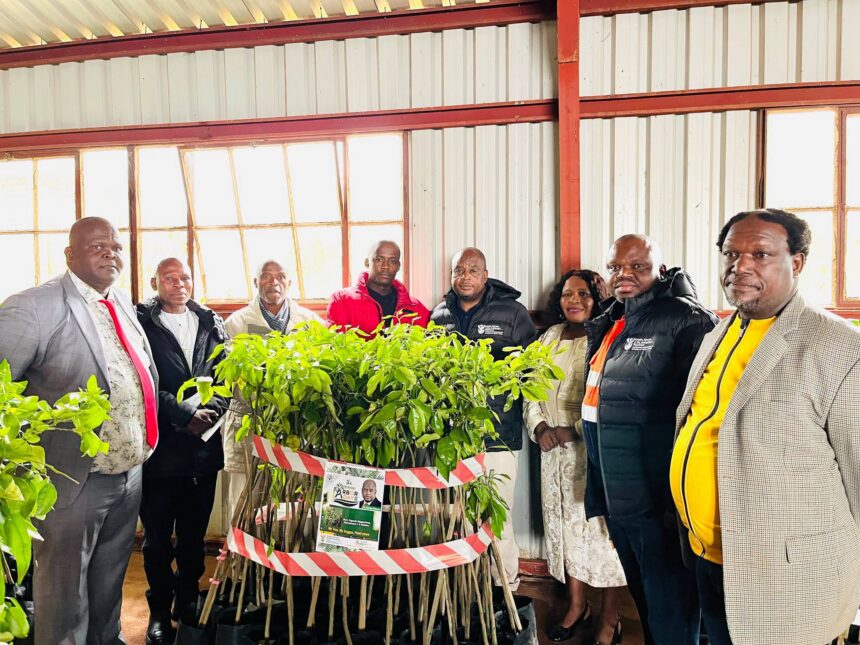
Arbor Month in Limpopo is taking on a broader meaning in Ga-Matji, where tree planting is being linked with food production, environmental protection and community development. MEC Makamu led activities from Ga-Matji Moshate to Ward 3 as part of an effort to promote greener communities and strengthen local food security. The activities at the Mogabagabe Climate Smart Agriculture Project highlight how trees can support more than environmental goals when communities plan their agricultural spaces carefully. Through the One Employee, One Tree campaign, employees and communities are being encouraged to contribute directly to a greener Limpopo. The message is simple and practical: planting trees can help create shade, support productive landscapes and contribute to a more resilient future.
The Mogabagabe Climate Smart Agriculture Project provides an important setting for connecting Arbor Month with food security. Climate-smart agriculture focuses on agricultural practices that respond to changing environmental conditions while supporting productive and sustainable food systems. Trees can form part of these efforts by providing shade and helping improve the overall condition of agricultural landscapes. Their value depends on the species selected, the local climate, available water and how they are integrated into farming activities. In Ga-Matji, the Arbor Month activities bring these issues into a community setting where environmental action and agricultural development can be considered together.
The presence of MEC Makamu at the Ga-Matji activities also places emphasis on leadership through direct participation. Leading from the front in a tree-planting campaign sends a practical message about the importance of environmental responsibility. Tree planting requires more than placing seedlings in the ground, because newly planted trees need suitable conditions and ongoing care to survive. Communities, employees and local institutions therefore have an important role to play after Arbor Month activities end. The long-term value of the campaign will depend on continued maintenance, responsible water use and the protection of planted trees.
The One Employee, One Tree campaign adds another dimension to Arbor Month by encouraging individual participation. Its focus is not limited to large government projects or organised planting events. Each employee who plants and cares for a tree can contribute to a wider culture of environmental responsibility. When many people take part, individual actions can become part of a broader community effort to increase tree cover and strengthen environmental awareness. The campaign’s message, “Together, We Keep Growing,” reflects the idea that sustained participation matters as much as the planting activity itself.
The movement from Ga-Matji Moshate to Ward 3 demonstrates the importance of taking environmental programmes into communities. Tree planting becomes more meaningful when residents can see how environmental resources connect with everyday needs such as food production, shade and healthier surroundings. In rural areas, the choice of trees can also affect how land is used and how agricultural activities are organised. Fruit and other useful trees may provide direct benefits where conditions are suitable, while indigenous trees can contribute to local biodiversity and ecological value. Any planting programme must therefore consider local conditions rather than treating every location as identical.
Food security is particularly important when discussing climate-smart agriculture because changing weather conditions can place pressure on agricultural production. Farmers and communities need approaches that can help them manage environmental risks while maintaining food production. Integrating appropriate trees into agricultural landscapes can contribute to soil protection, shade and ecosystem health, although the benefits depend on careful planning and management. Trees can also take time to mature, which means communities should view tree planting as a long-term investment rather than an immediate solution to food insecurity. The Mogabagabe Climate Smart Agriculture Project provides a useful context for reinforcing this longer-term perspective.
Arbor Month also creates an opportunity to increase public awareness about the role of trees in communities. Trees can provide shade in public spaces, contribute to biodiversity and support healthier local environments. In agricultural settings, properly selected trees can form part of systems that combine crops, livestock and trees where local conditions allow. However, tree planting must be matched with appropriate species selection, adequate spacing and proper care. Planting large numbers of trees without planning for their survival can reduce the long-term impact of an environmental campaign.
The Ga-Matji activities also connect environmental action with the broader goal of building resilient communities in Limpopo. A greener community requires participation from government, employees, farmers, traditional leadership, residents and other local stakeholders. Each group can contribute in different ways, from planting and maintenance to community education and responsible land management. This shared responsibility can help ensure that tree planting becomes part of everyday community development rather than a once-a-year activity. The success of the One Employee, One Tree campaign will ultimately depend on whether planted trees are protected and allowed to grow.
The focus on shade is also significant because trees can make outdoor spaces more comfortable, particularly in areas exposed to strong sunlight. Shade trees can benefit community spaces, agricultural areas and places where people gather for daily activities. Their contribution can increase as trees mature, which again makes maintenance and protection essential. Communities should also consider the water requirements of different species, especially in areas where water resources are limited. Responsible tree planting means choosing species and planting locations that are appropriate for the local environment.
The food security dimension of the initiative gives Arbor Month a practical focus. Planting useful trees can support household and community priorities when the selected species suit local growing conditions and available resources. Food-producing trees can take time before they generate meaningful yields, so planting should form part of a broader food security strategy that includes crops, agricultural skills, water management and access to productive land. Climate-smart agriculture can support this approach by encouraging farmers to consider environmental conditions when planning production. The connection between trees and food security therefore requires careful planning rather than assuming that every tree automatically produces the same benefits.
The activities at Ga-Matji also reinforce the importance of local participation in environmental programmes. Communities understand their local conditions, land-use patterns and environmental challenges in ways that can help improve the planning of planting projects. Engagement with residents can help identify suitable planting areas and encourage people to take responsibility for trees after official events have ended. Schools, workplaces, households and community organisations can also help build awareness about why trees need protection and regular care. A tree planted during Arbor Month only creates lasting value if someone continues to look after it.
The One Employee, One Tree campaign presents a clear opportunity to turn individual environmental commitments into collective action across Limpopo. Employees can become participants in environmental protection rather than only observers of government programmes. The campaign can also encourage conversations about climate resilience, food production and sustainable land management in workplaces and communities. When planting is combined with education and follow-up care, it can create a stronger connection between environmental awareness and practical action. This approach can help make Arbor Month relevant beyond the annual planting season.
The message from Ga-Matji is therefore broader than simply planting more trees. It is about creating landscapes that can provide food, shade and environmental benefits while supporting communities facing changing conditions. The Mogabagabe Climate Smart Agriculture Project places these priorities in a setting where agriculture, climate resilience and environmental stewardship intersect. MEC Makamu’s participation highlights the role of visible leadership in encouraging public involvement. The One Employee, One Tree campaign extends that message by asking individuals to make a direct contribution to a greener Limpopo.
Arbor Month offers a reminder that environmental progress depends on consistent action after the public event has ended. The trees planted in Ga-Matji will require care, protection and suitable growing conditions if they are to deliver their intended benefits. Communities and employees can help sustain the campaign by monitoring planted trees, replacing trees that fail where appropriate and protecting them from damage. Agricultural projects can also continue exploring responsible ways to integrate trees into productive landscapes. These actions can strengthen the connection between environmental protection, food security and climate-smart agriculture.
From Ga-Matji Moshate to Ward 3, the One Employee, One Tree campaign represents a call for continued participation in building a greener Limpopo. The Mogabagabe Climate Smart Agriculture Project shows how Arbor Month can be connected with practical priorities such as food security, shade and climate resilience. Planting trees is an important first step, but long-term care determines whether those trees become a lasting community resource. With responsible planning and sustained participation, tree planting can support healthier and more productive environments over time. This Arbor Month, the message from Ga-Matji is clear: planting trees means investing in food, shade, environmental responsibility and hope for the future, and together, we keep growing.
Join 'Farmers Mag' WhatsApp Channel
Get the latest Farming news and tips delivered straight to your WhatsApp
CLICK HERE TO JOIN