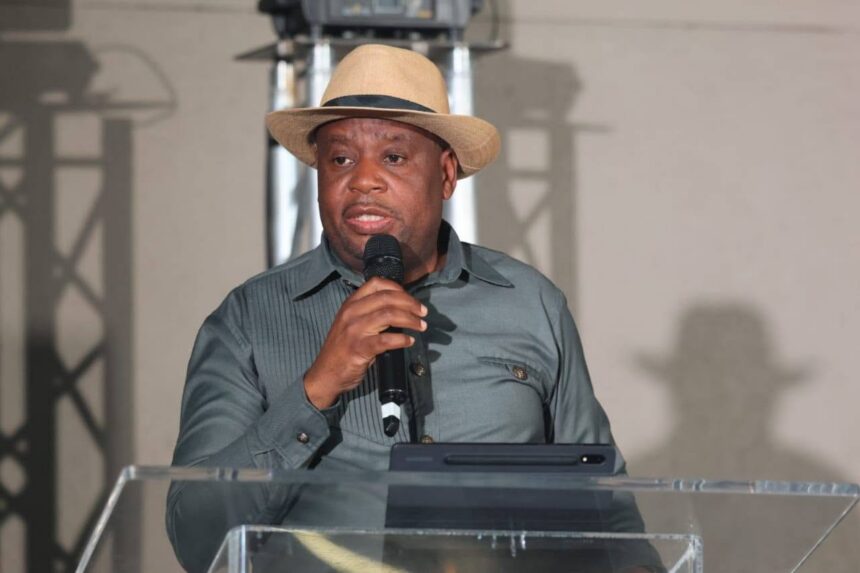
The future of agriculture in Limpopo and South Africa depends not only on farmers and agricultural production, but also on the economic research, policy analysis and innovation that support the sector. This was the central message from Limpopo MEC for Agriculture and Rural Development, Mr. Basikopo Makamu, when he addressed delegates at the 63rd Agricultural Economics Association of South Africa (AEASA) Conference Gala Dinner. In his keynote address, MEC Makamu highlighted the important contribution of agricultural economists, researchers and policymakers to the development of a stronger and more sustainable agricultural economy. Their work can help decision-makers understand production challenges, identify opportunities and develop policies that respond to the needs of farmers and rural communities. The engagement also reinforced the commitment of the Limpopo Department of Agriculture and Rural Development to working with industry experts to advance food security and inclusive rural development.
Agricultural economics plays an important role in understanding the financial and economic forces that shape farming and food systems. Agricultural economists examine issues such as production costs, markets, prices, resource allocation, investment and agricultural policy. Their research can provide information that helps farmers, businesses and government make more informed decisions. In a sector affected by changing input costs, market conditions, climate pressures and evolving consumer needs, reliable economic information is increasingly important. The discussions at the AEASA conference provided an opportunity to recognise this contribution and consider how agricultural economics can support the broader development of South Africa’s agricultural sector.
MEC Makamu’s keynote address placed food security at the centre of the discussion. Food security depends on the ability of agricultural systems to produce and supply sufficient, safe and nutritious food while remaining economically and environmentally sustainable. Farmers need access to productive resources, markets, infrastructure, finance, technology and relevant information to maintain viable agricultural operations. Agricultural economists can contribute by analysing the factors that influence food production and food prices and by assessing the potential effects of different policy interventions. Researchers and policymakers can use this evidence to help develop strategies that strengthen agricultural production and improve the resilience of food systems.
Limpopo has a significant rural and agricultural population, making rural development an important part of the province’s economic priorities. Agriculture can support livelihoods through farming, processing, trading and other activities connected to the agricultural value chain. Rural development therefore requires attention to both agricultural production and the economic conditions that allow rural enterprises to grow. Agricultural economists can help assess where investment and support can have the greatest practical impact. Their analysis can also help identify barriers that prevent farmers and rural businesses from participating more effectively in markets.
Innovation was another key theme in MEC Makamu’s address. Agriculture is continually influenced by changes in technology, production methods, markets and environmental conditions. Innovation can involve new farming technologies, improved production systems, better data management or approaches that make agricultural enterprises more efficient. However, innovation must also make economic sense for farmers and communities. Agricultural economists and researchers can help assess the costs, benefits and potential risks associated with new approaches, while policymakers can create conditions that support responsible innovation.
The role of research is particularly important because agricultural decisions require reliable evidence. Researchers can study production trends, market behaviour, climate-related risks and the effectiveness of agricultural programmes. Their findings can help identify what works under particular conditions and where changes may be necessary. Evidence-based research can also support better planning by government and agricultural organisations. Collaboration between researchers, farmers, policymakers and industry can help ensure that research addresses practical challenges rather than remaining disconnected from conditions on the ground.
Agricultural policy also requires careful economic consideration. Government decisions can influence farmers through programmes, regulations, infrastructure investment and support measures. Policymakers need to understand how these interventions may affect different categories of agricultural producers and rural communities. Agricultural economists can contribute by examining likely economic effects and identifying potential trade-offs. This type of analysis can help strengthen policy development and improve the alignment between agricultural programmes and broader development objectives.
MEC Makamu’s engagement with AEASA delegates also highlighted the value of partnerships between government and professional communities. No single institution can address every challenge facing agriculture. Government departments can provide policy direction, public services and development programmes, while researchers and agricultural economists can contribute specialised knowledge and analysis. Industry participants can bring practical experience and information about market conditions and business operations. Strong collaboration can help connect these different areas of expertise and support more coordinated approaches to agricultural development.
The focus on an inclusive agricultural economy is also significant for rural development. Agricultural growth can have broader economic effects when small-scale producers, emerging farmers, established commercial farmers and other participants have opportunities to take part in value chains. Inclusion requires attention to barriers such as access to markets, finance, infrastructure, information and productive resources. Economic research can help identify the factors that limit participation and assess potential interventions. Policymakers can then use this information when designing programmes intended to expand participation in the agricultural economy.
Sustainability is another important consideration for the future of agriculture. Agricultural production depends on natural resources, including land and water, while farmers must also manage financial and market risks. Sustainable agriculture therefore requires decisions that consider long-term productivity alongside immediate economic returns. Agricultural economists can contribute by evaluating the economic implications of resource management and sustainable production practices. Researchers can provide additional evidence on how farming systems respond to environmental pressures and changing conditions.
The role of agricultural economists extends beyond traditional farm-level analysis. Their work can also contribute to understanding entire agricultural value chains, from input suppliers and producers to processors, retailers and consumers. Analysing these relationships can help identify where costs arise and where opportunities for greater efficiency may exist. It can also help policymakers understand how changes in one part of the value chain can affect other participants. This broader perspective is important when the objective is to strengthen the agricultural economy rather than focusing only on individual production activities.
Food security also requires attention to affordability and access. Producing food is only one part of a functioning food system. Consumers must also be able to access food through effective markets and distribution networks. Agricultural economists can examine factors that influence food prices, supply and demand and market efficiency. This information can contribute to a better understanding of food security challenges and help inform policy discussions.
MEC Makamu’s message to AEASA delegates therefore placed professional expertise within the wider development priorities of Limpopo and South Africa. Agricultural economists, researchers and policymakers have different responsibilities, but their work can complement one another when they operate toward shared development objectives. Research can provide evidence, economic analysis can explain impacts and policy can translate priorities into programmes and interventions. Farmers and agricultural businesses then operate within the systems shaped by these decisions. Effective communication between these groups can improve the connection between policy intentions and practical agricultural realities.
The 63rd AEASA Conference also provided an important platform for professional engagement around agricultural economics in South Africa. Conferences of this nature create opportunities for experts to exchange knowledge, discuss research and consider emerging issues affecting agriculture. Such engagement can help strengthen professional networks and encourage collaboration across institutions and disciplines. For government, participation in these forums can provide opportunities to communicate development priorities and engage with specialists who can contribute to policy and programme development. For researchers and economists, engagement with policymakers can provide greater insight into the challenges faced by government and rural communities.
LDARD’s commitment to partnering with industry experts reflects the importance of maintaining these connections. A sustainable agricultural economy requires ongoing cooperation between government, farmers, researchers, economists, businesses and other stakeholders. Partnerships can support the exchange of information and help identify areas where joint action may be possible. They can also contribute to the development of solutions that take both economic realities and agricultural needs into account. Such cooperation is particularly relevant when addressing complex challenges that extend across multiple parts of the agricultural value chain.
Rural development also depends on creating conditions in which agricultural enterprises can become sustainable businesses. Farmers need more than production capacity if they are to participate successfully in the economy. They also need access to markets, financial opportunities, infrastructure, technical knowledge and information that supports sound decision-making. Agricultural economists can help assess the economic viability of different enterprises and identify factors that affect profitability. This work can contribute to more informed agricultural planning and stronger rural economic development.
The emphasis on innovation, food security and rural development also reflects the interconnected nature of South Africa’s agricultural challenges. A change in production costs can affect farm profitability, while changes in weather can influence yields and water availability. Market conditions can influence what farmers choose to produce, while government policy can affect the environment in which agricultural businesses operate. These issues cannot always be addressed separately. Economic analysis, research and policymaking can help bring the different factors together when considering solutions.
MEC Basikopo Makamu’s address at the 63rd AEASA Conference Gala Dinner highlighted the contribution that agricultural economists, researchers and policymakers can make to the future of agriculture. His message connected their professional work with major priorities including innovation, food security and rural development. For Limpopo, collaboration with experts in agricultural economics and related fields can contribute to stronger analysis and more informed approaches to agricultural development. LDARD’s commitment to partnerships with industry experts provides a framework for continued engagement between government and the wider agricultural sector. As South Africa works to strengthen its agricultural economy, the contribution of research, economic expertise and evidence-based policymaking will remain important in building productive, sustainable and inclusive rural communities.
Join 'Farmers Mag' WhatsApp Channel
Get the latest Farming news and tips delivered straight to your WhatsApp
CLICK HERE TO JOIN