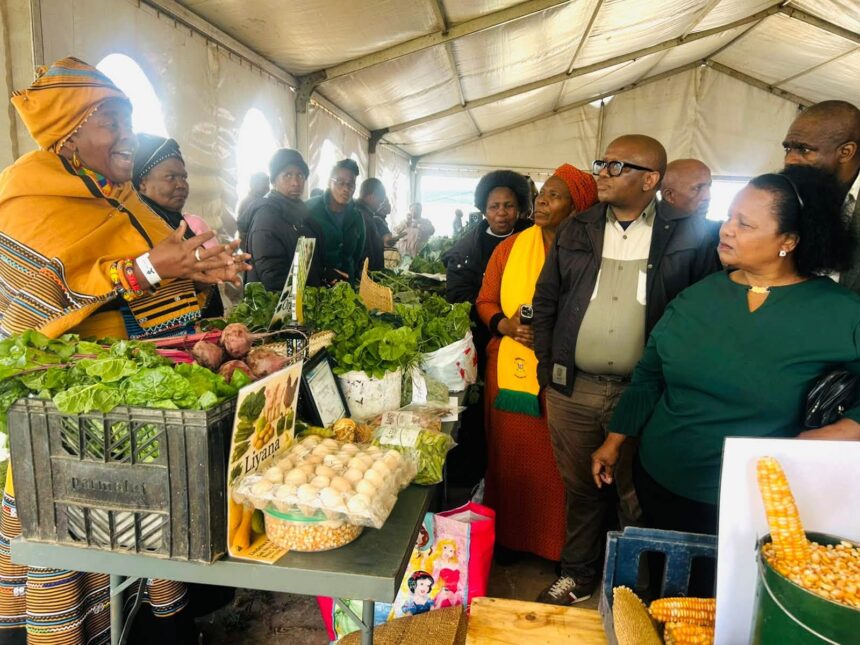
Farmers, community members and agriculture stakeholders came together at the ENgcobo Indoor Sports Centre in Dr AB Xuma Local Municipality, under Chris Hani District, to showcase local agricultural produce and unique products. The gathering provided an important opportunity for local farmers to place their work in front of a wider audience while connecting with people and organisations involved in agriculture. Agricultural exhibitions such as this can give smallholder and emerging farmers a platform to demonstrate what they produce and the value they bring to their communities. They also create space for farmers to exchange experiences, learn from one another and explore possible opportunities beyond their individual farms. The event highlighted how community-based agricultural activities can bring producers and other stakeholders together around farming, local enterprise and rural economic activity.
The quality of the produce on display was an important feature of the event. Seeing locally produced agricultural goods in one place allows visitors to better understand the range of farming activities taking place within the community. For farmers, displaying their products can provide an opportunity to build confidence in what they produce and receive feedback from people who may not normally visit their farms. It also allows producers to demonstrate that agricultural activity in rural communities extends beyond basic food production. Different farmers can have different products, approaches and ideas, creating a diverse exhibition that reflects the potential within the local agricultural sector.
Agricultural exhibitions can serve several purposes at the same time. They can be spaces where farmers market their products, but they can also become learning and networking platforms. Farmers can observe how other producers present their goods and gain ideas that may be useful for their own enterprises. They can also meet agriculture stakeholders who may have knowledge, services or partnerships relevant to their farming activities. These interactions can help farmers better understand the broader agricultural value chain and the importance of building relationships around production.
The Engcobo event also demonstrated the value of bringing agriculture stakeholders closer to farming communities. Agriculture involves more than the farmer working on a piece of land, as successful production can depend on access to knowledge, inputs, markets, finance, infrastructure and other forms of support. When stakeholders meet farmers directly, they have an opportunity to understand some of the realities faced by producers. Farmers, in turn, can communicate their experiences, needs and ambitions in a practical setting. This type of interaction can help create stronger connections between agricultural producers and the wider network that supports rural development.
For local farmers, exhibitions can also be a useful learning environment. A farmer may arrive primarily to display produce but leave with new ideas after speaking to another producer or stakeholder. Conversations about production methods, product presentation, customer preferences and farm management can provide practical lessons that are difficult to gain from working alone. Farmers can also learn by observing products and enterprises that differ from their own. Over time, these exchanges can contribute to greater knowledge and encourage producers to consider new opportunities within agriculture.
The importance of networking should not be underestimated in farming. Agricultural businesses depend on relationships with buyers, suppliers, service providers, other producers and potential partners. An exhibition creates a setting where these connections can begin through direct interaction rather than relying only on formal communication. Farmers can introduce their enterprises, explain what they produce and discuss their plans with people who may be interested in working with them. Building these relationships takes time, but events that bring multiple stakeholders together can make the process easier.
The event also provided a platform for farmers to share ideas. Farming conditions can vary between communities and individual producers, meaning that farmers often have different experiences of similar challenges. One farmer may have developed a practical way of managing production while another may have experience in marketing or adding value to agricultural products. Sharing these experiences can help producers identify approaches that may be relevant to their own operations. It also encourages farmers to see one another not only as competitors but as potential sources of knowledge and collaboration.
Agricultural exhibitions can further help communities recognise the work being done by local farmers. When produce is displayed publicly, it makes local agricultural activity more visible to residents and visitors. This can strengthen appreciation for the effort involved in producing food and other agricultural goods. It can also encourage people to think about agriculture as an important part of local economic activity. Supporting local farmers can have wider benefits when agricultural enterprises create income, sustain livelihoods and contribute to the circulation of money within communities.
The showcase of unique agricultural offerings was another important element of the gathering. Farmers often produce goods that reflect the resources, skills and opportunities available in their communities. Presenting these products together can reveal the variety that exists within local agriculture. It can also encourage producers to think about how they can improve the presentation and value of what they sell. A product that is clearly presented and well understood by customers may have greater potential to attract attention in competitive markets.
For emerging farmers, learning how to exhibit agricultural products can be an important business skill. Producing a crop or other agricultural product is only one part of running an agricultural enterprise. Farmers also need to understand how to communicate what they produce, identify potential customers and build relationships with people who may support the business. Exhibitions provide a practical environment where producers can gain experience in presenting their enterprises. This can be particularly useful for farmers who are still developing their businesses and looking for ways to reach broader markets.
The gathering at the ENgcobo Indoor Sports Centre also shows why agricultural development benefits from collaboration. Farmers have direct knowledge of what happens on the ground, while other stakeholders may provide technical, business or institutional support. Bringing these perspectives together can create opportunities for more informed discussions about the future of local agriculture. Collaboration can also help identify gaps that individual farmers may struggle to address on their own. When stakeholders communicate openly, there is greater scope for developing practical responses to shared agricultural challenges.
The event’s focus on learning, connecting, sharing ideas and interacting with strategic partners reflects the broader role of agricultural exhibitions in rural communities. These events are not simply displays where products are placed on tables for visitors to see. They can create opportunities for farmers to develop business relationships, improve their knowledge and gain exposure for their products. They can also help stakeholders understand the diversity of agricultural enterprises operating within a local area. This combination of exhibition, learning and networking can make agricultural events valuable to both producers and the communities they serve.
Local agricultural showcases can also encourage farmers to think about the future of their enterprises. A farmer who sees another producer successfully presenting a product may begin considering how to improve their own production or marketing approach. Conversations with stakeholders can introduce new perspectives on issues that farmers face every season. Exposure to different agricultural products can also encourage producers to consider diversification where it is suitable for their resources and market conditions. These decisions still require careful planning, but exhibitions can provide the information and connections that help farmers start those conversations.
For the wider community, such events provide an opportunity to see agriculture as a sector with different layers of activity. Farming includes production, processing, marketing, distribution and many other activities that connect producers with consumers. When these activities are represented at a local event, visitors can gain a better understanding of how agricultural enterprises contribute to the economy. Young people can also see examples of people building livelihoods through agriculture. This visibility can contribute to a stronger appreciation of farming as an important part of community development.
The gathering in Dr AB Xuma Local Municipality therefore represents more than a day of displaying agricultural produce. It brought farmers, community members and agriculture stakeholders into the same space to exchange ideas and build connections. The quality and diversity of the products showcased demonstrated the work being done by local producers, while the interactions created opportunities for learning and partnership. Agricultural exhibitions can help farmers gain experience, promote their products and understand the importance of networking within the agricultural value chain. Continued opportunities for farmers to exhibit, learn and connect can help strengthen local agricultural activity and create greater visibility for the enterprises operating within rural communities.
The Engcobo agricultural showcase ultimately highlighted the value of creating spaces where farmers can be seen, heard and connected with others in the sector. Local farmers have knowledge, products and ideas that deserve opportunities to reach wider audiences. By bringing producers and stakeholders together, agricultural exhibitions can encourage knowledge sharing, business connections and greater community engagement with farming. The event also showed that the strength of local agriculture is reflected not only in the quantity of produce available but in the people, skills and enterprises behind that produce. Supporting these connections can help create a stronger foundation for farmers to develop their businesses and contribute to the continued growth of agriculture in their communities.
Join 'Farmers Mag' WhatsApp Channel
Get the latest Farming news and tips delivered straight to your WhatsApp
CLICK HERE TO JOIN