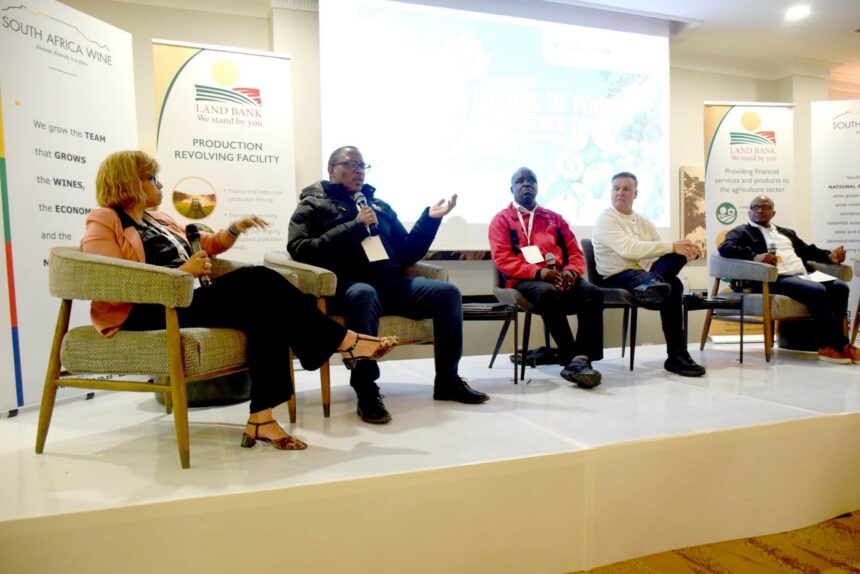
Litha Kutta, Head of Partnership Development & Ecosystem Coordination at Land Bank, participated in a panel discussion focused on improving market access for farmers at the SA Future of Food Conference 2026. The session, titled “From Shelf to Source: Unlocking Retail Procurement & Market Access”, examined the practical relationship between farmers, retailers, markets and other players across the agricultural value chain. The discussion was moderated by Ivor Price, Managing Director of Food For Mzansi, and brought together leaders with experience across agricultural development, market management, retail and food production. The panel explored issues that can influence whether farmers are able to move successfully from producing agricultural products to securing opportunities in formal markets. A key message from the discussion was that agricultural success depends not only on production but also on understanding the requirements of the markets farmers want to serve.
Kutta highlighted the importance of equipping farmers with a stronger understanding of market and retail requirements. He pointed out that many farmers are not sufficiently informed about what retailers consider when assessing products and potential suppliers. This knowledge gap can create challenges for farmers who may have quality products but are not adequately prepared to meet the expectations of formal buyers. Understanding these requirements before approaching retailers can help farmers identify what they need to improve within their businesses. Market knowledge can therefore form an important part of preparing farmers for sustainable participation in formal agricultural markets.
The panel discussion placed market access at the centre of conversations about agricultural development. Producing crops or other agricultural products is only one part of the journey from farm to consumer. Farmers also need to understand how their products fit into existing supply chains and what buyers require from potential suppliers. Retail procurement involves considerations that farmers need to understand before they seek commercial opportunities. By learning about these expectations in advance, farmers can make more informed decisions about production, product preparation, business processes and potential market channels.
Kutta encouraged farmers to ask questions before approaching retailers. Asking questions can help farmers gain a clearer understanding of the standards and requirements that apply to the markets they want to enter. This can include learning about what buyers expect from products and what suppliers need to demonstrate as businesses. Farmers who understand these requirements can then assess their own readiness and identify areas that require attention. The message is particularly relevant to producers who want to move beyond informal or local sales and explore opportunities within more structured retail markets.
Market readiness requires farmers to look beyond the production process itself. A farmer may be capable of producing a particular crop but still need to strengthen other parts of the business before supplying a major buyer. Product preparation, consistency, business processes and an understanding of buyer expectations can all influence a farmer’s ability to engage with formal markets. Kutta’s contribution emphasised the value of gaining this knowledge before making contact with retailers. This approach allows farmers to prepare more deliberately rather than discovering market requirements only after they have already approached a potential buyer.
The panel brought together perspectives from different parts of the food and agricultural ecosystem. Karin Kleinbooi, Executive Manager: Inclusion & Development at SA Wine, participated alongside Cedric Nephawe, Divisional Manager: Programme Management at Joburg Market, and Gary Jackson, Founder and Owner of Jackson’s Real Food Market & Eatery. Their participation brought together experience from agricultural inclusion and development, fresh produce markets and retail. The presence of different industry perspectives reflected the complexity of agricultural market access. Farmers interact with multiple parts of the value chain, and understanding these relationships can help them navigate opportunities more effectively.
The involvement of Joburg Market in the discussion also highlighted the role that established markets can play in connecting agricultural producers with buyers. Farmers need to understand where their products can be sold and what different market channels require from suppliers. Retailers and fresh produce markets may operate with different procurement processes and expectations. Having access to information about these channels can help farmers determine which opportunities are appropriate for their businesses. Greater knowledge of the market environment can also help producers plan their production around realistic commercial opportunities.
Retail market access can present both opportunities and challenges for farmers. Formal retail can provide access to established consumer markets, but farmers need to understand the conditions attached to supplying those markets. Product quality, consistency, preparation and business readiness can all become important considerations when farmers seek relationships with formal buyers. Farmers therefore need to treat market access as part of their overall business planning rather than as a step that happens only after production. Building this understanding can help producers make better-informed choices about what they grow, how they prepare products and which markets they approach.
Kutta’s message also connects market access with the broader role of partnerships in agriculture. No single organisation can address every challenge within the agricultural value chain. Farmers, financial institutions, markets, retailers, industry bodies and other stakeholders all contribute to the functioning of the agricultural ecosystem. Partnerships can create opportunities for information sharing, coordination and stronger connections between producers and markets. For farmers, these relationships can provide greater insight into the expectations and processes that shape agricultural procurement.
Land Bank’s approach, as expressed through the discussion, recognises that sustainable agricultural growth extends beyond production. Farmers need access to productive resources, but they also need the knowledge, relationships and market connections required to build sustainable businesses. Partnership development and ecosystem coordination can help bring different stakeholders together around shared agricultural objectives. Stronger connections between farmers and markets can support a more integrated agricultural value chain. This perspective places market access alongside production as an important component of agricultural development.
The SA Future of Food Conference 2026 provided a platform for these issues to be discussed with industry representatives from different parts of the food system. The “From Shelf to Source” panel focused attention on the journey agricultural products take from producers to consumers. It also highlighted the need for farmers to understand what happens beyond the farm gate. Knowledge of procurement processes and buyer expectations can help producers prepare for commercial opportunities. The discussion therefore reinforced the importance of connecting agricultural production with practical market intelligence.
For farmers seeking retail opportunities, the central lesson from Kutta’s contribution is the importance of preparation. Farmers should seek information about market requirements before approaching potential buyers and should use that information to assess their own readiness. Understanding what retailers look for can help producers identify gaps in their products, processes and businesses. Asking questions can also help farmers build a clearer picture of the market they want to enter. This type of preparation can make market engagement more structured and help farmers approach opportunities with a better understanding of what buyers expect.
The discussion at the SA Future of Food Conference 2026 demonstrated that improving agricultural market access requires more than increasing production. Farmers need practical knowledge about buyers, procurement processes and the requirements associated with formal markets. Kutta’s contribution placed particular emphasis on helping farmers understand these requirements and encouraging them to ask questions before approaching retailers. The participation of leaders from Land Bank, SA Wine, Joburg Market and Jackson’s Real Food Market & Eatery also showed the importance of collaboration across the agricultural and food sectors. Strengthening partnerships, improving market knowledge and connecting farmers with appropriate market opportunities can contribute to a more connected agricultural ecosystem and support sustainable growth across the value chain.
Join 'Farmers Mag' WhatsApp Channel
Get the latest Farming news and tips delivered straight to your WhatsApp
CLICK HERE TO JOIN