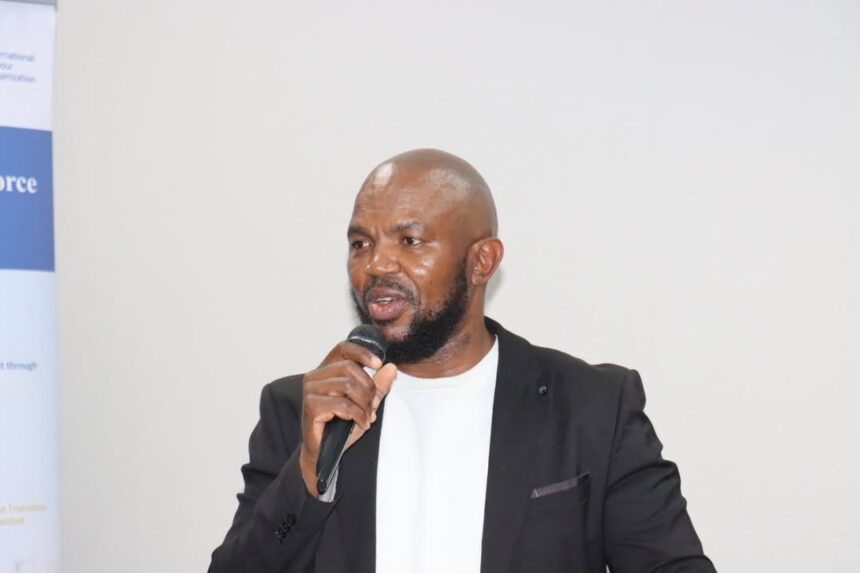
Farmers and operations managers from irrigation schemes across the Eastern Cape are gaining practical knowledge to reduce water and electricity costs while improving the sustainability of agricultural production. The Energy Management Training programme brought participants together to examine how better management of energy and water can improve the productivity and profitability of irrigation schemes. The programme responds to growing operational pressures facing farmers, including high electricity costs, water management challenges and the effects of climate change. By improving their understanding of efficient resource use, farmers can make better decisions about irrigation systems, energy consumption and agricultural operations. The initiative forms part of broader efforts to revive irrigation schemes and strengthen their role in supporting rural economies and livelihoods.
The training follows the launch of the Eastern Cape provincial irrigation schemes revival programme, which identified capacity building as an important part of improving the performance of irrigation schemes. Irrigation farming depends heavily on reliable water supplies and energy systems, particularly where electricity is required to pump and distribute water. Rising operational costs can place pressure on farmers and scheme managers, especially when inefficient systems consume more electricity or water than necessary. Climate change adds another layer of uncertainty by affecting water availability and increasing the need for farmers to adapt their production practices. Providing farmers with practical knowledge can help them identify opportunities to use available resources more efficiently.
The Energy Management Training programme created a platform for farmers and operations managers to engage directly on the challenges affecting irrigation agriculture. Participants explored practical approaches to managing electricity consumption and reducing water costs. They also discussed how improved resource management can contribute to more efficient agricultural production and better financial performance. The sessions focused on solutions that farmers and scheme managers can consider within their own operations. This approach recognises that reducing costs is not only about cutting expenditure, but also about improving how resources are planned, monitored and used.
Climate change adaptation formed an important part of the training because irrigation farmers operate in an environment where weather patterns and water availability can affect production. Farmers need to consider how changes in rainfall, temperatures and water resources could influence their irrigation requirements. Efficient irrigation can help farmers use available water more responsibly while maintaining crop production. Energy efficiency can also become increasingly important where pumping requirements place significant pressure on operating budgets. By combining climate adaptation with water and energy management, farmers can strengthen the resilience of their agricultural operations.
The cost of electricity was one of the central issues discussed during the programme. Irrigation schemes can require substantial amounts of electricity when water must be pumped over distances or to higher elevations. Inefficient pumps, poorly managed irrigation schedules and unnecessary energy consumption can increase operating costs. Farmers and managers therefore need reliable information about how much energy their systems use and when consumption occurs. Regular monitoring can help identify patterns that may indicate opportunities for improved efficiency.
Solar energy solutions were also discussed as a potential option for irrigation schemes seeking to manage energy costs. Solar systems can provide electricity for agricultural operations, including suitable pumping applications, when they are correctly designed and installed. However, solar installation involves more than purchasing and mounting panels. Farmers need to consider technical requirements, legal processes, system capacity, maintenance and the specific energy needs of their irrigation scheme. The training therefore addressed the legal requirements and processes associated with installing solar panels, helping participants understand that renewable energy projects must comply with applicable requirements.
Water management was another major focus of the programme. Irrigation farmers need to balance crop water requirements with the availability and cost of water. Poor irrigation practices can result in unnecessary water use, while inadequate irrigation can affect crop development and agricultural yields. Monitoring water consumption can help farmers understand where resources are being used and whether irrigation practices can be improved. Better water management can also support long-term sustainability in areas where water resources face increasing pressure.
The training also addressed compliance requirements relating to water rights. Water-use rights are an important consideration for agricultural operations because access to water for irrigation is subject to South Africa’s legal and regulatory framework. Farmers need to understand the requirements that apply to their operations and the processes involved in securing and maintaining lawful water use. Understanding these requirements can help irrigation scheme farmers manage their water resources responsibly and reduce the risks associated with non-compliance. The discussions gave participants an opportunity to engage with these issues and improve their understanding of water-use responsibilities.
The development of an Energy Management Tool represents another practical outcome of the training. The tool is intended to assist irrigation scheme farmers and managers in monitoring and managing their energy consumption more effectively. Effective energy management starts with knowing how much energy is being used and understanding the factors that influence consumption. A structured monitoring tool can help farmers track usage and identify areas where operational changes may reduce unnecessary expenditure. Over time, better energy data can support more informed decisions about equipment, irrigation schedules and possible renewable energy investments.
Energy management can have a direct connection with farm profitability. Electricity is an operating cost, and irrigation schemes that use significant amounts of energy need to manage that cost carefully. Reducing unnecessary consumption can improve the financial performance of agricultural operations without necessarily reducing productive activity. Farmers can also use energy information when evaluating whether investments in more efficient equipment or renewable energy systems make financial sense. The goal is therefore not simply to use less electricity, but to use energy more efficiently in ways that support productive farming.
Water and energy management are closely connected in many irrigation schemes. Water often requires energy to be pumped, transported or distributed across agricultural fields. When water systems operate inefficiently, they may increase both water consumption and electricity use. Improving the efficiency of pumps, pipes and irrigation practices can therefore create benefits across both areas. Farmers who understand this relationship can consider water and energy together rather than treating them as separate operational issues.
The training also highlighted the need for cooperation between farmers and government in the revival of irrigation schemes. After awarding certificates to participants, the Department’s Deputy Director responsible for Irrigation Schemes, Mr Vuyo Menze, encouraged farmers to work together with government to restore irrigation schemes and ensure that they become viable agricultural enterprises. Menze said the Department is committed to ensuring that irrigation schemes are not only productive but also profitable. He also emphasised that farmers have an important role to play in the revival and sustainability of these schemes. His message reinforces the idea that infrastructure investment and government support need to be combined with effective management and active participation by farmers.
The focus on profitability is important because productive infrastructure does not automatically guarantee a financially sustainable irrigation scheme. Farmers need access to functioning infrastructure, reliable water, manageable energy costs and appropriate agricultural knowledge. They also need to make production decisions that take markets, input costs and operational conditions into account. Effective management can help farmers understand where costs are increasing and where improvements can be made. A sustainable irrigation scheme must therefore combine agricultural production with sound financial and resource management.
Capacity building is an important part of this process because farmers need practical skills to manage increasingly complex agricultural operations. Training can help participants understand energy consumption, water management, climate adaptation and compliance requirements. It can also create opportunities for farmers and managers to share experiences and discuss challenges affecting their irrigation schemes. This exchange can help identify practical approaches that are relevant to local farming conditions. Continued training can further strengthen farmers’ ability to respond to changing economic and environmental pressures.
The programme also has wider implications for rural communities in the Eastern Cape. Irrigation schemes can contribute to agricultural production and create economic opportunities in areas where farming forms an important part of local livelihoods. When irrigation schemes become more efficient and financially sustainable, farmers may be better positioned to maintain production and participate in agricultural markets. Stronger agricultural enterprises can also support associated activities such as transport, input supply, processing and local services. The sustainability of irrigation schemes therefore matters beyond the boundaries of individual farms.
The increasing importance of climate adaptation means that irrigation farmers must consider long-term resource management alongside immediate production needs. Water is a finite resource, and efficient use becomes especially important when farmers face changing weather conditions. Energy costs also require careful attention because pumping and irrigation can represent significant operating expenses. Combining efficient water management with effective energy management can help farmers address both environmental and financial pressures. The Energy Management Training programme provides farmers with knowledge that can support this integrated approach.
The discussions around solar energy also demonstrate the growing role of renewable energy in agricultural operations. Solar power may provide an alternative or supplementary energy source for suitable irrigation applications, but its viability depends on factors such as system requirements, available sunlight, installation costs and compliance obligations. Farmers need accurate assessments before investing in such systems. Understanding the legal and technical requirements can help prevent costly mistakes and support responsible adoption of solar technology. Training that addresses these issues gives farmers a stronger foundation for evaluating renewable energy options.
The Eastern Cape Department of Agriculture continues to support irrigation scheme farmers through capacity building, infrastructure development and initiatives aimed at strengthening agricultural production. These interventions are intended to contribute to improved livelihoods in rural communities and support the development of viable agricultural enterprises. The Energy Management Training adds a resource management component to these efforts by focusing on how farmers can manage two critical inputs, water and energy. The effectiveness of such initiatives will depend on how knowledge gained through training is applied within individual schemes. Continued collaboration between farmers, scheme managers and government can help translate training into practical improvements.
The Energy Management Training programme has provided Eastern Cape irrigation scheme farmers with important tools for addressing water and electricity costs while preparing for changing climate conditions. The focus on energy monitoring, water efficiency, solar energy, water-use rights and climate adaptation reflects the range of issues that influence modern irrigation farming. The development of an Energy Management Tool can further support farmers in tracking consumption and identifying opportunities to improve efficiency. Government support through infrastructure development and capacity building can provide an important foundation, while farmers remain central to the day-to-day management and sustainability of their schemes. By working together to improve resource efficiency, strengthen infrastructure and build profitable agricultural enterprises, irrigation scheme farmers can contribute to more resilient farming operations and stronger rural livelihoods across the Eastern Cape.
Join 'Farmers Mag' WhatsApp Channel
Get the latest Farming news and tips delivered straight to your WhatsApp
CLICK HERE TO JOIN