The mass vaccination of cattle against Foot-and-Mouth Disease (FMD) is gaining momentum in KwaZulu-Natal’s uMzinyathi District, with 44,000 animals brought to dipping tanks across the area within six days. Veterinary-led teams are working across the Msinga and uMvoti Local Municipalities as part of the province-wide effort to protect livestock and contain the spread of the disease. The campaign is particularly significant for uMzinyathi, which has an estimated 350,000 head of cattle, including animals belonging to commercial farming operations. The district is also one of the last two areas still outstanding in KwaZulu-Natal’s provincial vaccination rollout. The progress recorded so far has given farmers renewed confidence as government works to strengthen disease control and protect livelihoods that depend heavily on livestock farming.
The vaccination teams are currently scheduled to continue their work in Msinga and uMvoti until 30 August 2026, reaching cattle through established dipping tanks and other community-based livestock facilities. These facilities are important points of contact between veterinary teams and farmers, particularly in rural communities where livestock plays a major economic and social role. Bringing animals to the dipping tanks allows veterinary professionals to administer vaccines while engaging farmers about disease prevention and livestock health. The scale of the task remains substantial because thousands of cattle still need to be reached across the district. Effective coordination between farmers, veterinary officials and local authorities will therefore be essential to maintain the pace of the campaign.
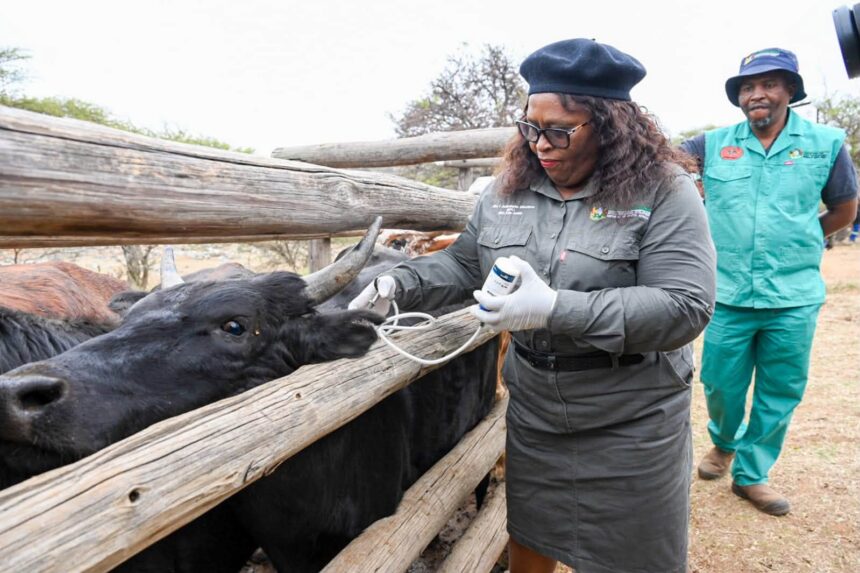
MEC for Agriculture and Rural Development Thembeni kaMadlopha-Mthethwa is participating in the Provincial Cabinet’s Operation Sukuma Sakhe and District Development Model programme as part of efforts to address challenges directly within communities. The programme is designed to bring government closer to residents, listen to their concerns, accelerate solutions and address obstacles that affect service delivery. During her visit to uMsinga, the MEC inspected the vaccination programme at Sibumba Diptank under Msinga Local Municipality. Her involvement also allows her to provide guidance where challenges extend beyond the scope of the local War Room structures. This direct engagement is important in a vaccination campaign of this scale because operational challenges can affect how quickly livestock are reached and protected.
The progress in uMzinyathi forms part of a much larger vaccination campaign that has already covered significant ground across KwaZulu-Natal. Since the first vaccination drive began in uGu District, the Department of Agriculture and Rural Development has moved swiftly to inoculate approximately 1.7 million head of cattle. Two vaccine types, BioGenesis Bago and Dollvet, are being used as part of the provincial response. Reaching such a large number of cattle demonstrates the scale of the logistical and veterinary operation required to respond to FMD across the province. The ongoing work in uMzinyathi is another major step towards completing the provincial rollout and strengthening protection for cattle in communities that remain at risk.
Foot-and-Mouth Disease has placed considerable pressure on farmers and the wider agricultural economy because of the restrictions associated with controlling the outbreak. The outbreak was declared a national disaster earlier in 2026, leading to an intensified response and mass vaccination efforts. Strict controls on the movement of animals created significant challenges for farmers who depend on livestock sales and the movement of animals between farming areas. The international ban on the sale of animals and animal products further affected market opportunities, while the closure of livestock auctions disrupted an important part of the agricultural value chain. These measures were necessary to limit the spread of the disease, but they also created widespread economic uncertainty for livestock producers.
For many farmers in uMzinyathi and other rural parts of KwaZulu-Natal, livestock represents much more than an agricultural asset. Cattle can provide income, food, savings and financial security for households, making disease outbreaks particularly damaging when animals become sick or when farmers are unable to sell or move their livestock. The vaccination programme has therefore provided an important source of reassurance to communities that have faced uncertainty during the outbreak. Protecting cattle from FMD can help farmers maintain healthier herds while supporting the gradual restoration of confidence in livestock production. The success of the campaign will also depend on continued cooperation between government and farmers after vaccination teams leave individual communities.
MEC kaMadlopha-Mthethwa has stressed that agricultural challenges must receive priority because many local livelihoods depend directly on farming. Her comments reflect the importance of livestock production to communities across uMzinyathi, where cattle farming forms a central part of the local rural economy. The MEC said the vaccination programme was progressing well and expressed hope that the work would be completed by 12 September. She noted that 44,000 animals had been vaccinated since the campaign began the previous Friday, demonstrating the speed at which veterinary teams have been working in the district. Once uMzinyathi is completed, the vaccination operation is expected to move to Amajuba, the final outstanding district in the provincial rollout.
The target of completing the uMzinyathi vaccination campaign by 12 September will require sustained effort from veterinary teams and continued participation from livestock owners. The district’s estimated cattle population of 350,000 means that reaching adequate vaccination coverage is a significant undertaking. Commercial herds and communal cattle both form part of the broader livestock population that needs effective disease protection. Farmers can support the process by ensuring their animals are available when vaccination teams operate in their communities and by following veterinary guidance on disease control. Strong participation can help officials reach more animals efficiently and improve the overall effectiveness of the provincial response.
The Department is also addressing livestock health beyond the immediate vaccination effort. MEC kaMadlopha-Mthethwa has directed the Veterinary Services unit to ensure that communal livestock receive vitamin supplementation, particularly during the winter season. Providing vitamins can support animal health and help improve the condition of livestock during periods when nutritional challenges may affect their resilience. This measure complements the vaccination programme by addressing another aspect of herd health rather than focusing only on disease prevention. Supporting the general health of communal cattle is particularly important in rural communities where farmers may have limited resources to provide additional veterinary and nutritional support independently.
The combination of vaccination, veterinary support and direct community engagement reflects the need for a comprehensive approach to livestock disease management. Vaccination is a critical component of FMD control, but farmers also need access to information, veterinary services and practical support to maintain healthy herds. Regular monitoring can help identify signs of disease early, while responsible livestock movement and adherence to official restrictions can reduce opportunities for infection to spread. Community participation also allows veterinary authorities to communicate important information directly to livestock owners. These combined measures can strengthen the province’s ability to manage FMD while protecting farmers from further economic disruption.
The uMzinyathi campaign also demonstrates the importance of completing a province-wide disease control strategy rather than addressing individual districts in isolation. Livestock movement between areas means that disease risks can extend beyond the boundaries of a single municipality or district. Coordinated vaccination across KwaZulu-Natal can therefore provide broader protection while helping authorities manage disease risks across interconnected livestock populations. With 1.7 million cattle already inoculated since the first campaign in uGu District, the province has made substantial progress towards its wider vaccination objective. Completing the remaining districts will be an important milestone in the effort to strengthen livestock protection across KwaZulu-Natal.
The response to FMD has also highlighted how closely animal health is linked to the economic wellbeing of rural communities. Restrictions on livestock movement, the closure of auctions and international market limitations can affect farmers, traders, transporters and other businesses connected to the agricultural value chain. Restoring confidence requires effective disease control as well as clear communication about progress and the conditions governing livestock movement and trade. The vaccination programme provides an important foundation for that recovery by helping reduce disease risks and reassuring farmers that government is actively addressing the crisis. Continued investment in veterinary services and livestock health will remain important as KwaZulu-Natal works towards a more resilient agricultural sector.
The vaccination of 44,000 cattle in uMzinyathi within six days represents significant progress in KwaZulu-Natal’s ongoing fight against Foot-and-Mouth Disease. With veterinary teams continuing their work in Msinga and uMvoti and the province having already vaccinated approximately 1.7 million cattle, the campaign is moving closer to covering all districts. The involvement of MEC Thembeni kaMadlopha-Mthethwa through Operation Sukuma Sakhe and the District Development Model further demonstrates the importance of taking agricultural services directly into communities and addressing challenges that affect local livelihoods. The additional focus on vitamin supplementation for communal livestock also shows the need to support overall animal health alongside vaccination. As the campaign advances towards its target of completing uMzinyathi before moving to Amajuba, continued cooperation between farmers, veterinary teams and government will be essential to protect livestock, restore agricultural confidence and safeguard the rural communities that depend on farming.
Join 'Farmers Mag' WhatsApp Channel
Get the latest Farming news and tips delivered straight to your WhatsApp
CLICK HERE TO JOIN