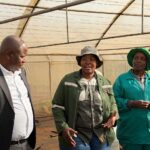
The KwaZulu-Natal Department of Agriculture and Rural Development is intensifying efforts to protect livestock as part of a province-wide response to Foot-and-Mouth Disease (FMD). As part of Operation Sukuma Sakhe, MEC for Agriculture and Rural Development Hon. Thembeni KaMadlopha-Mthethwa has arrived at Sibumba Dip Tank in the Malomeni area of uMsinga, under the uMzinyathi District, to oversee the ongoing mass vaccination campaign. The campaign forms part of the department’s broader efforts to contain FMD and strengthen livestock disease control across KwaZulu-Natal. Running from 21 August to 31 August 2026, the vaccination programme is focused on reaching livestock in affected and at-risk areas. The intervention highlights the importance of coordinated government action, farmer participation and consistent disease prevention measures in protecting the province’s livestock sector.
Foot-and-Mouth Disease is a highly contagious viral disease that affects cloven-hoofed animals, including cattle, sheep, goats and pigs. An outbreak can have serious consequences for farmers because the disease can spread rapidly between susceptible animals and disrupt livestock production and trade. Although FMD does not pose a food safety concern for people, its economic impact on farming communities can be significant. Disease outbreaks can lead to movement restrictions, increased management costs and difficulties accessing certain livestock markets. Strengthening vaccination and other control measures therefore remains an important part of protecting farmers and maintaining the stability of the agricultural sector.
The arrival of MEC KaMadlopha-Mthethwa at Sibumba Dip Tank demonstrates the importance placed on the vaccination campaign and the need for government leadership at community level. Dip tanks play an important role in livestock management in many rural communities because they provide established points where farmers can bring their animals for agricultural services. Using these facilities during vaccination campaigns can help officials reach livestock owners in organised and accessible locations. It also creates an opportunity for government representatives and agricultural officials to engage directly with farmers about disease control. This interaction can help improve understanding of vaccination requirements and encourage greater cooperation between authorities and livestock producers.
The mass vaccination campaign in uMsinga forms part of a much larger provincial effort to strengthen FMD control. According to the department, uMzinyathi is the 10th district to be covered in the province-wide vaccination rollout. Reaching the 10th district represents significant progress in the effort to extend vaccination coverage across KwaZulu-Natal. A province-wide approach is important because livestock disease does not follow municipal or district boundaries. Coordinated vaccination and disease control measures can therefore help reduce the risk of transmission between neighbouring communities and districts.
The campaign’s schedule, running from 21 August until 31 August 2026, gives agricultural authorities a defined period in which to intensify vaccination activities in the district. During such campaigns, farmers have an important role to play by ensuring that their livestock are available when veterinary and agricultural teams arrive at designated facilities. Cooperation from livestock owners can help officials vaccinate animals efficiently and improve overall coverage. Farmers should also continue following guidance from veterinary authorities regarding animal movement, identification and other disease control measures. Vaccination works most effectively as part of a broader disease management strategy that includes responsible livestock practices and ongoing monitoring.
For communities in uMsinga, protecting livestock is closely linked to protecting household livelihoods. Cattle, sheep and goats can provide income, food, savings and other economic value for rural families. The loss of animals through disease can therefore affect far more than agricultural production alone. Farmers may face financial pressure when livestock become sick or when movement restrictions limit their ability to trade animals. By strengthening disease prevention, the vaccination campaign can help reduce some of the risks facing livestock-owning households and contribute to greater resilience within rural communities.
The campaign also highlights the importance of early intervention when managing livestock diseases. Once FMD spreads widely, controlling transmission can become more difficult and costly. Vaccination can form an important part of a coordinated response by helping reduce the risk and severity of disease within susceptible livestock populations. However, farmers and officials must combine vaccination with other biosecurity and disease control measures to limit transmission. This makes ongoing communication between agricultural authorities, veterinary professionals and farmers essential throughout the campaign and beyond.
The role of agricultural officials extends beyond administering vaccines. Teams working in affected and high-risk areas also need to provide farmers with information about disease symptoms, livestock movement restrictions and the importance of reporting suspected cases. Farmers who recognise unusual symptoms or sudden illness among their animals can help authorities respond more quickly by reporting concerns through the appropriate channels. Early reporting can support disease surveillance and allow veterinary authorities to investigate potential cases. Strong communication at community level can therefore strengthen the overall effectiveness of the provincial FMD response.
Operation Sukuma Sakhe provides a platform for coordinated government intervention at local level. Its involvement in the vaccination campaign reflects the need for different government structures and communities to work together when addressing challenges that affect rural livelihoods. FMD control requires more than a single intervention because disease management depends on consistent implementation of vaccination, surveillance, movement control and biosecurity measures. Bringing government services closer to livestock farmers can improve access to information and strengthen cooperation. This community-focused approach is particularly important in rural areas where livestock farming plays a major role in household economies.
The progress of the provincial vaccination rollout also demonstrates the scale of the challenge facing KwaZulu-Natal’s livestock sector. With uMzinyathi becoming the 10th district covered by the campaign, the department is moving closer to its goal of strengthening disease control across the province. Each district reached represents another area where livestock can receive targeted protection and where farmers can engage with officials about FMD prevention. Continued implementation will be important to ensure that vaccination coverage remains strong and that disease control measures are maintained after the campaign period. Protecting livestock requires sustained attention because disease risks can continue even after an intensive vaccination drive has ended.
The involvement of farmers will remain central to the success of KwaZulu-Natal’s FMD response. Government can provide vaccines, veterinary support and disease control programmes, but effective implementation also depends on livestock owners presenting their animals for vaccination and following official guidance. Farmers can contribute further by maintaining good biosecurity practices, monitoring their animals and reporting suspected disease promptly. These actions can help reduce opportunities for FMD to spread within and between farming communities. A strong partnership between government and farmers gives the province a better chance of protecting livestock and limiting the economic consequences associated with disease outbreaks.
The ongoing FMD mass vaccination campaign at Sibumba Dip Tank in Malomeni, uMsinga, represents another important stage in KwaZulu-Natal’s province-wide livestock disease control efforts. MEC Thembeni KaMadlopha-Mthethwa’s oversight of the campaign under Operation Sukuma Sakhe highlights the importance of visible government support and coordinated action in rural communities. With uMzinyathi now the 10th district covered by the vaccination rollout, KwaZulu-Natal is making progress towards broader livestock protection and stronger disease control. The campaign running from 21 August to 31 August 2026 provides an important opportunity for farmers to participate in vaccination efforts and strengthen protection for their animals. Continued cooperation, responsible livestock management, effective surveillance and sustained government support will remain essential as KwaZulu-Natal works to contain Foot-and-Mouth Disease and protect the livelihoods that depend on a healthy livestock sector.
Join 'Farmers Mag' WhatsApp Channel
Get the latest Farming news and tips delivered straight to your WhatsApp
CLICK HERE TO JOIN