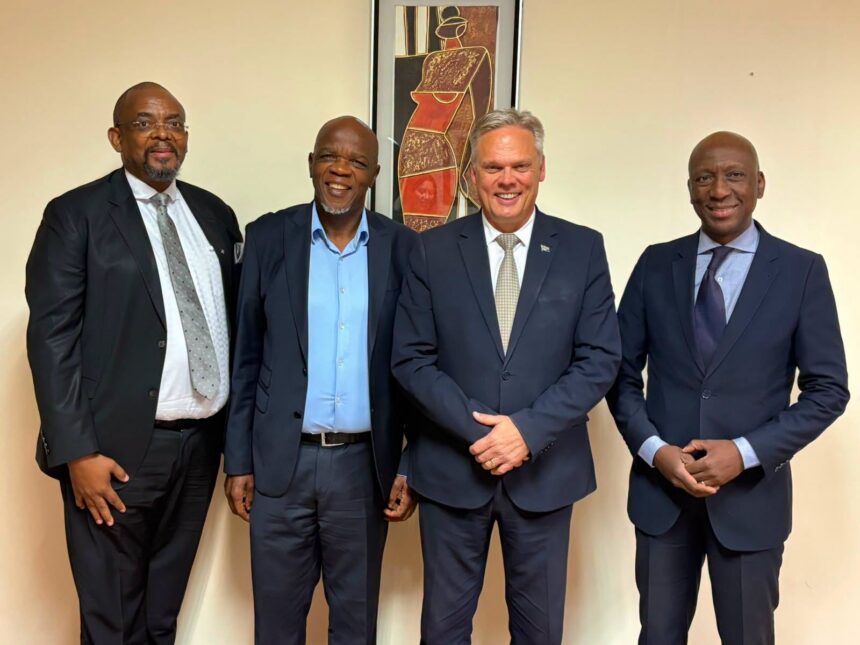
The future of South African agriculture depends on strong partnerships, meaningful collaboration and practical action that supports farmers at every level of production. Recognizing this, Minister Willie Aucamp recently met with the African Farmers’ Association of South Africa (AFASA) to discuss the challenges facing emerging and small-scale farmers across the country. The engagement highlighted the importance of bringing government and agricultural stakeholders together to develop solutions that promote growth, sustainability and long-term success. Agriculture remains one of South Africa’s most important economic sectors, contributing to food security, employment and rural development. By creating opportunities for open dialogue and cooperation, government and industry leaders are working toward building a stronger and more inclusive agricultural future that benefits farmers, communities and the national economy.
During the meeting, Minister Willie Aucamp and AFASA representatives focused on the realities confronting many emerging and small-scale farmers. These producers often face barriers such as limited access to finance, inadequate infrastructure, restricted market opportunities, rising production costs and the growing impact of climate change. While many farmers possess the skills and determination to expand their operations, overcoming these obstacles often requires coordinated support from both the public and private sectors. The discussions acknowledged that addressing these issues demands practical interventions rather than short-term solutions. By identifying the most pressing challenges together, government and industry can develop targeted initiatives that improve productivity and strengthen the resilience of farming enterprises.
The engagement emphasized the importance of strengthening collaboration between government and the agricultural sector to accelerate support for farmers. Effective partnerships create opportunities to share knowledge, improve access to agricultural services and develop programs that respond directly to the needs of farming communities. Government institutions can provide policy support, technical assistance and development initiatives, while organizations such as AFASA contribute valuable insights from farmers working on the ground every day. This combination of experience and expertise helps ensure that agricultural policies remain practical and responsive to real-world conditions. Collaboration also encourages greater accountability as stakeholders work toward common goals that benefit the entire agricultural value chain.
Supporting emerging and small-scale farmers is essential for creating a more balanced and competitive agricultural sector in South Africa. These farmers contribute significantly to local food production, rural employment and economic activity, yet many continue to operate with limited resources. Expanding access to financing, training, technology and markets can help these businesses increase production and improve profitability over time. Investments in skills development and modern farming practices also enable producers to adapt to changing environmental and market conditions. By empowering farmers with the right tools and opportunities, South Africa can unlock the full potential of its agricultural sector while strengthening food security and promoting inclusive economic growth.
The meeting also highlighted the need to create sustainable and resilient farming enterprises that are prepared to meet future challenges. Climate variability, water availability, input costs and global market fluctuations continue to influence agricultural production across the country. Building resilience requires farmers to adopt efficient production methods, embrace innovation and diversify their operations where appropriate. Government support, combined with strong industry partnerships, can help farmers gain access to research, improved technologies and climate-smart agricultural practices. These efforts contribute to a more adaptable agricultural sector that is capable of maintaining productivity despite changing conditions.
AFASA continues to play an important role in representing the interests of black commercial, emerging and small-scale farmers throughout South Africa. Through advocacy, training and stakeholder engagement, the organization works to ensure that farmers have a stronger voice in shaping agricultural policy and development initiatives. Meetings such as the one with Minister Willie Aucamp demonstrate the value of maintaining open communication between policymakers and those directly involved in food production. Constructive dialogue allows both sides to identify priorities, share experiences and work together on practical solutions that deliver measurable results. Strong relationships between government and farmer organizations also create greater confidence within the agricultural sector and encourage continued investment in rural development.
The commitment to turning dialogue into action reflects a growing recognition that meaningful progress requires more than discussion alone. Practical implementation of agreed priorities will be essential to expanding opportunities for emerging farmers, improving access to resources and strengthening the long-term sustainability of agricultural businesses. Continued collaboration between government, AFASA and other agricultural stakeholders has the potential to create lasting positive change throughout the sector. By focusing on inclusion, innovation and shared responsibility, South Africa can build a stronger agricultural industry that supports economic growth while improving livelihoods in rural communities. The recent engagement between Minister Willie Aucamp and AFASA represents another important step toward creating a more prosperous, resilient and inclusive agricultural sector that serves the interests of farmers and the nation as a whole.
Join 'Farmers Mag' WhatsApp Channel
Get the latest Farming news and tips delivered straight to your WhatsApp
CLICK HERE TO JOIN