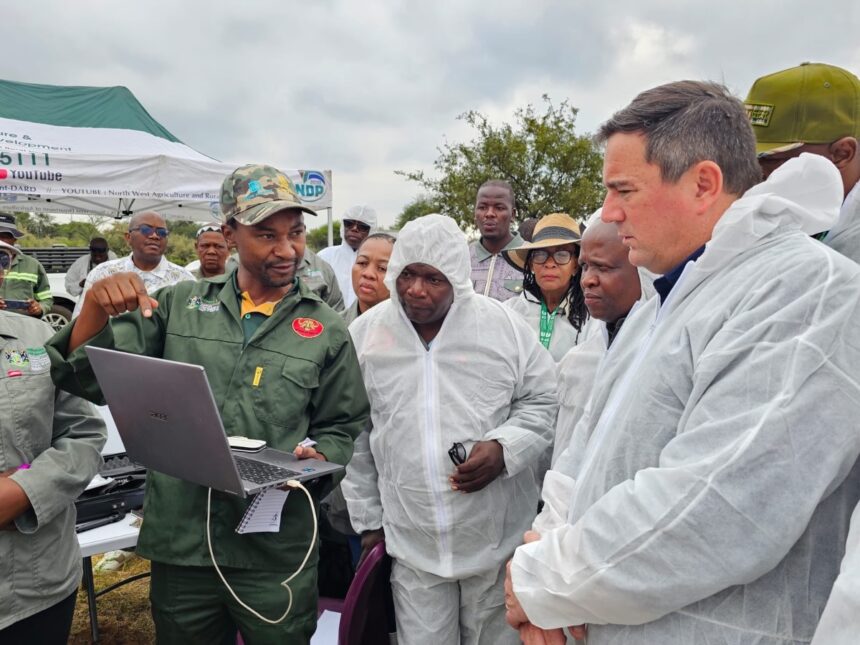
The South African agricultural sector is set for a major policy shift following the announcement by Minister of Agriculture John Steenhuisen on the intention to publish the Routine Vaccination Scheme for Foot and Mouth Disease (RVS-FMD). The draft scheme, developed under Section 10 of the Animal Diseases Act of 1984, introduces a voluntary but structured national framework aimed at controlling one of the most damaging diseases affecting livestock production. Foot and Mouth Disease continues to pose serious economic risks to farmers, exporters and the broader meat value chain. The new approach signals a move away from purely reactive disease control toward planned and coordinated prevention. It also reflects growing pressure to protect livestock productivity and improve international market confidence. By formalising vaccination efforts, the government aims to reduce outbreaks and stabilise the sector. The announcement marks a significant development in animal health governance.
The core objective of the Routine Vaccination Scheme is to create a coordinated system for vaccinating domesticated cloven hoofed animals across South Africa. This includes cattle, sheep, goats and pigs, all of which are vulnerable to Foot and Mouth Disease. The Department of Agriculture has designed the scheme to reduce disease risk while ensuring that participating farmers can continue their normal business operations with fewer disruptions. Minister Steenhuisen emphasised that the framework is built on partnership between government and industry. He noted that cost sharing mechanisms and phased implementation will help make participation more accessible across different farming scales. The scheme is intended to balance disease control with economic sustainability. This dual focus is critical for maintaining both food security and trade stability.
A key feature of the proposed scheme is the establishment of a dedicated oversight committee. This committee will include state and private veterinarians, experts in virology and vaccinology, and representatives from key agricultural sectors such as dairy, feedlot operations, small stock farming and pig production. The inclusion of multiple stakeholders ensures that decisions are informed by both scientific expertise and practical farming experience. The committee will oversee vaccination standards, implementation strategies and compliance measures. It will also help coordinate national efforts to ensure consistency across provinces. This collaborative structure is designed to strengthen trust between government and industry. It also improves accountability in disease management systems.
Another central requirement of the scheme is the implementation of a national traceability system for all participating animals. Every animal must be uniquely identified using methods such as branding, tattooing or electronic ear tags. This identification system will allow authorities to track each animal’s movement, vaccination history and health status throughout its lifecycle. The traceability framework is essential for managing disease outbreaks quickly and accurately. It also supports transparency in livestock trade and reduces the risk of fraud or misrepresentation. Farmers will benefit from improved record keeping and better herd management data. This system forms the backbone of the proposed vaccination programme.
The scheme also introduces strict controls over vaccine handling and administration. This includes oversight of vaccine storage, cold chain management and proper vaccination techniques. Maintaining vaccine integrity is critical to ensuring effectiveness and preventing failures in disease prevention. The Department of Agriculture will monitor compliance to ensure that all procedures meet established veterinary standards. Farmers and service providers will be required to follow approved protocols when administering vaccines. These measures are designed to maintain consistency and reliability across the national programme. Proper implementation is expected to significantly improve disease control outcomes.
While participation in the scheme is voluntary, livestock owners who choose to enrol must meet specific requirements. These include adherence to biosecurity plans and regular audits to ensure continued compliance. Biosecurity measures may include controlled animal movement, hygiene protocols and monitoring systems to reduce the risk of disease spread. Regular audits will help verify that participants maintain the required standards over time. This approach ensures that the scheme remains credible and effective. It also encourages responsible farming practices among participants. Voluntary participation combined with strict compliance standards creates a balanced regulatory environment.
Minister Steenhuisen explained that the scheme is designed as a partnership between government and the agricultural sector. He highlighted that the goal is to mitigate the risk of Foot and Mouth Disease while enabling continued economic activity for farmers and livestock owners. The introduction of cost sharing mechanisms ensures that the financial burden is distributed more equitably across stakeholders. Phased implementation allows for gradual rollout and adjustment based on real world conditions. This reduces pressure on farmers while ensuring steady progress toward national coverage. The approach reflects a shift toward shared responsibility in disease management. It also supports long term sustainability in livestock production systems.
The broader significance of the RVS-FMD lies in its potential to transform South Africa’s approach to animal disease control. By moving from reactive containment strategies to a proactive, risk based vaccination system, the country aims to reduce the frequency and severity of outbreaks. This shift will help protect the national herd and improve confidence in local and international markets. Stronger disease control systems are also expected to support improved export opportunities for livestock products. The scheme aligns government and industry around a shared framework focused on prevention, traceability and accountability. Over time, this could contribute to restoring internationally recognised disease free status with vaccination. It also strengthens resilience in the agricultural sector.
The Department of Agriculture has opened a public comment period for the draft scheme, allowing stakeholders to provide input within seven calendar days from the date of publication on 10 April 2026. Interested parties are encouraged to submit feedback to the FMD Command Centre through the designated email address provided by the department. This consultation process ensures that farmers, industry bodies and experts can contribute to shaping the final version of the scheme. Public participation is an important part of building an effective and widely accepted policy framework. It also allows the department to refine implementation strategies based on real sector needs. Engagement at this stage will help strengthen the final structure of the programme. The process reflects a commitment to transparency and collaboration.
The Routine Vaccination Scheme for Foot and Mouth Disease represents a major step forward in South Africa’s livestock health strategy. It combines scientific expertise, industry participation and government oversight into a unified national framework. By focusing on prevention, traceability and shared responsibility, the scheme addresses long standing weaknesses in disease control. It also supports economic stability for farmers who depend on livestock production for their livelihoods. If successfully implemented, the programme could significantly reduce the impact of Foot and Mouth Disease across the country. It positions South Africa to improve both domestic food security and international trade confidence. This initiative marks a critical advancement in building a more resilient and competitive agricultural sector.
Join 'Farmers Mag' WhatsApp Channel
Get the latest Farming news and tips delivered straight to your WhatsApp
CLICK HERE TO JOIN