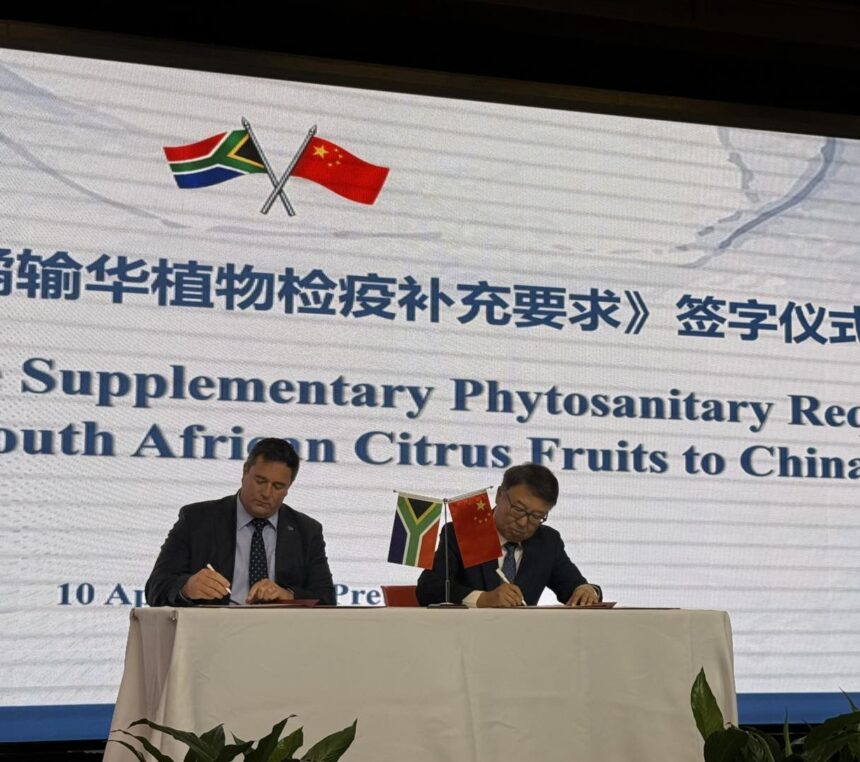
On 10 April 2026, South Africa and China formalised a supplementary phytosanitary agreement that strengthens the export of South African citrus fruit to the Chinese market. The signing brought together key stakeholders including Chinese Ambassador Wu Peng, Minister of Agriculture John Steenhuisen, citrus industry representatives, and agricultural experts. The agreement focuses on improving trade conditions, strengthening biosecurity systems, and expanding market access for South African exporters. It also builds on long standing cooperation between the two countries in agricultural trade and scientific exchange. The citrus sector sees this development as a strategic step that supports both economic growth and export stability. The agreement reflects growing demand for high quality citrus fruit in China and reinforces South Africa’s position as a major global supplier. It also highlights the importance of structured trade relationships in a competitive international market.
The agreement strengthens a partnership that began with the original citrus protocol signed in 2004 between South Africa and China. Over the years, this relationship has evolved through continuous scientific cooperation and technical alignment between agricultural authorities. The updated protocol introduces improved treatment options that help maintain fruit quality during transport and reduce supply chain costs. It also enhances competitiveness for South African exporters in the Chinese market by improving efficiency and compliance standards. Industry leaders have described the agreement as a major milestone that supports long term trade stability. The citrus sector depends heavily on predictable export rules, so updates like this provide critical support for planning and investment. This cooperation also strengthens trust between regulatory bodies in both countries.
The citrus industry remains one of the most important agricultural sectors in South Africa, contributing significantly to exports and rural employment. Annual export earnings exceed 2 billion US dollars, making citrus a key foreign exchange earner for the country. The sector supports around 140,000 direct jobs across farms and packhouses, with additional employment in logistics, shipping, and export services. These figures highlight the importance of stable international markets for sustaining rural economies. The industry also invests heavily in quality control, pest management, and cold chain systems to meet global standards. Strong biosecurity measures ensure that fruit meets strict international requirements. This makes South African citrus highly competitive in demanding markets such as China.
Trade with China continues to be a strategic growth area for South African agricultural exports. In 2025, exports to China and Hong Kong reached approximately 11.5 million cartons, accounting for about 6 percent of total citrus exports. While this share has fluctuated in recent years, industry stakeholders see significant potential for expansion. Rising consumer demand in China for fresh, high quality fruit supports this growth outlook. South African citrus is valued for its seasonal complementarity, supplying fruit during periods when local Chinese production is lower. This timing advantage strengthens its competitiveness in the market. Exporters aim to increase market share through improved compliance and better logistical efficiency.
Government and industry leaders have also pointed to broader trade developments that support agricultural exports between South Africa and China. Recent policy changes, including tariff adjustments and improved customs facilitation, are expected to improve market access conditions. These changes include streamlined processes at entry points and upgraded inspection systems that reduce delays. Minister Steenhuisen noted that recent agreements across multiple agricultural products have strengthened bilateral trade relations. These include veterinary certificates and protocols covering additional exports such as dairy, wool, and avocados. Each agreement contributes to a more diversified and resilient export portfolio. Strong diplomatic and technical cooperation remains central to maintaining this progress.
Scientific research plays a key role in supporting compliance and maintaining trade standards between South Africa and China. Institutions such as Citrus Research International provide technical expertise that ensures exporters meet phytosanitary requirements. Their work supports pest control, fruit quality improvement, and compliance with international safety standards. This research base helps align production practices with evolving global regulations. It also reduces risks of export rejection and strengthens long term market confidence. Continuous innovation in treatment methods and cold chain management supports the success of the citrus industry. These efforts ensure that South African exporters remain competitive in demanding international markets.
The new agreement is expected to improve trade resilience in a global environment affected by shipping disruptions and geopolitical uncertainty. By strengthening regulatory alignment, the agreement reduces uncertainty for exporters and improves planning across the value chain. It also reinforces long term agricultural cooperation between South Africa and China. The citrus sector stands to benefit from improved efficiency, expanded market access, and stronger international partnerships. As global demand for fresh fruit continues to grow, structured agreements like this become increasingly important. The partnership demonstrates how agriculture and diplomacy work together to support economic development. It also shows how science based trade systems can create stable and mutually beneficial outcomes for both exporting and importing countries.
Join 'Farmers Mag' WhatsApp Channel
Get the latest Farming news and tips delivered straight to your WhatsApp
CLICK HERE TO JOIN