

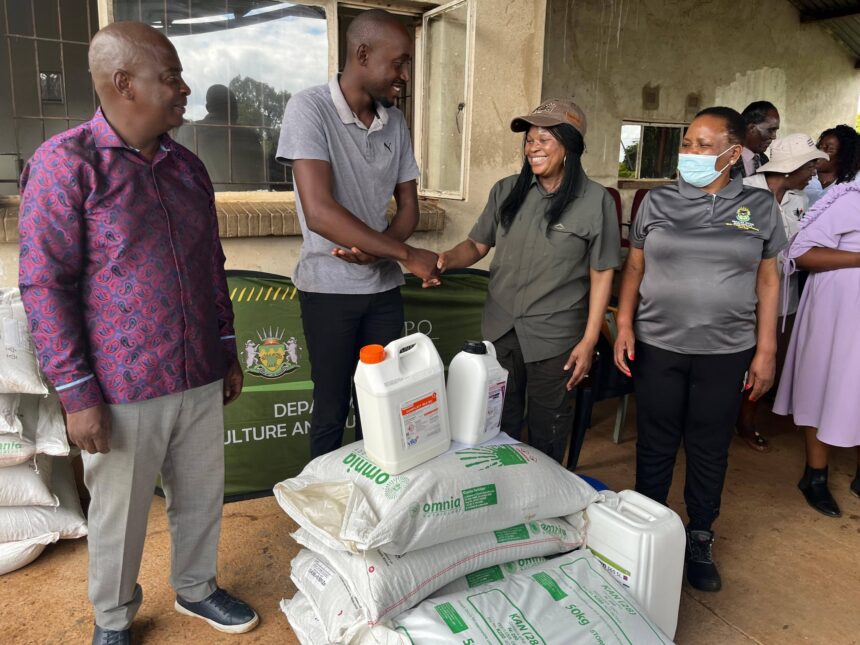
The Limpopo Department of Agriculture and Rural Development has intensified its response to the devastating floods that disrupted farming activities in the Greater Giyani area earlier this year. Following her visit to Nsavulani, MEC Nakedi Grace Kekana proceeded to the Mopani North Agro-Ecological Zone at Gaza Beef outside Giyani to oversee a key recovery intervention. This visit formed part of a broader government effort to support farmers whose operations were severely affected by the unprecedented floods in January 2026. Submerged roads and waterlogged fields had brought agricultural production to a complete halt, leaving many farmers unable to plant or harvest crops. The situation created urgent food security concerns and placed significant financial strain on rural households that depend on farming for their livelihoods.
During the visit, MEC Kekana led the distribution of essential agricultural inputs, including seedlings and fertilizers, to affected farmers. These inputs are critical for restarting production and ensuring that farmers can return to their fields as conditions improve. By providing immediate support, the department aims to reduce delays in planting and help farmers recover lost production time. The intervention also focuses on improving resilience, encouraging farmers to adopt practices that can better withstand future climate-related challenges. For many farmers in the region, this support represents a vital step toward rebuilding their operations and restoring income streams.
The floods exposed the vulnerability of farming systems in the Mopani district, particularly in areas with limited infrastructure and drainage capacity. Waterlogged soils not only delayed planting schedules but also damaged existing crops and reduced soil quality in some areas. The distribution of fertilizers is intended to help restore soil fertility and improve crop performance in the upcoming planting cycle. Seedlings provided through the program are selected to suit local conditions, giving farmers a better chance of achieving successful yields. This targeted approach ensures that assistance is both practical and aligned with the needs of farmers on the ground.
MEC Kekana emphasized that the government remains committed to supporting rural communities through both immediate relief and long-term development strategies. Engagements with farmers during the visit provided an opportunity to assess ongoing challenges and identify additional support measures required in the region. Strengthening infrastructure, improving early warning systems, and promoting climate-smart agriculture are key priorities moving forward. Collaboration between government departments, local municipalities, and farming communities will be essential to build resilience against future extreme weather events. These efforts are aimed at ensuring that agriculture in Limpopo remains sustainable despite increasing environmental pressures.
The intervention at Gaza Beef outside Giyani highlights the importance of timely government action in safeguarding food security and rural livelihoods. By distributing essential inputs and working closely with affected farmers, the Limpopo Department of Agriculture and Rural Development is helping to restore agricultural activity in one of the province’s hardest-hit areas. The recovery process will take time, but coordinated support and continued investment will enable farmers to rebuild stronger and more resilient operations. This initiative underscores the role of proactive leadership and community engagement in overcoming agricultural challenges. With sustained efforts, the Greater Giyani area can recover from the impacts of the floods and continue contributing to local food production and economic stability.
Join 'Farmers Mag' WhatsApp Channel
Get the latest Farming news and tips delivered straight to your WhatsApp
CLICK HERE TO JOIN




