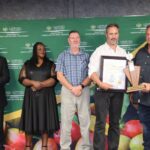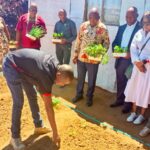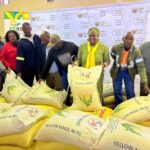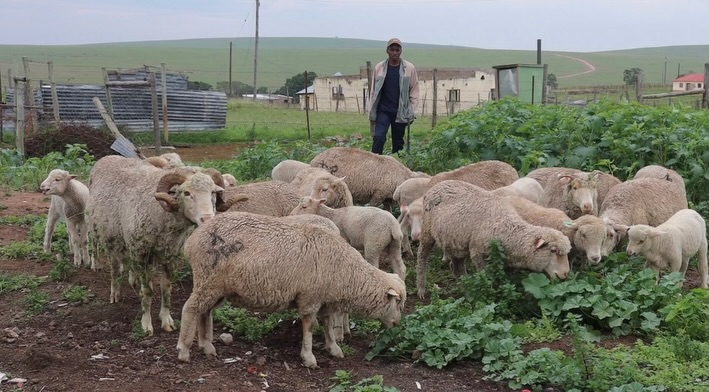
The Eastern Cape Department of Agriculture communications team began a field journey yesterday morning under the Freedom to Farm campaign, an initiative designed to highlight farming families and the legacies they build across generations. The campaign focuses on real stories from rural communities where agriculture is not only a livelihood but also a long-standing family tradition. The team set out to document lived experiences that show how young people are reshaping agricultural pathways while staying connected to their roots. This first phase of visits forms part of a wider Freedom Month programme that aims to elevate stories of purpose, resilience and continuity in farming communities. The day’s work placed strong emphasis on how education and practical farming knowledge can work together to secure long-term food production and rural development.
The first stop of the campaign took the team to Ntseshe village in Ngqamakhwe, a rural area within the Eastern Cape. There, the spotlight fell on the Bomela family, whose story reflects both tradition and personal choice in shaping a farming future. At the centre of the story is Bomela Jnr, whose unexpected departure from Walter Sisulu University, where he was enrolled for a BCom degree, initially raised concern within his community. What appeared to be a sudden withdrawal from academic life later revealed a deliberate decision guided by passion and long-term vision. Instead of continuing on a business-focused academic path, he redirected his energy toward agriculture, choosing to enrol at Tsolo Agriculture and Rural Development Institute to study Animal Health.
This shift in direction proved to be a defining moment in his life and his family’s farming journey. Bomela Jnr completed his studies successfully and now stands as a qualified graduate ready to contribute directly to livestock care and agricultural development. His decision reflects a growing trend among young people in rural areas who are rethinking career paths and returning to agriculture with formal training. It also highlights the role of agricultural institutions such as Tsolo Agriculture and Rural Development Institute in equipping students with practical skills that respond to real community needs. Within the Bomela household, his qualification is seen as both personal achievement and continuation of a family legacy rooted in farming practice.
The Freedom to Farm campaign, driven by the Eastern Cape Department of Agriculture, aims to continue documenting similar stories throughout Freedom Month. Each visit is intended to uncover how farming knowledge is passed down, adapted and strengthened across generations in rural communities. These narratives show how education, family influence and personal choice intersect to shape the future of agriculture in the province. The Bomela family story stands as a clear example of how young farmers can redefine success while staying grounded in their heritage. As the campaign progresses, more communities will be visited to capture these experiences and highlight the role of agriculture in building sustainable livelihoods.
The journey to Ntseshe village demonstrates the value of recognising and supporting farming families who continue to invest in both tradition and education. The story of Bomela Jnr shows how a single decision can reshape a career path and strengthen a family’s agricultural foundation. Through the Freedom to Farm campaign, the Eastern Cape Department of Agriculture is creating space for these stories to be shared and preserved. It also reinforces the importance of agricultural training institutions in preparing young people for practical roles in food production and animal health. As Freedom Month continues, the campaign is expected to bring more insight into how rural communities are sustaining farming legacies across generations.
Join 'Farmers Mag' WhatsApp Channel
Get the latest Farming news and tips delivered straight to your WhatsApp
CLICK HERE TO JOIN